About Steel 2026
下载
复制该事实的链接
下载
复制该事实的链接
Electrical steels are specialised steels with high magnetic permeability and low core losses, playing a vital role in transformers, motors and generators, enabling efficient, sustainable electrification through renewable power generation and distribu…
下载
复制该事实的链接
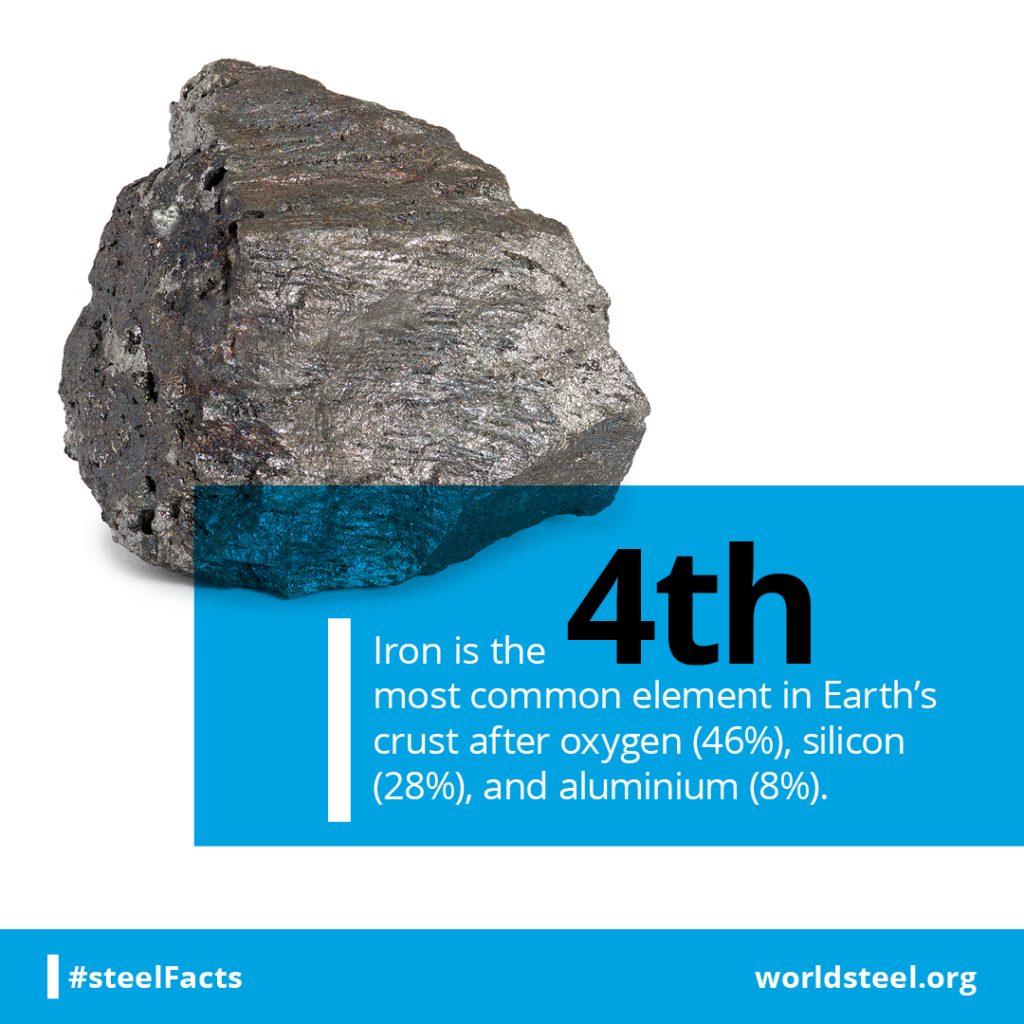
Iron is the 4th most common element in Earth’s crust after oxygen (46%), silicon (28%), and aluminium (8%).
下载
复制该事实的链接
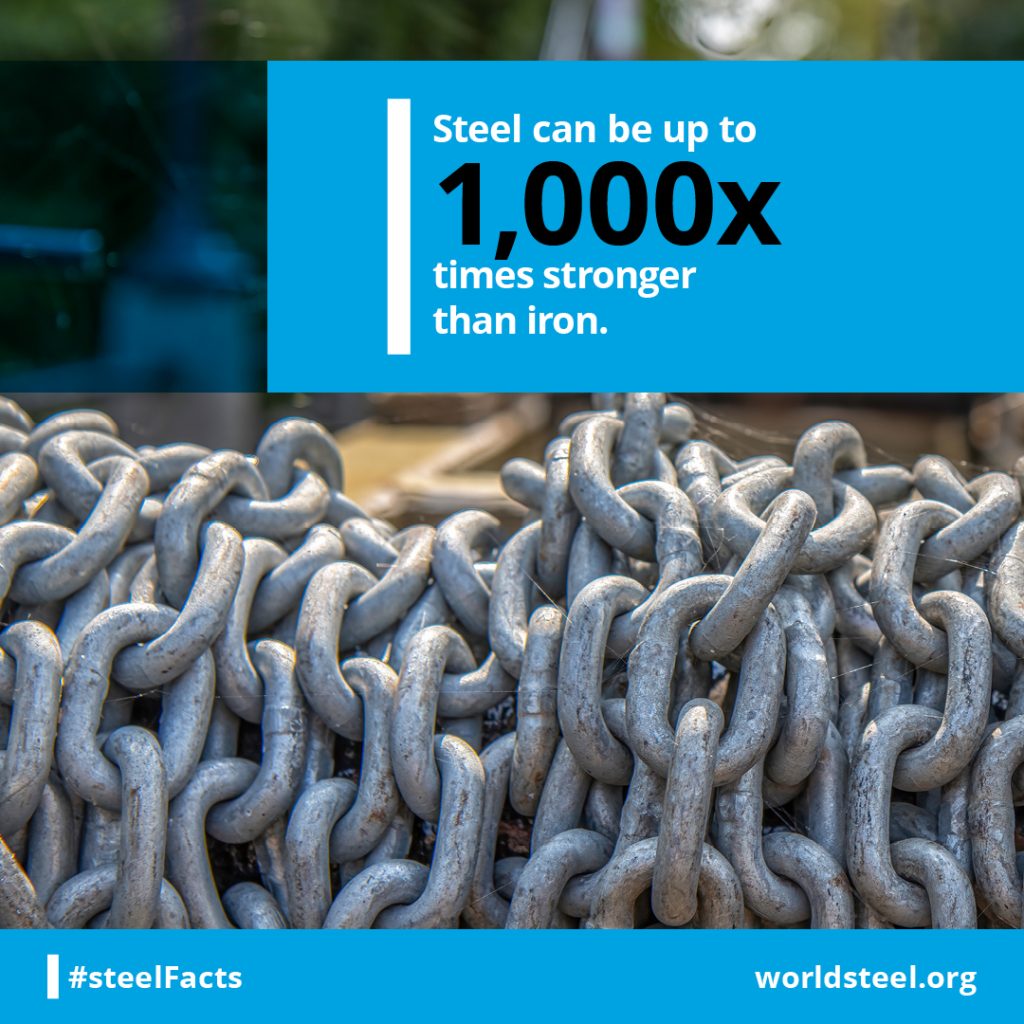
Steel can be up to 1,000 times stronger than iron.
下载
复制该事实的链接
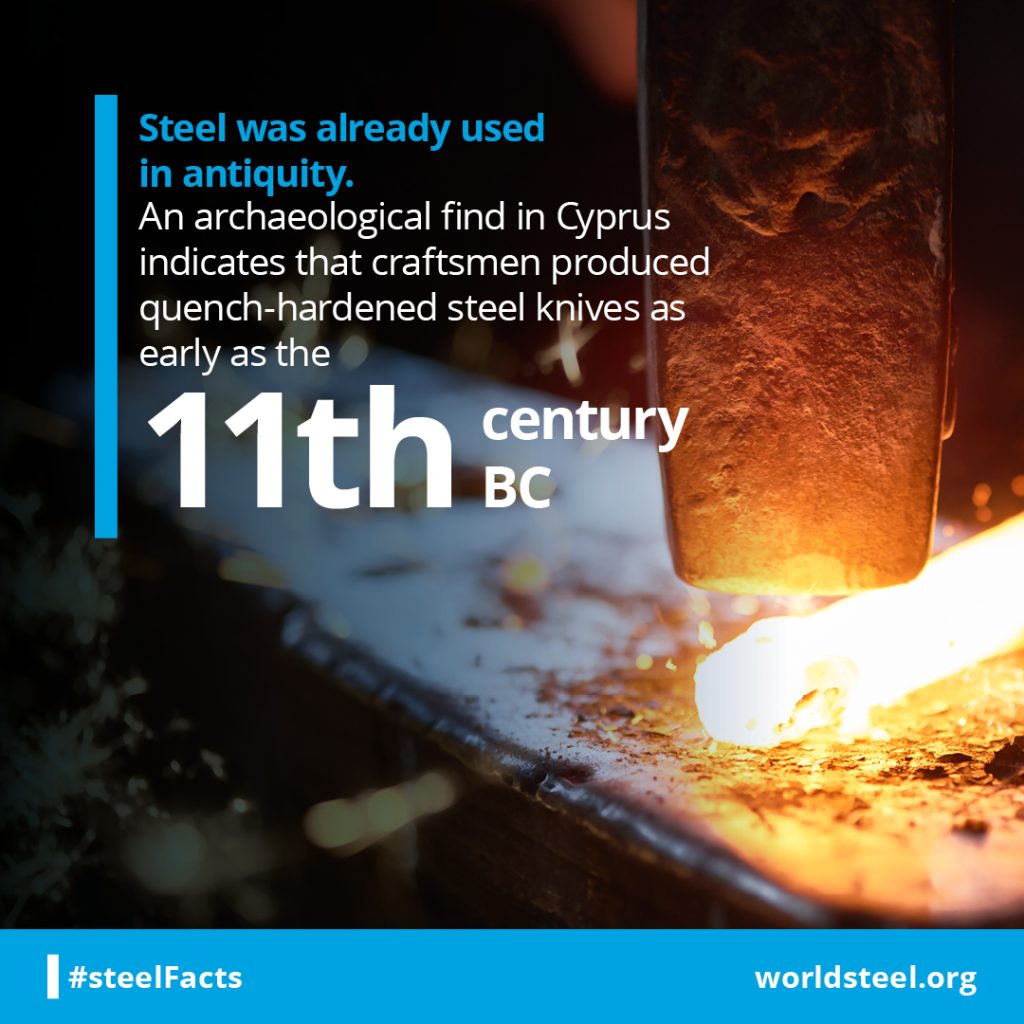
Steel was already used in antiquity. An archaeological find in Cyprus indicates that craftsmen produced quench-hardened steel knives as early as the 11th century BC.
下载
复制该事实的链接
下载
复制该事实的链接
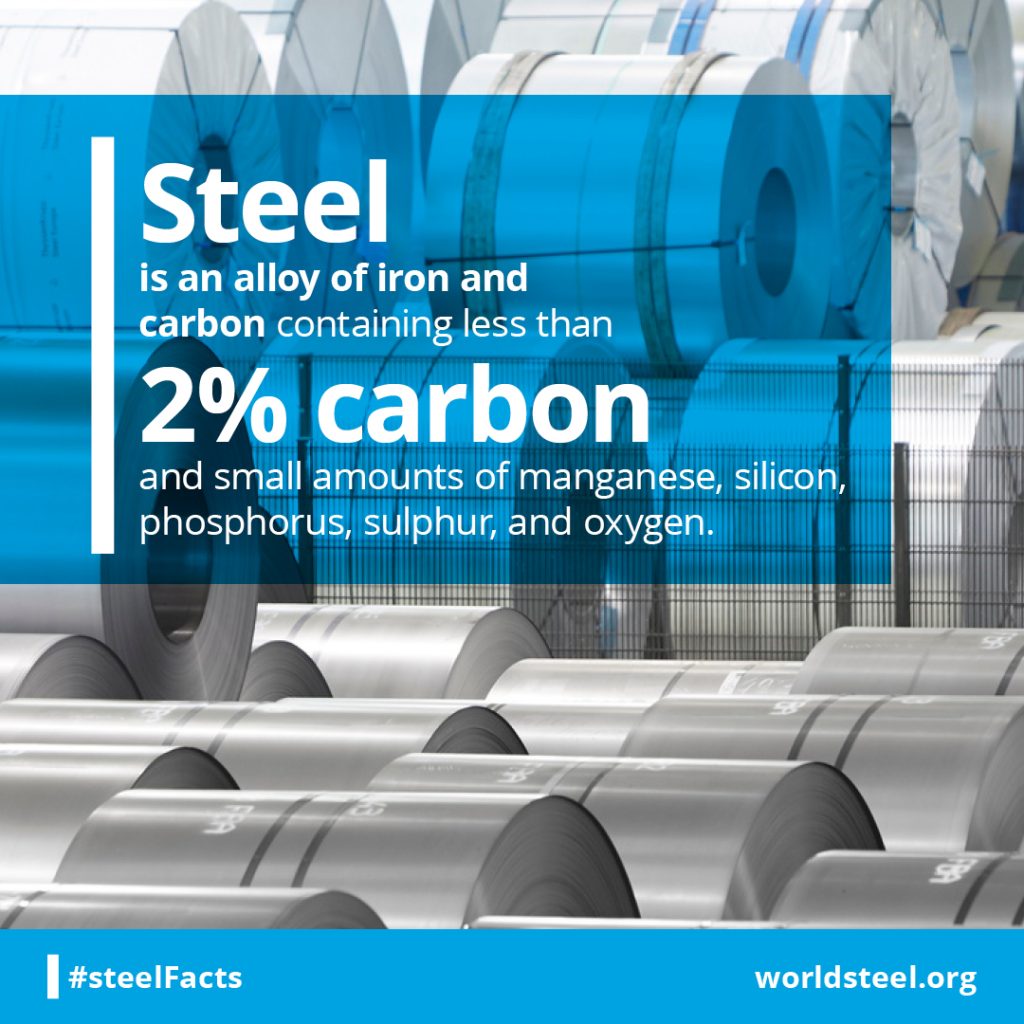
Steel is an alloy of iron and carbon containing less than 2% carbon and small amounts of manganese, silicon, phosphorus, sulphur, and oxygen.
下载
复制该事实的链接
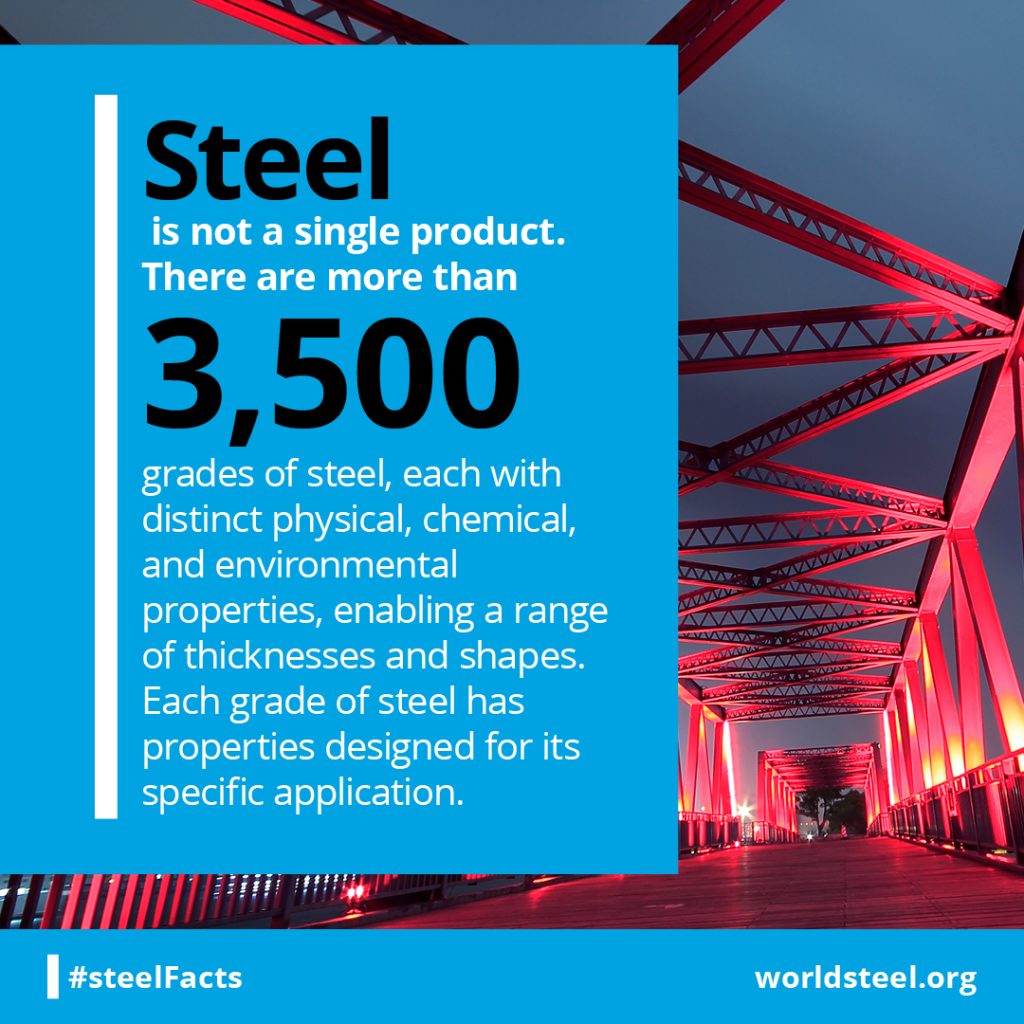
Steel is not a single product. There are more than 3,500 grades of steel, each with distinct physical, chemical, and environmental properties, enabling a range of thicknesses and shapes. Each grade of steel has properties designed for its specific ap…
下载
复制该事实的链接
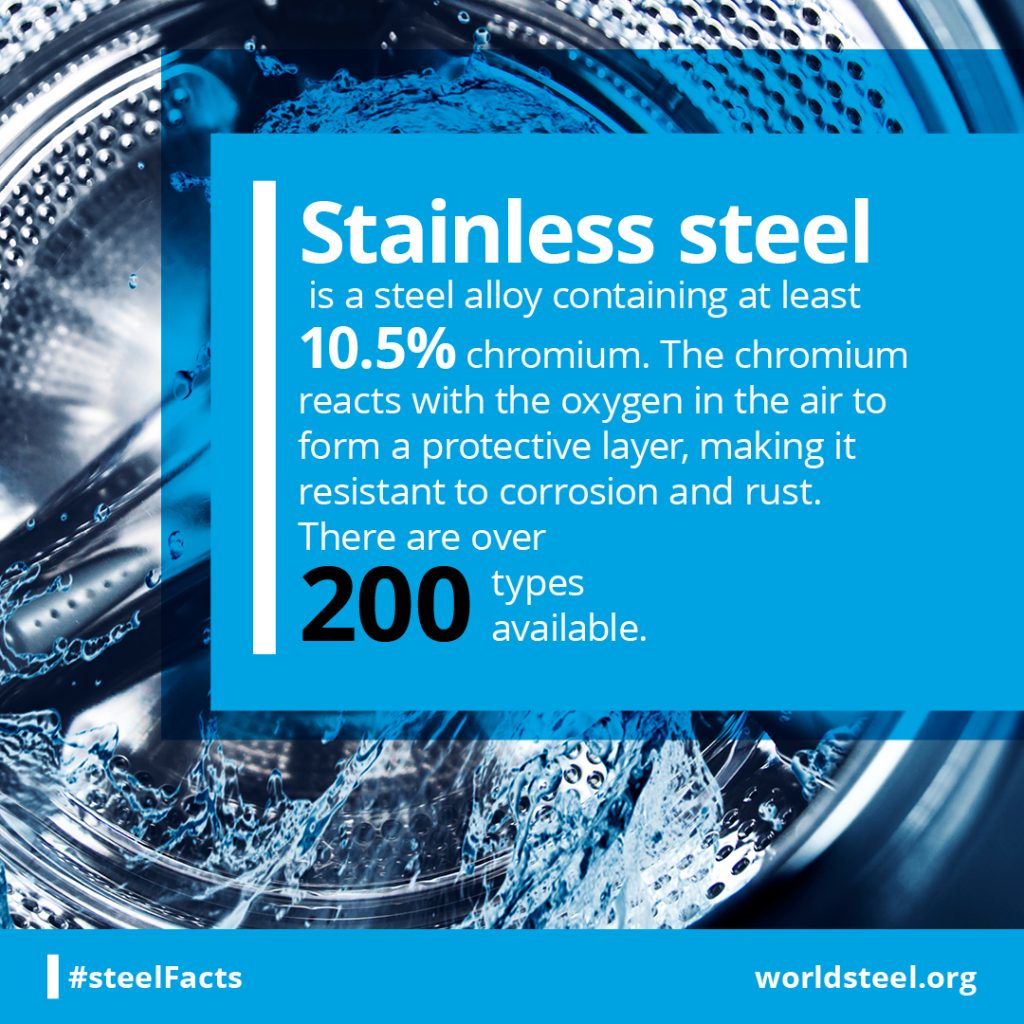
Stainless steel is a steel alloy containing at least 10.5% chromium. The chromium reacts with the oxygen in the air to form a protective layer, making it resistant to corrosion and rust. There are over 200 types available.
下载
复制该事实的链接
Electrical steels are specialised steels with high magnetic permeability and low core losses, playing a vital role in transformers, motors and generators, enabling efficient, sustainable electrification through renewable power generation and distribu…
下载
复制该事实的链接
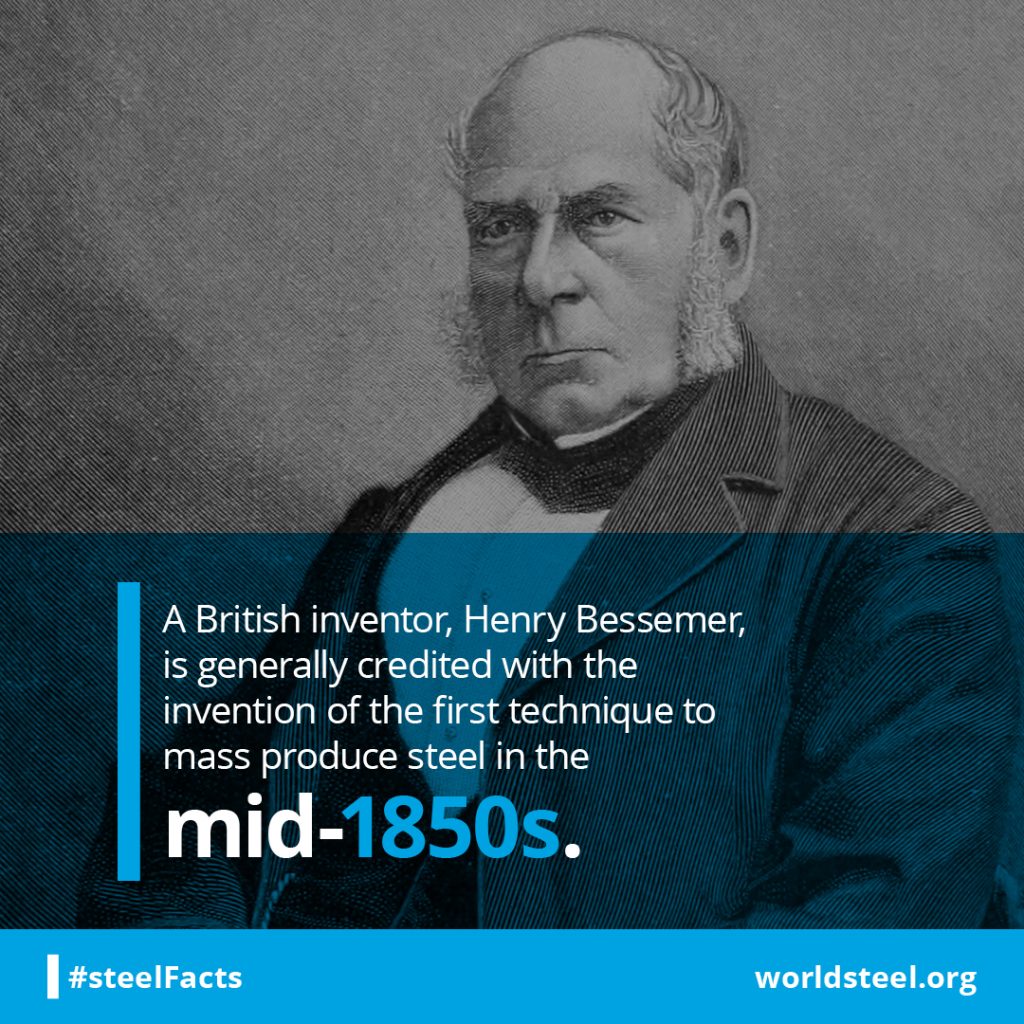
A British inventor, Henry Bessemer, is generally credited with inventing the first technique for mass-producing steel in the mid-1850s.
下载
复制该事实的链接
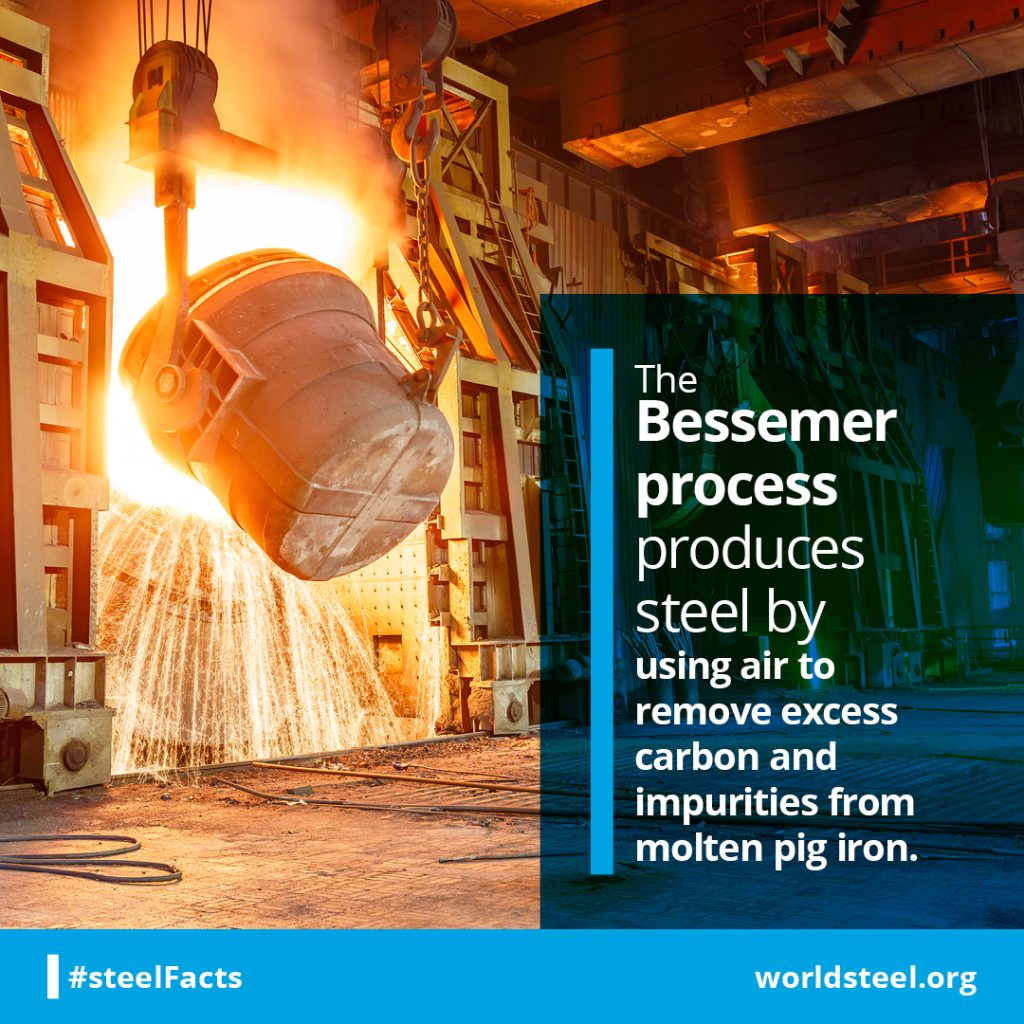
The Bessemer process produces steel by using air to remove excess carbon and impurities from molten pig iron.
下载
复制该事实的链接
下载
复制该事实的链接
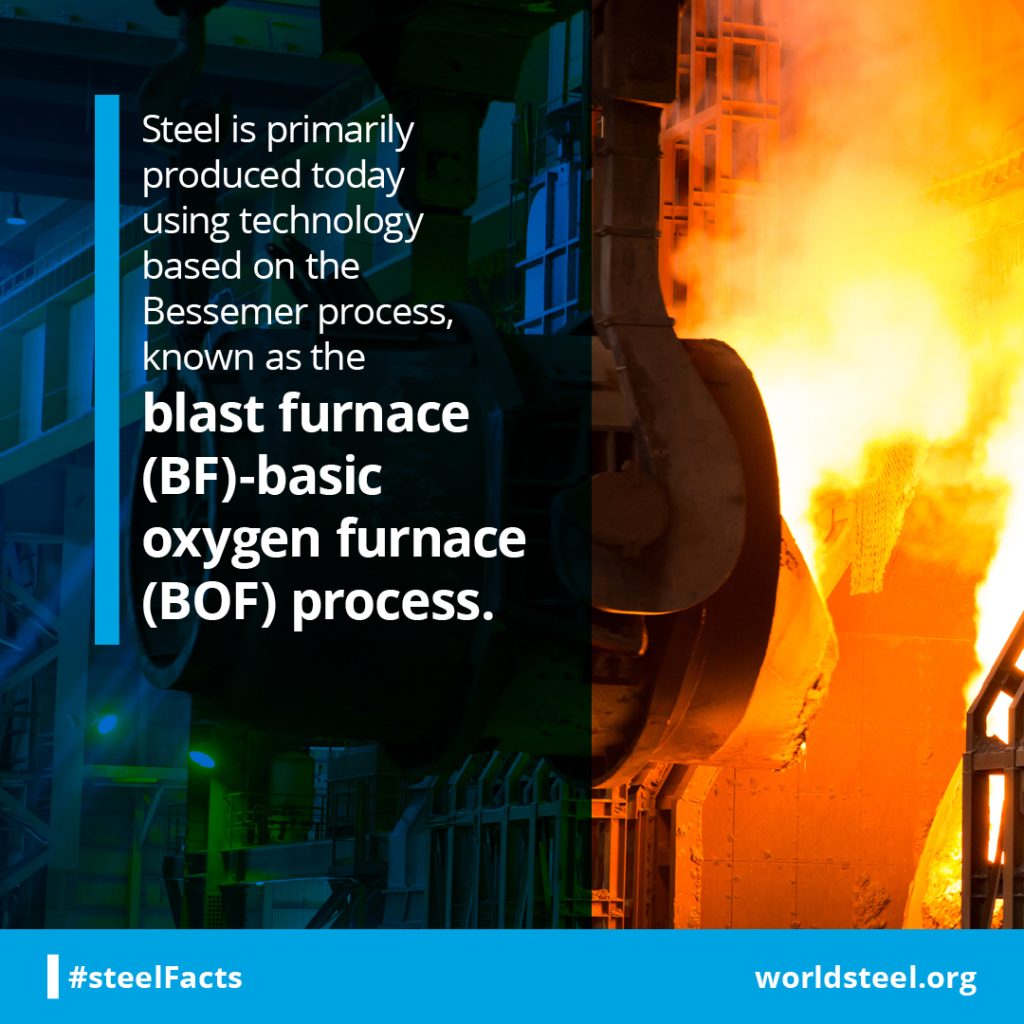
Much of the world's steel is produced using the blast furnace (BF)-basic oxygen furnace (BOF) route, based on the Bessemer process.
下载
复制该事实的链接
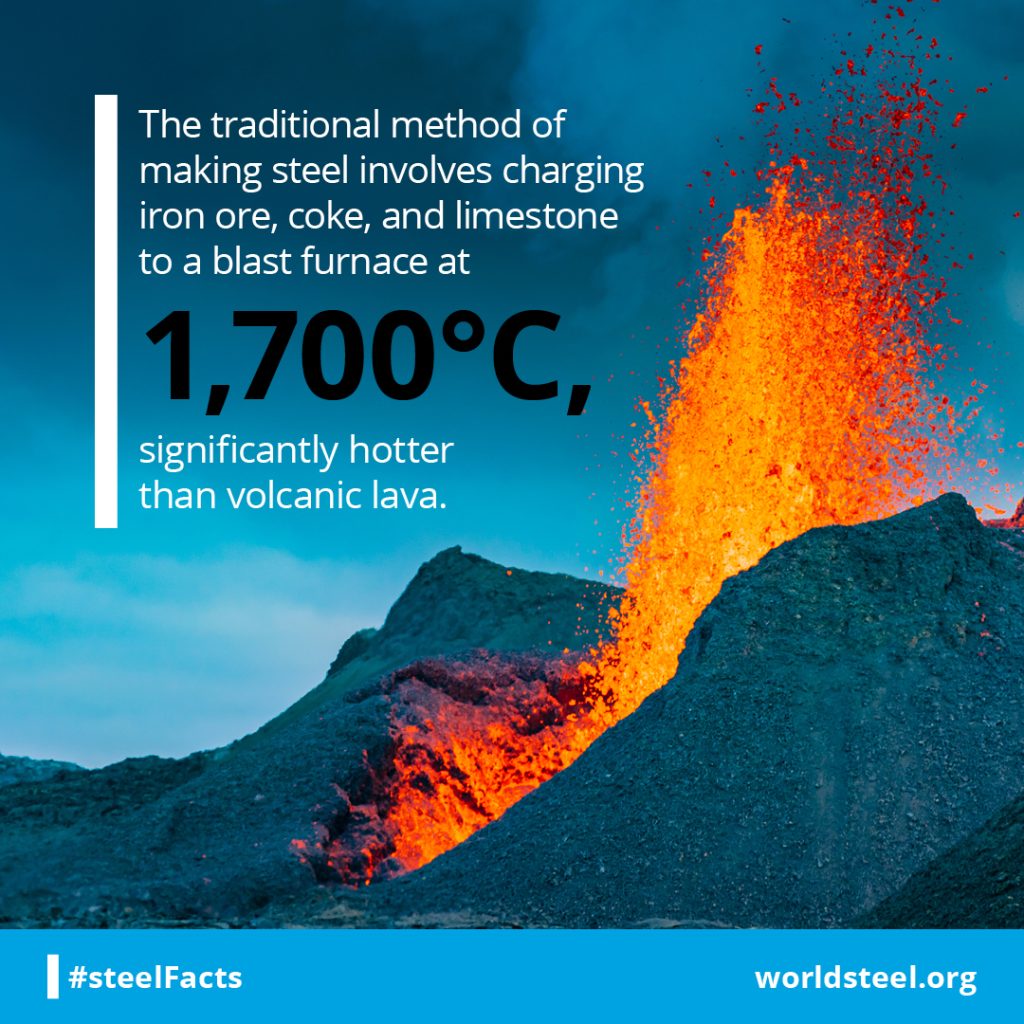
The traditional method of making steel involves charging iron ore, coke, and limestone to a blast furnace at 1,700°C, significantly hotter than volcanic lava.
下载
复制该事实的链接
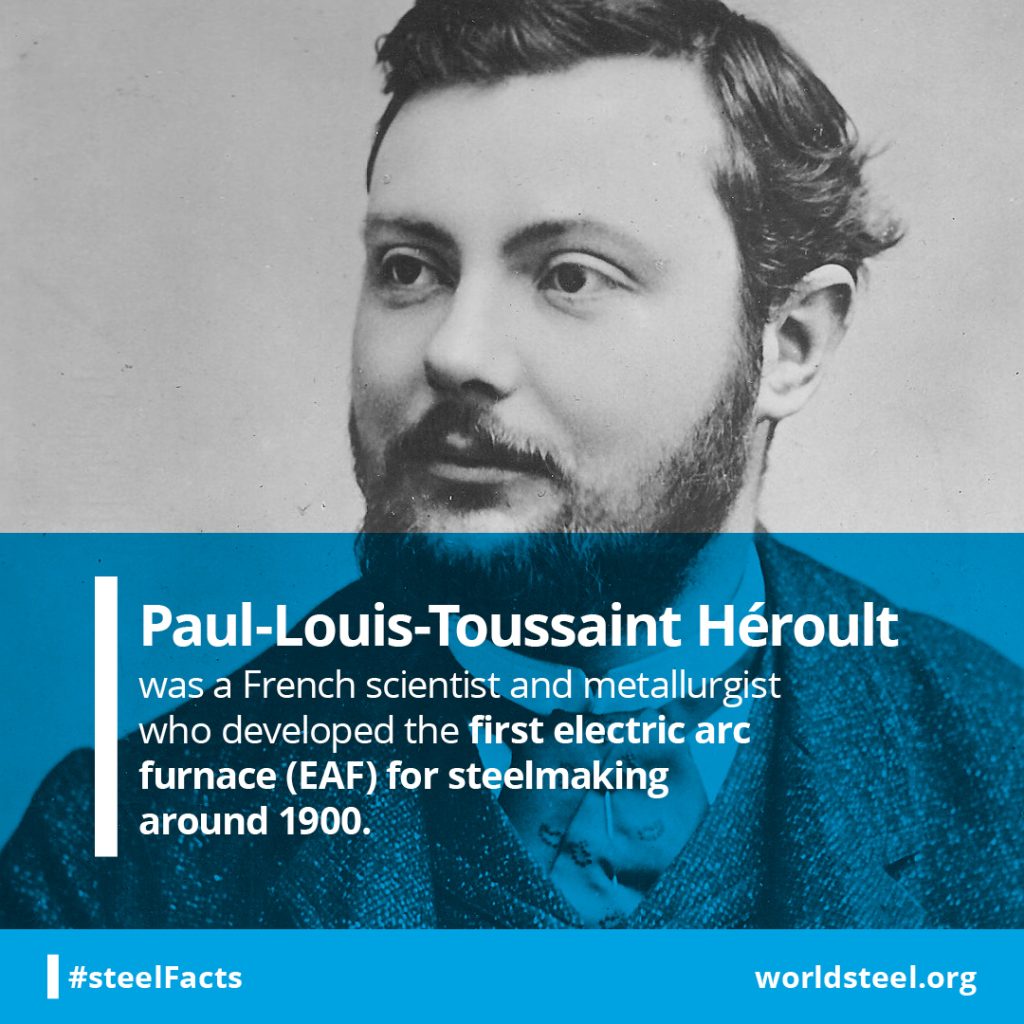
Paul-Louis-Toussaint Héroult was a French scientist and metallurgist who developed the first electric arc furnace (EAF) for steelmaking around 1900.
下载
复制该事实的链接
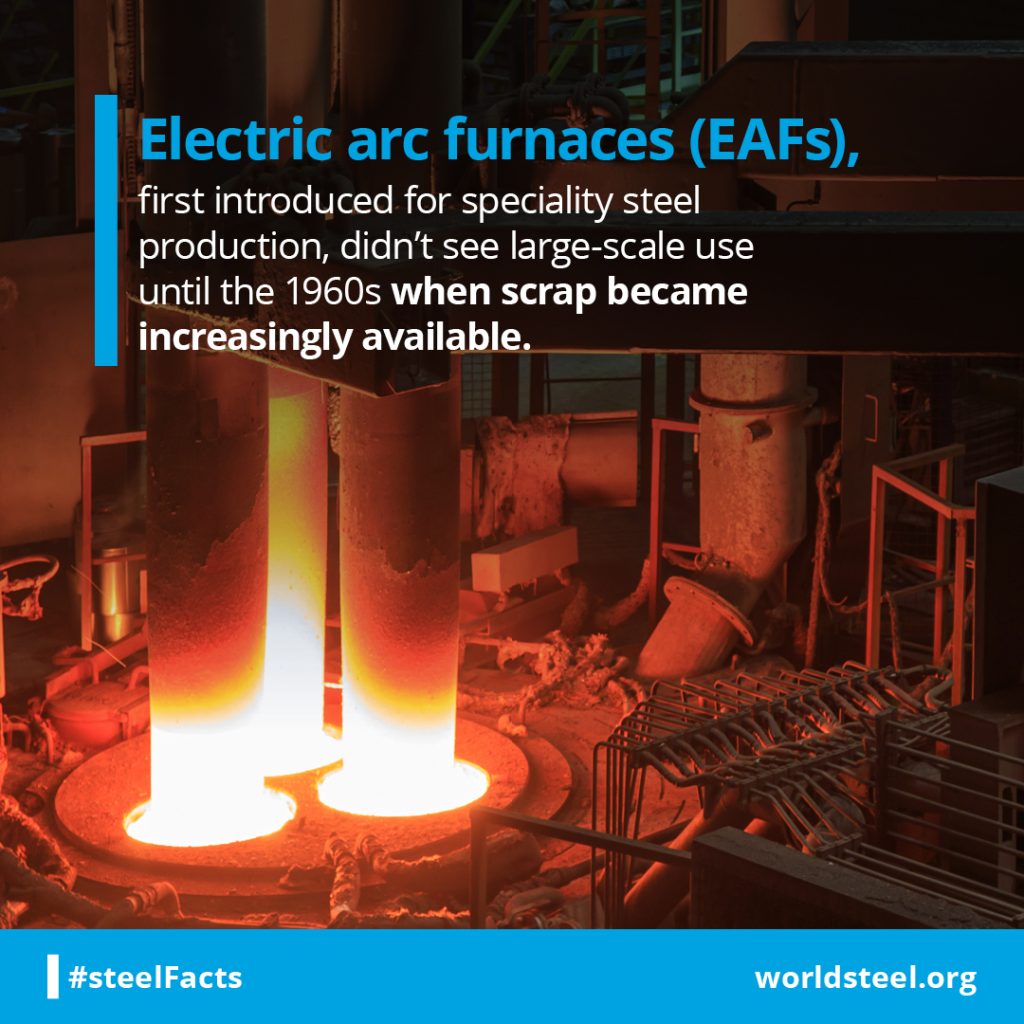
Electric arc furnaces (EAFs), introduced in the late 19th century for specialty steel production, didn’t see large-scale use until the 1960s when scrap became increasingly available.
下载
复制该事实的链接
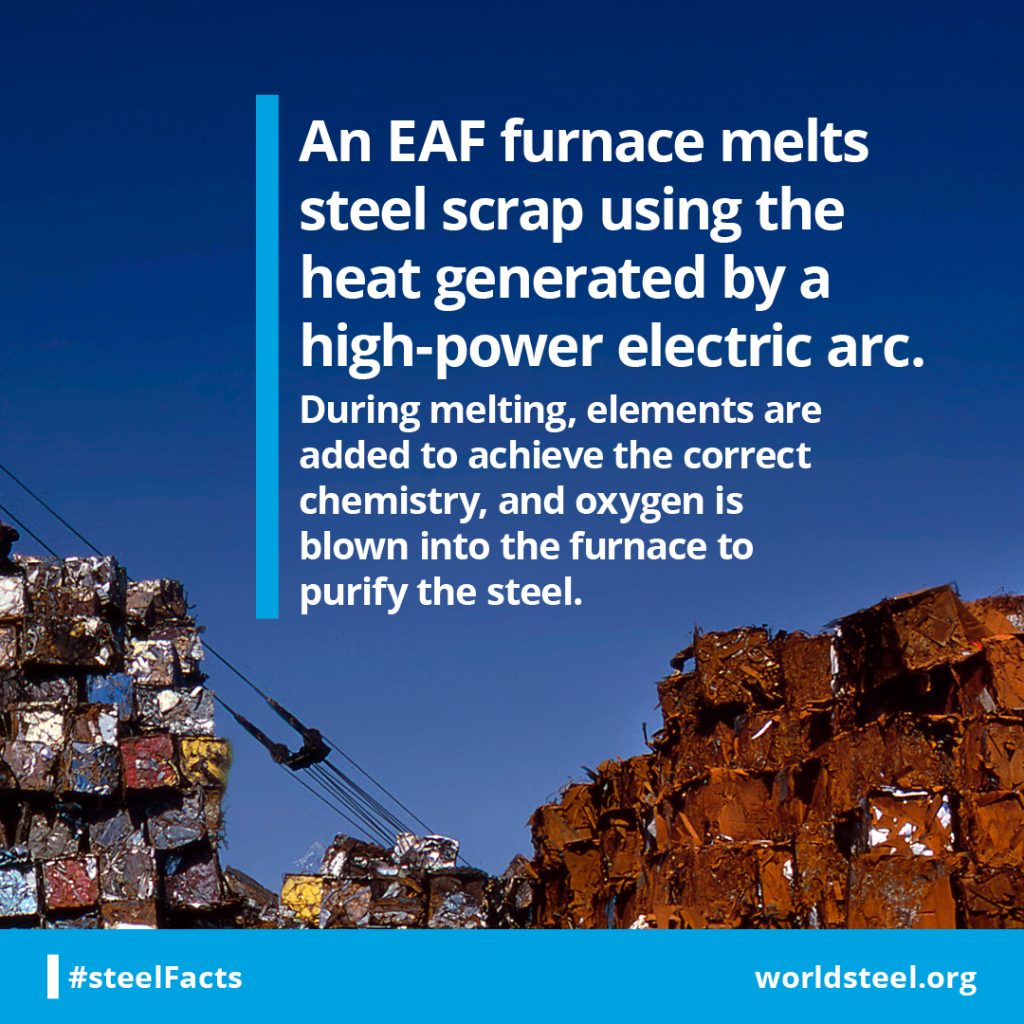
An EAF furnace melts steel scrap using the heat generated by a high-power electric arc. During melting, elements are added to achieve the correct chemistry, and oxygen is blown into the furnace to purify the steel.
下载
复制该事实的链接
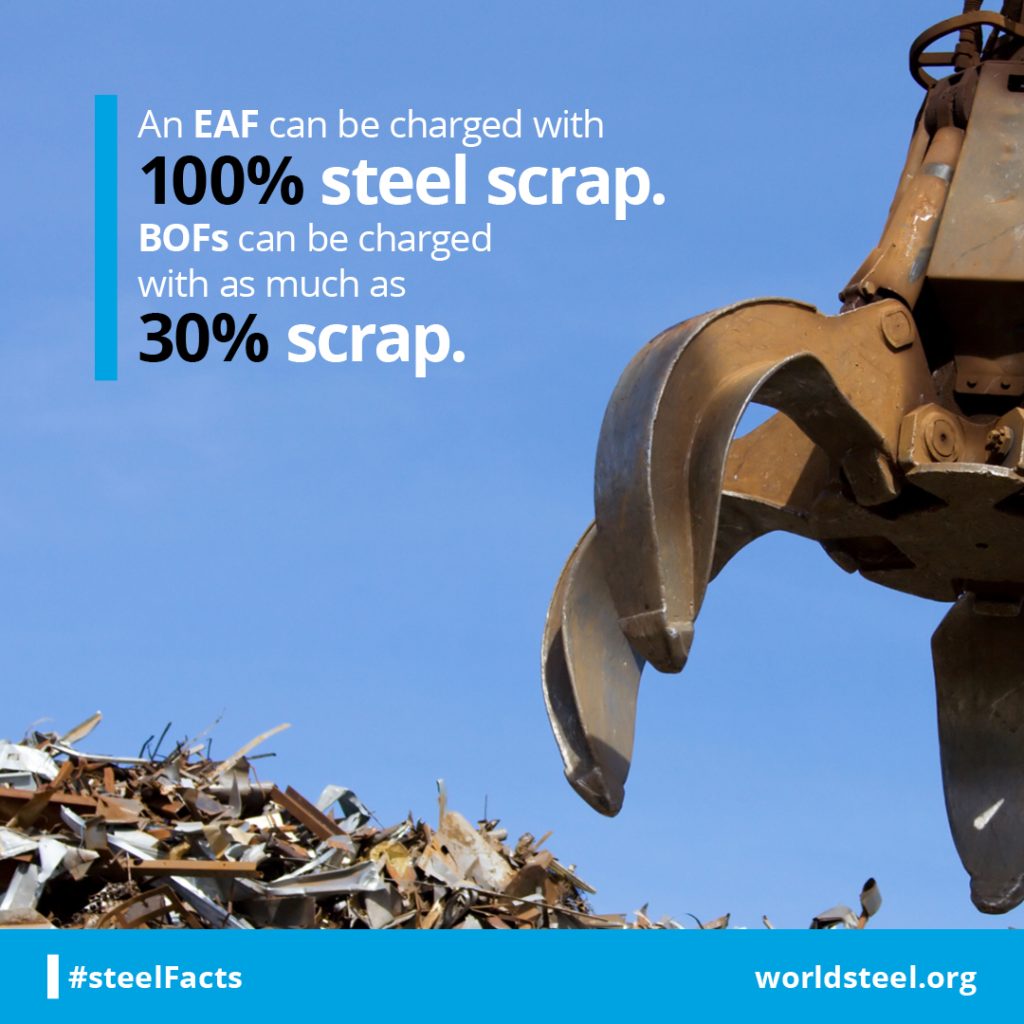
An EAF can be charged with 100% steel scrap. BOFs can be charged with as much as 30% scrap.
下载
复制该事实的链接
下载
复制该事实的链接
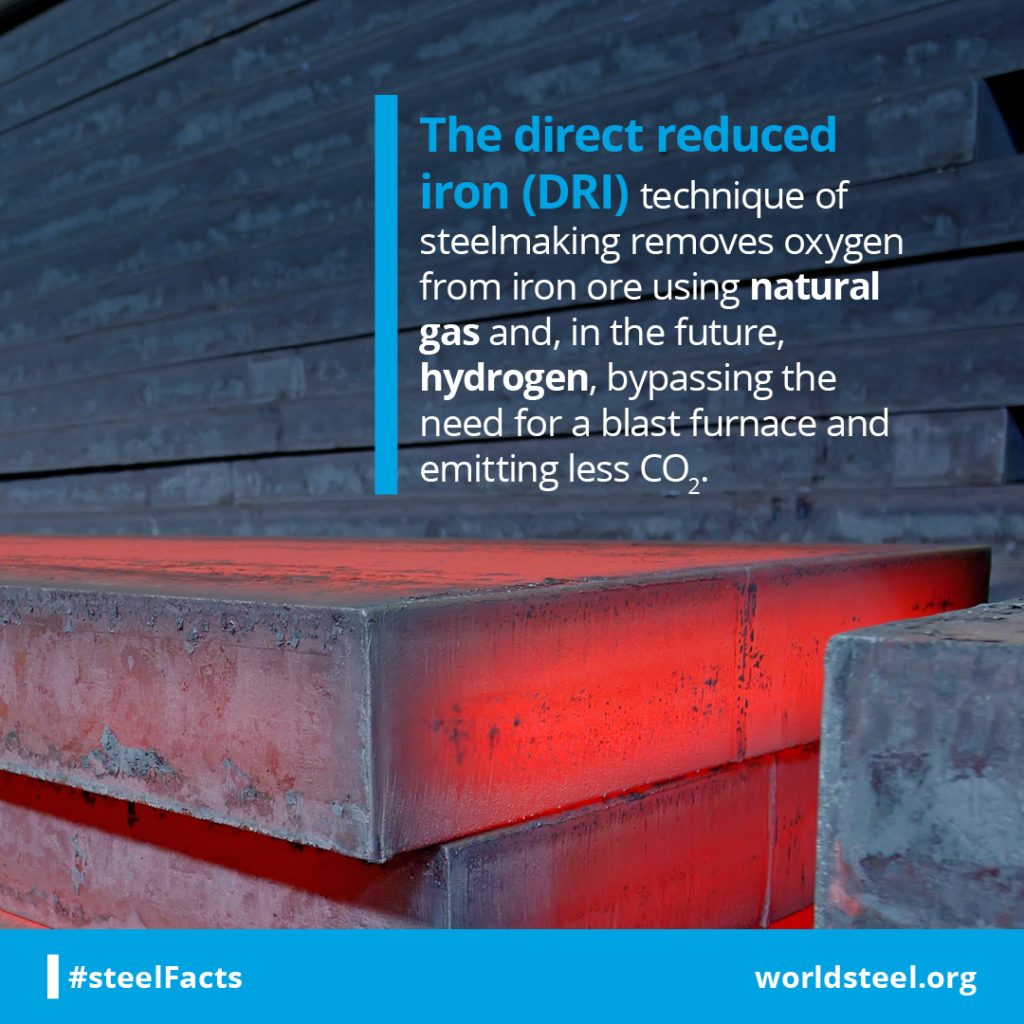
The direct reduced iron (DRI) technique of steelmaking removes oxygen from iron ore using natural gas and, in the future, hydrogen, bypassing the need for a blast furnace and emitting less CO₂.
下载
复制该事实的链接
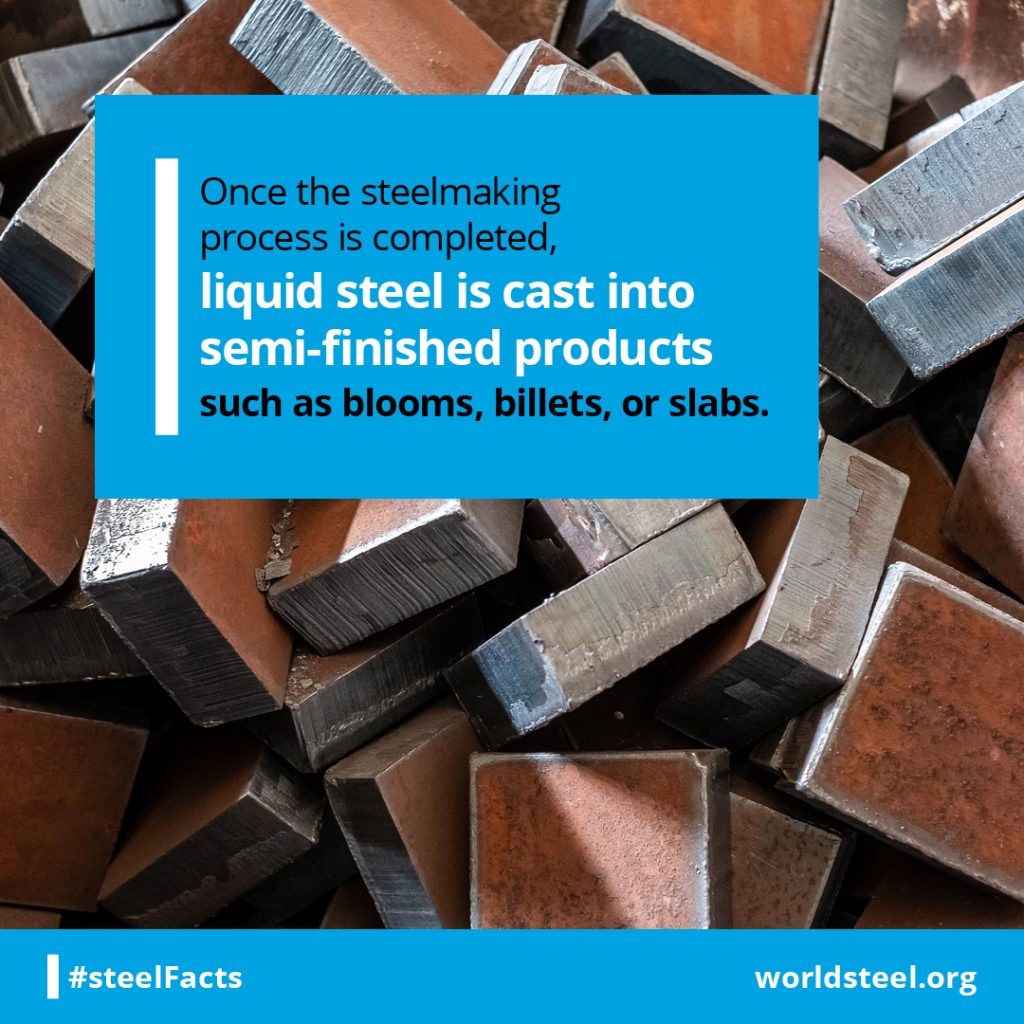
Once the steelmaking process is completed, liquid steel is cast into semi-finished products such as blooms, billets, or slabs.
下载
复制该事实的链接
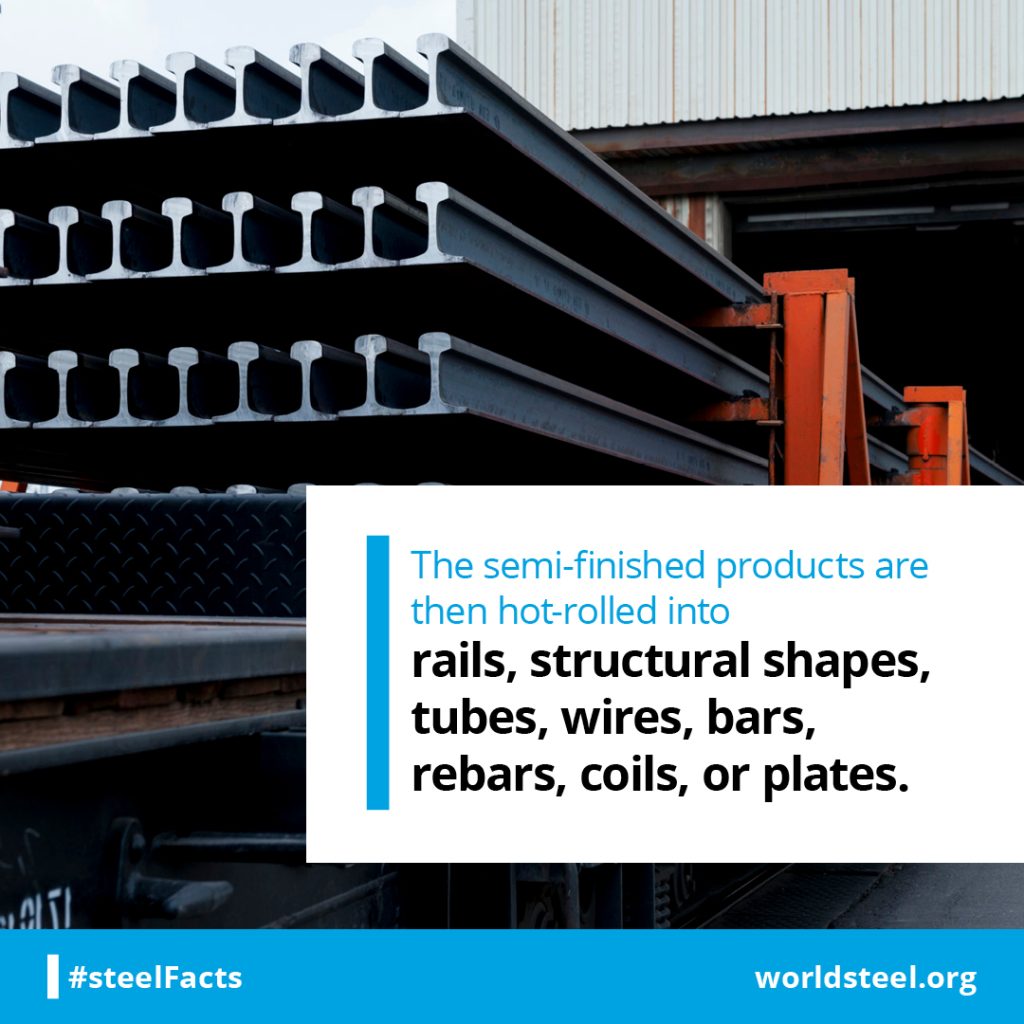
The semi-finished products are then hot-rolled into rails, structural shapes, tubes, wires, bars, rebars, coils, or plates.
下载
复制该事实的链接
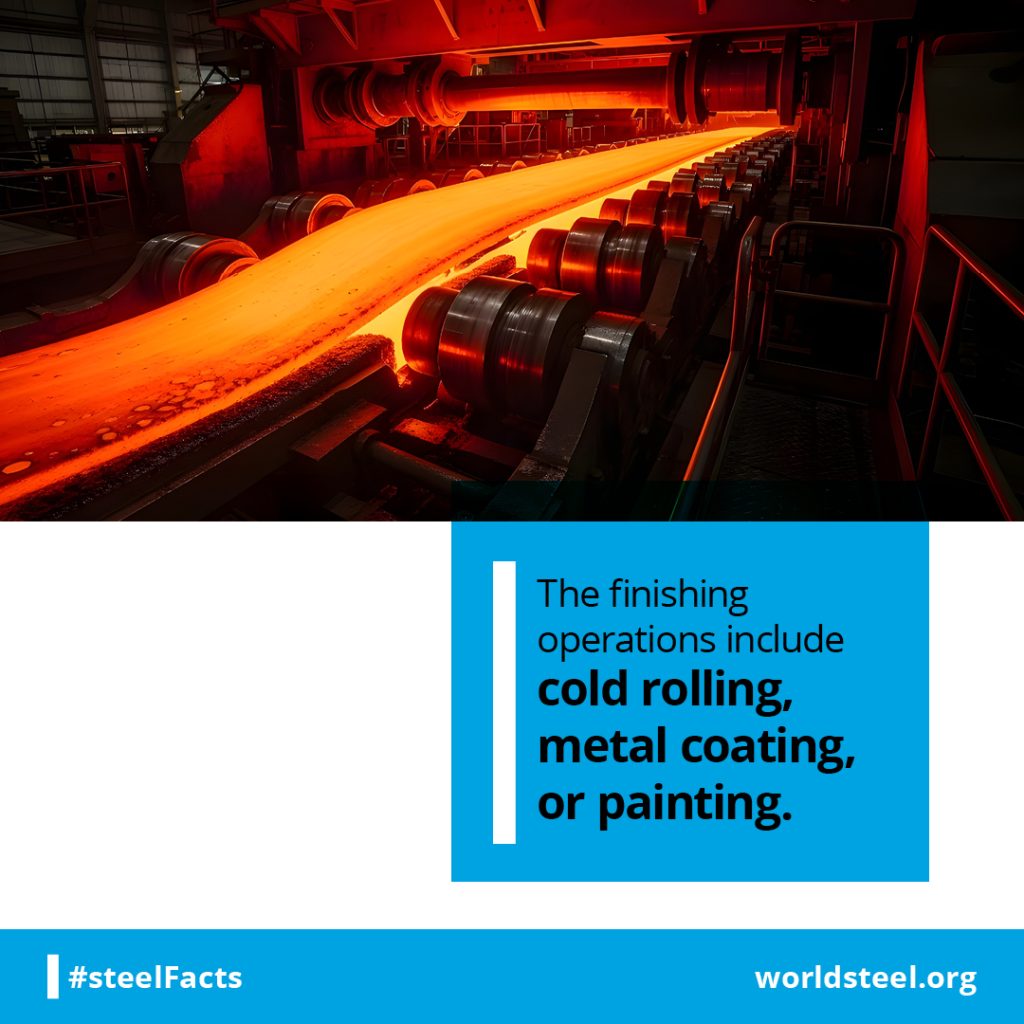
The finishing operations include cold rolling, metal coating, or painting.
下载
复制该事实的链接
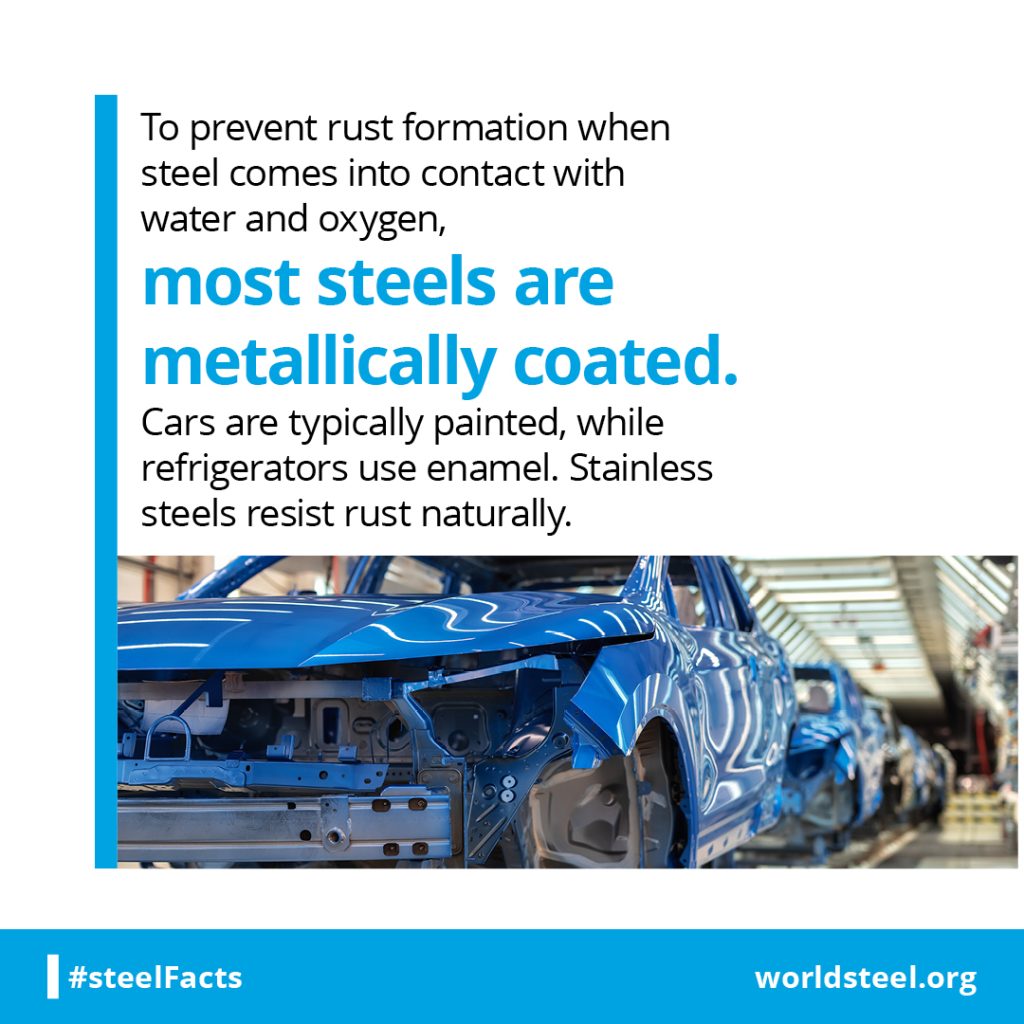
To prevent rust formation when steel comes into contact with water and oxygen, most steels are metallically coated. Cars are typically painted, while refrigerators use enamel. Stainless steels resist rust naturally.
下载
复制该事实的链接
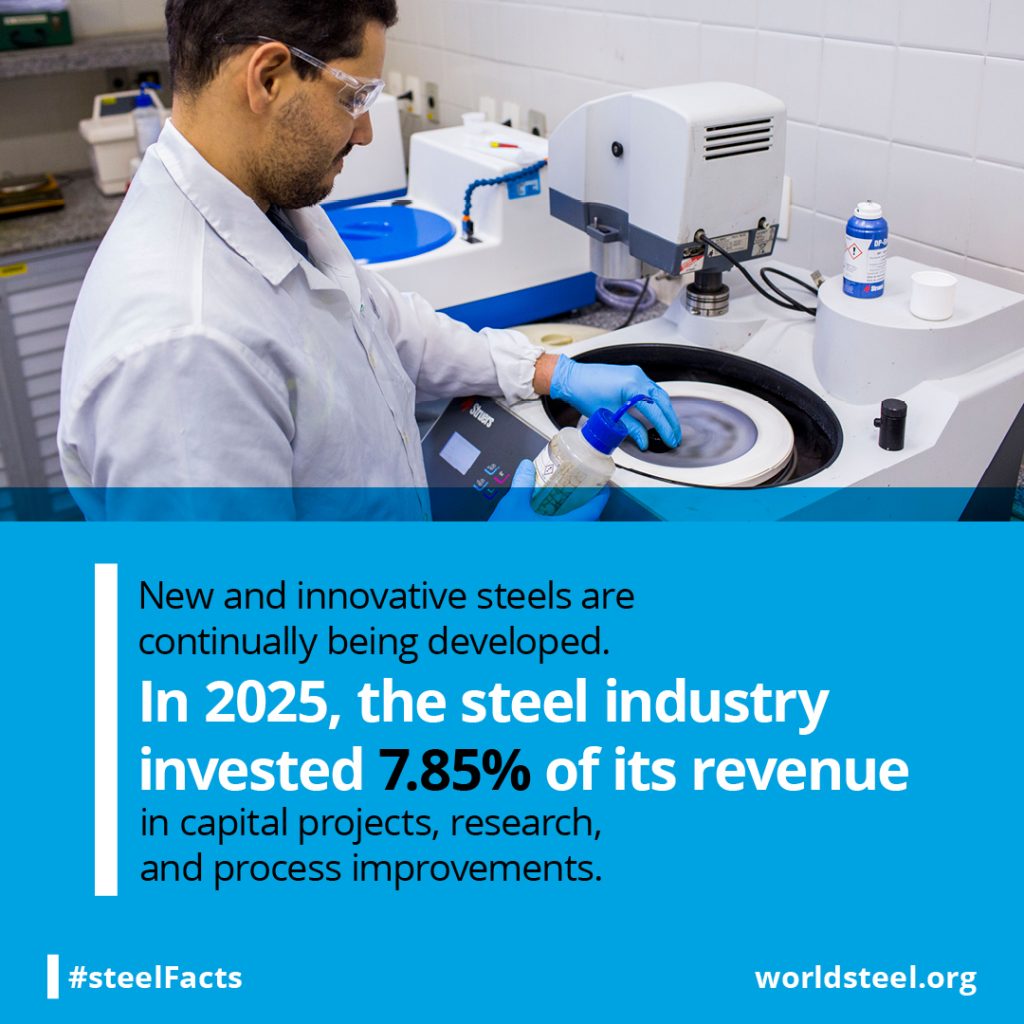
New and innovative steels are continually being developed. In 2025, the steel industry invested 7.85% of its revenue in capital projects, research, and process improvements.
下载
复制该事实的链接
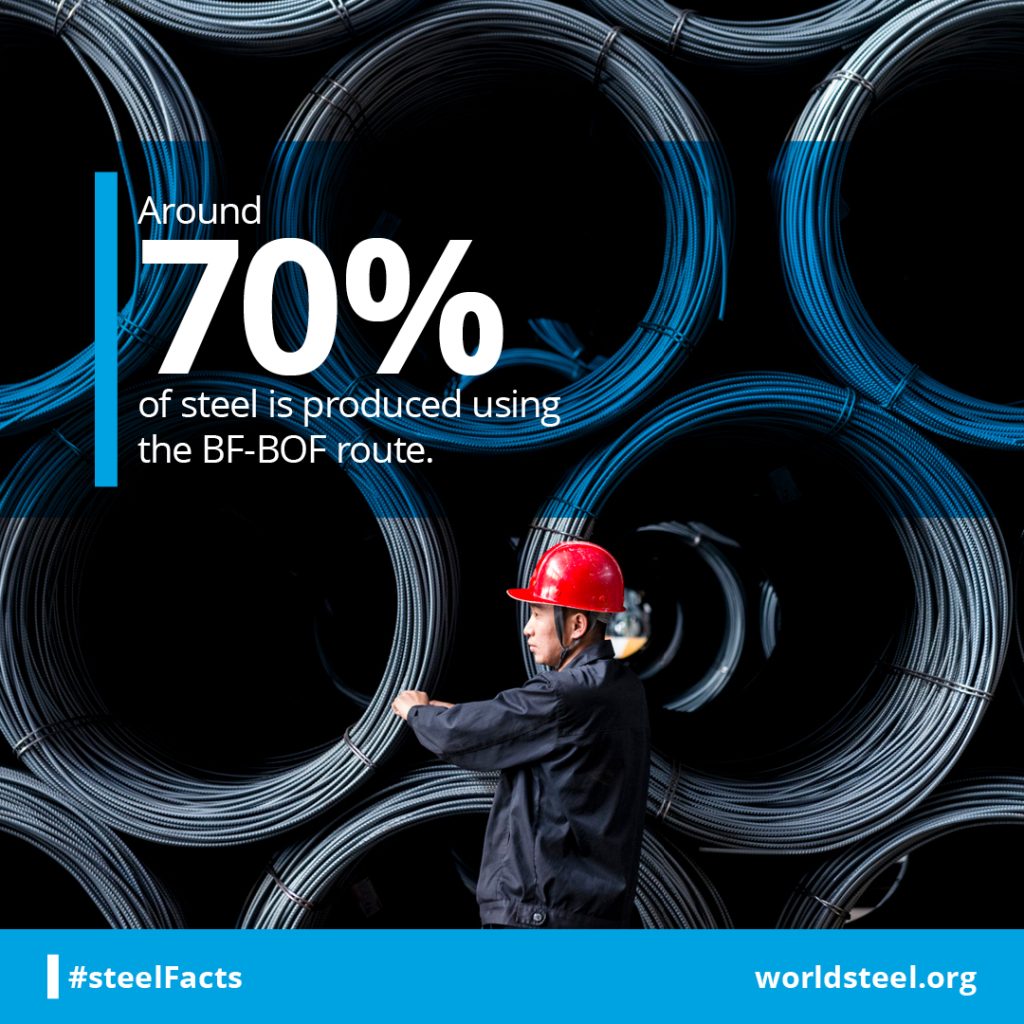
Around 70% of steel is produced using the BF-BOF route.
下载
复制该事实的链接
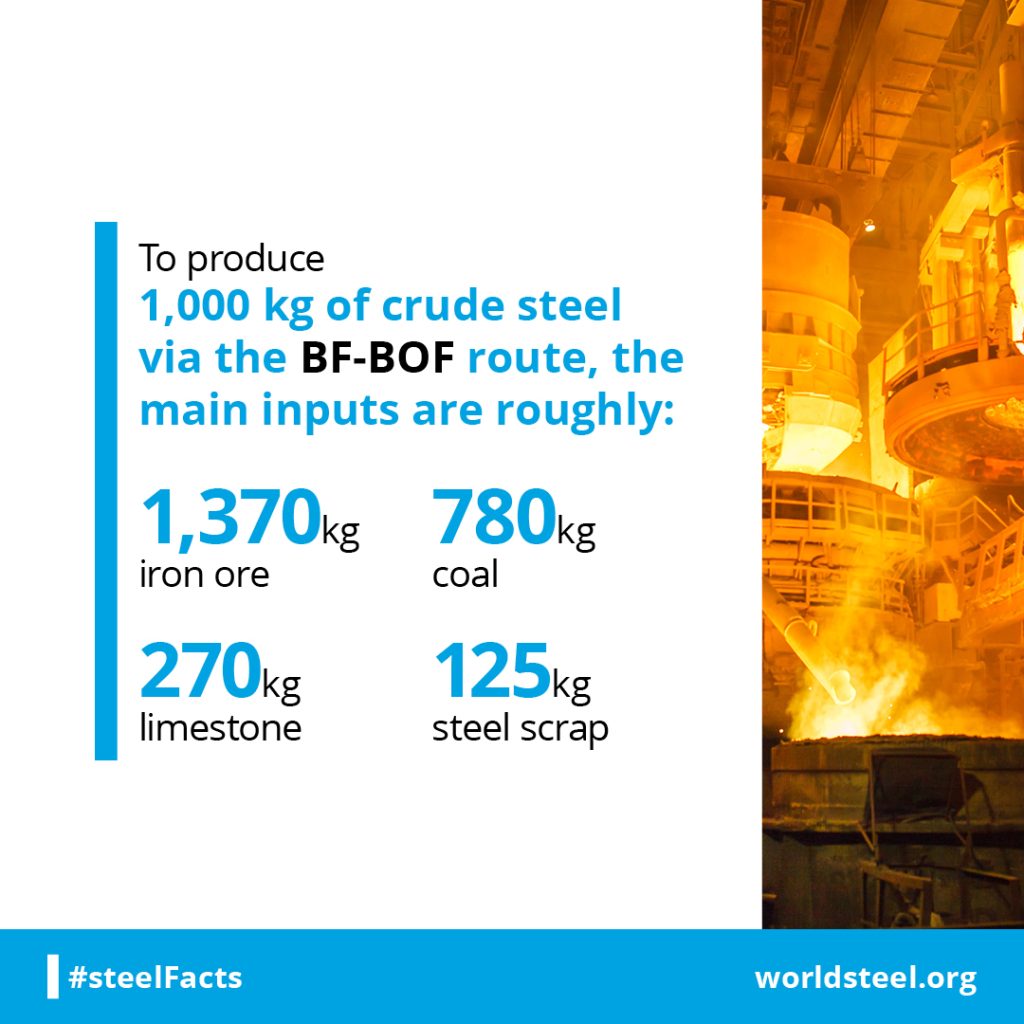
To produce 1,000 kg of crude steel via the BF-BOF route, the main inputs are roughly 1,370 kg iron ore, 780 kg coal, 270 kg limestone, and 125 kg steel scrap.
下载
复制该事实的链接
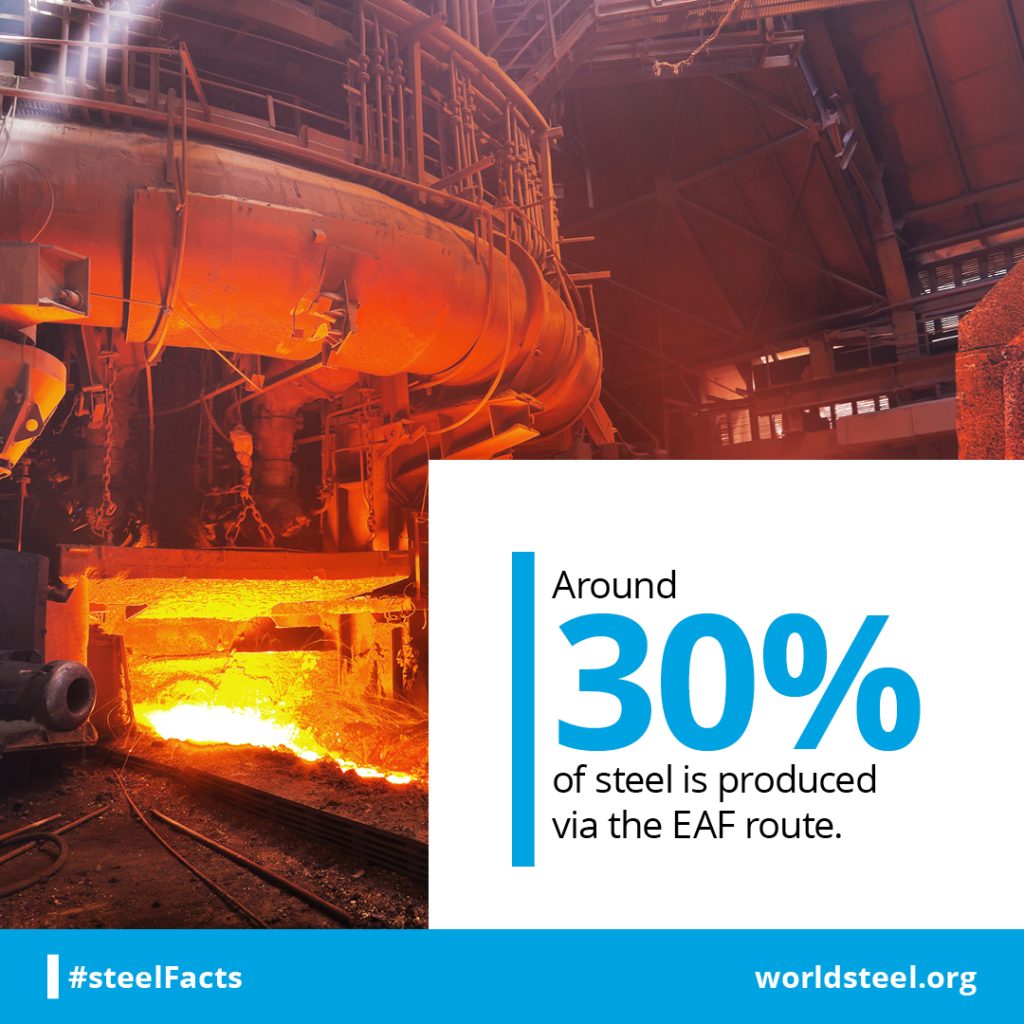
Around 30% of steel is produced via the EAF route.
下载
复制该事实的链接
下载
复制该事实的链接
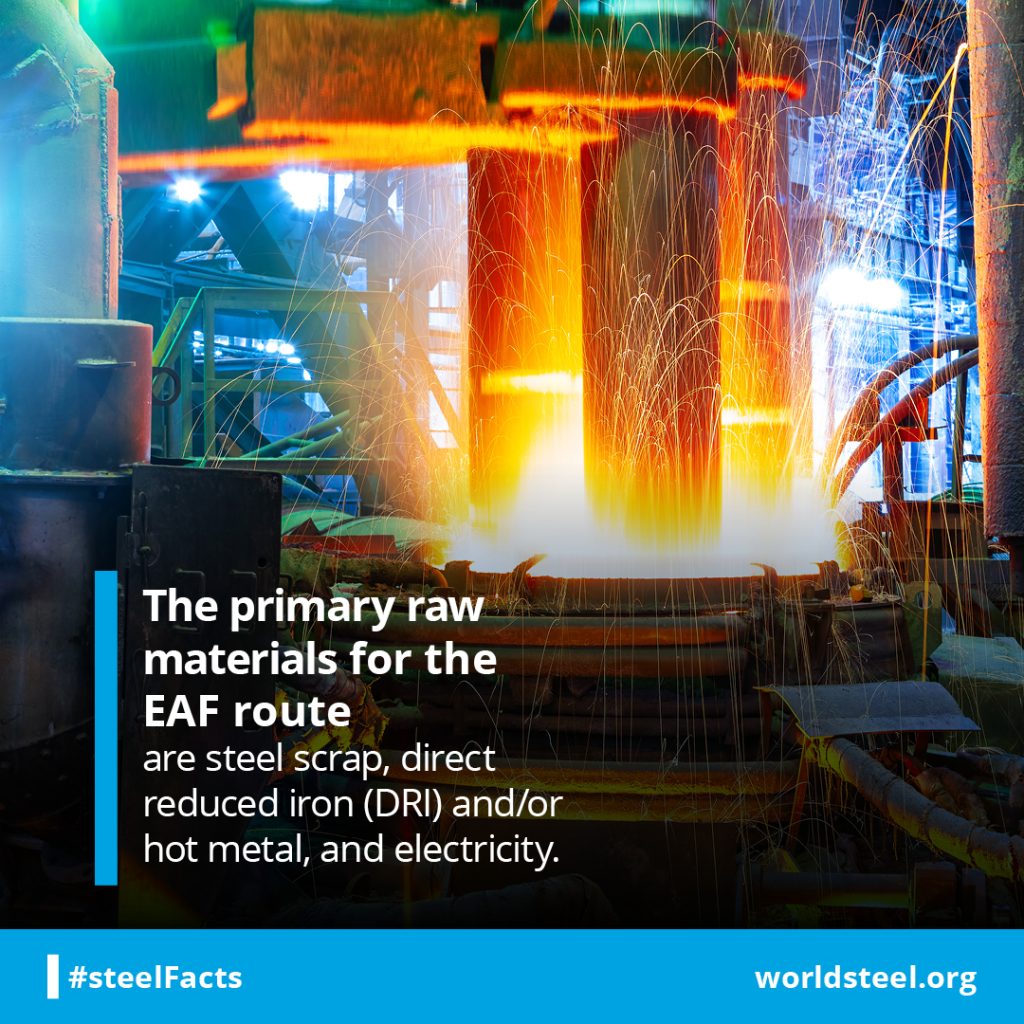
The primary raw materials for the EAF route are steel scrap, direct reduced iron (DRI) and/or hot metal, and electricity.
下载
复制该事实的链接
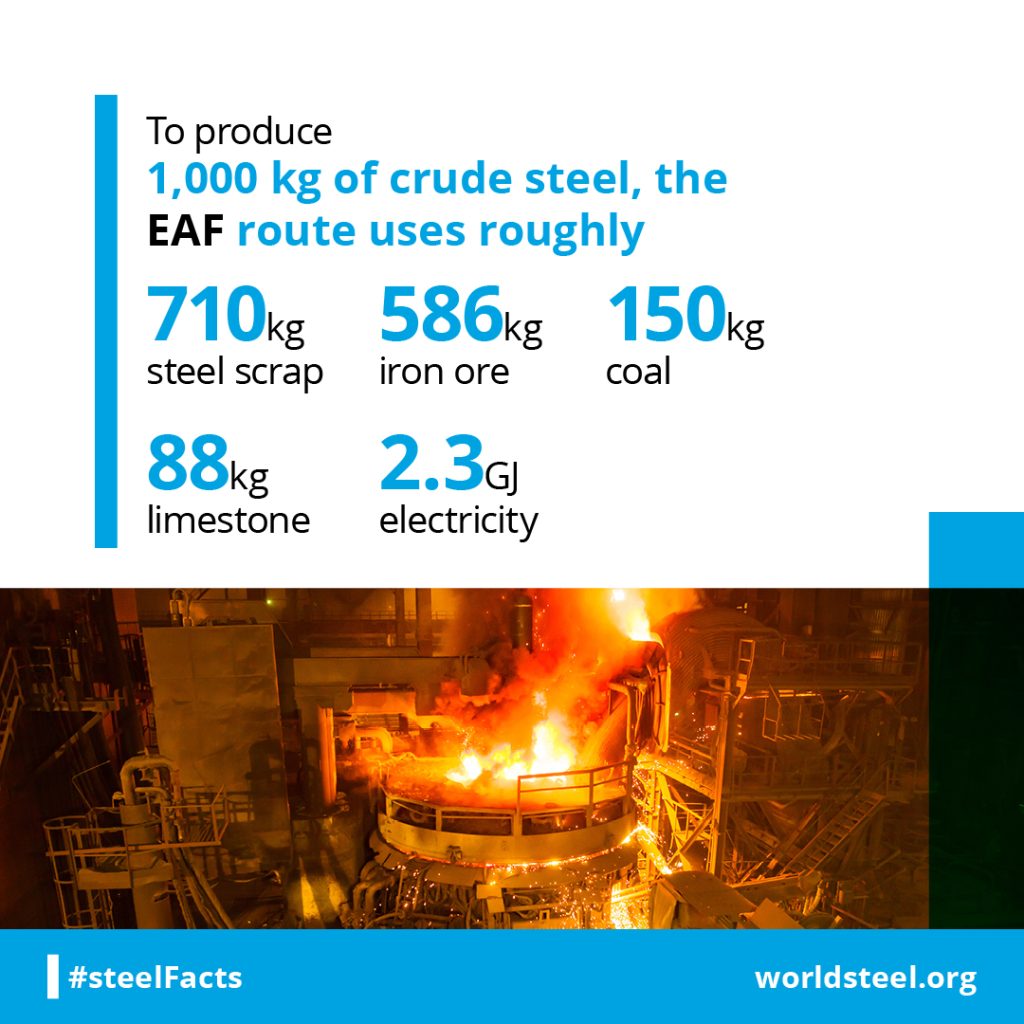
To produce 1,000 kg of crude steel, the EAF route uses roughly 710 kg steel scrap, 586 kg iron ore, 150 kg coal, 88 kg limestone, and 2.3 GJ electricity.
下载
复制该事实的链接
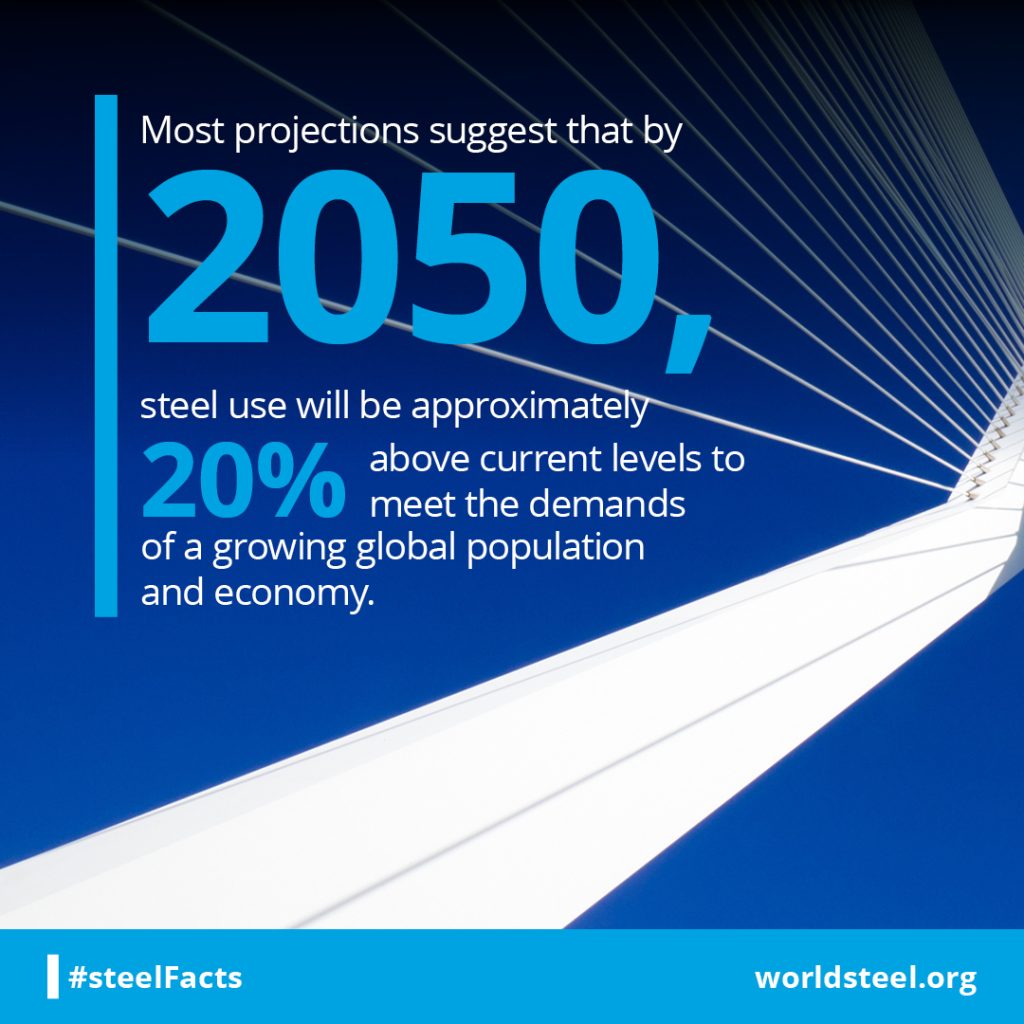
Most projections suggest that by 2050, steel use will be approximately 20% above current levels to meet the demands of a growing global population and economy.
下载
复制该事实的链接
Steel underpins modern society. It is essential for buildings, infrastructure, transport, energy systems and countless everyday products, while enabling economic development and the transition to a lower-emissions future.
下载
复制该事实的链接
Our priority is to explain what steel is, how it is made, and why continued innovation in steel grades, technologies, production routes, lower-emissions steelmaking and applications is essential for society.
Safety and health 2026
下载
复制该事实的链接
下载
复制该事实的链接
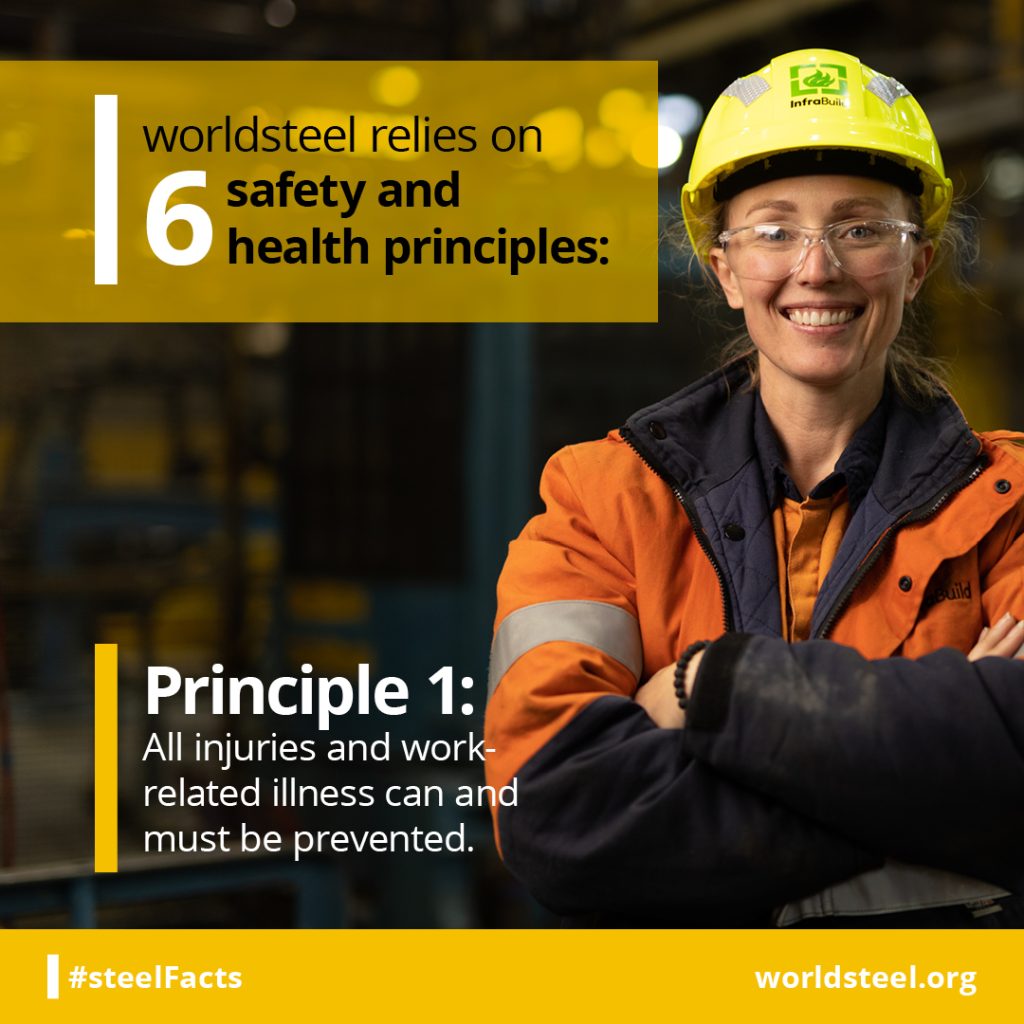
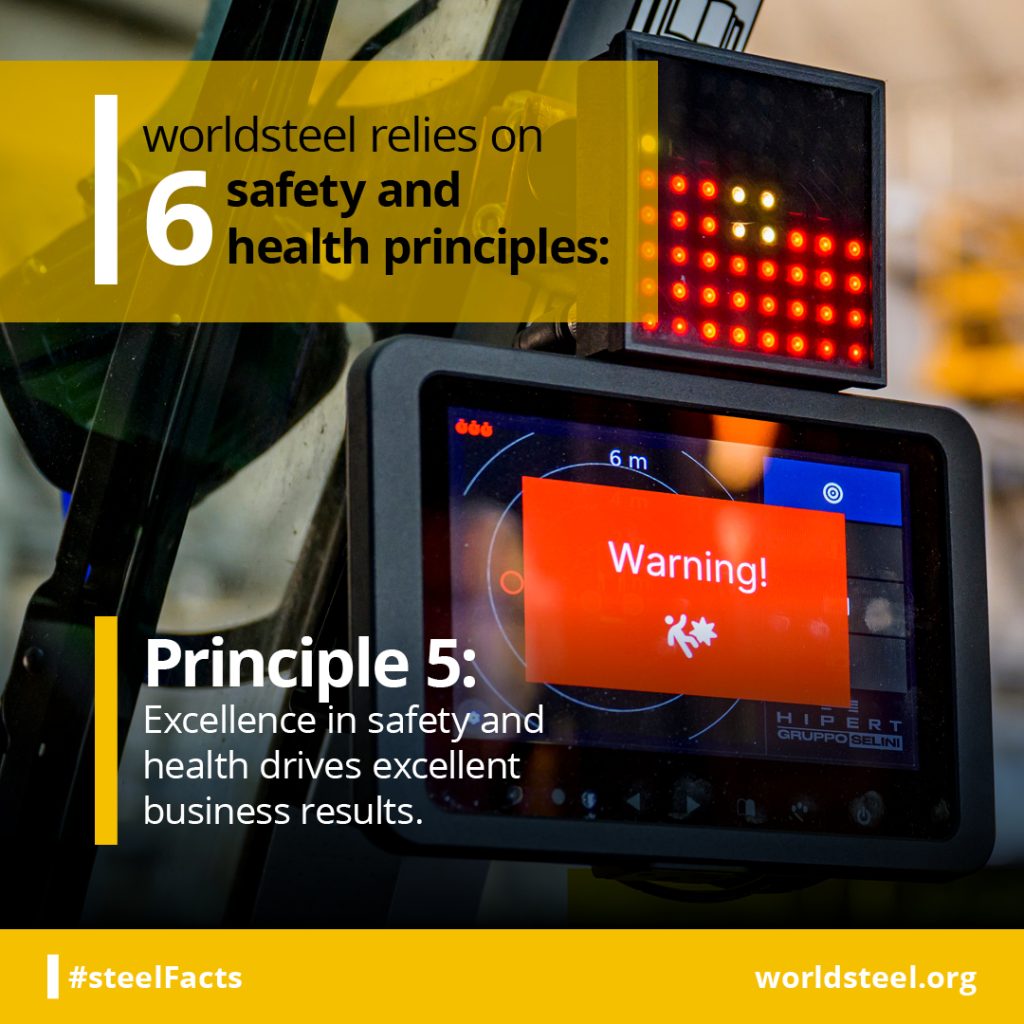
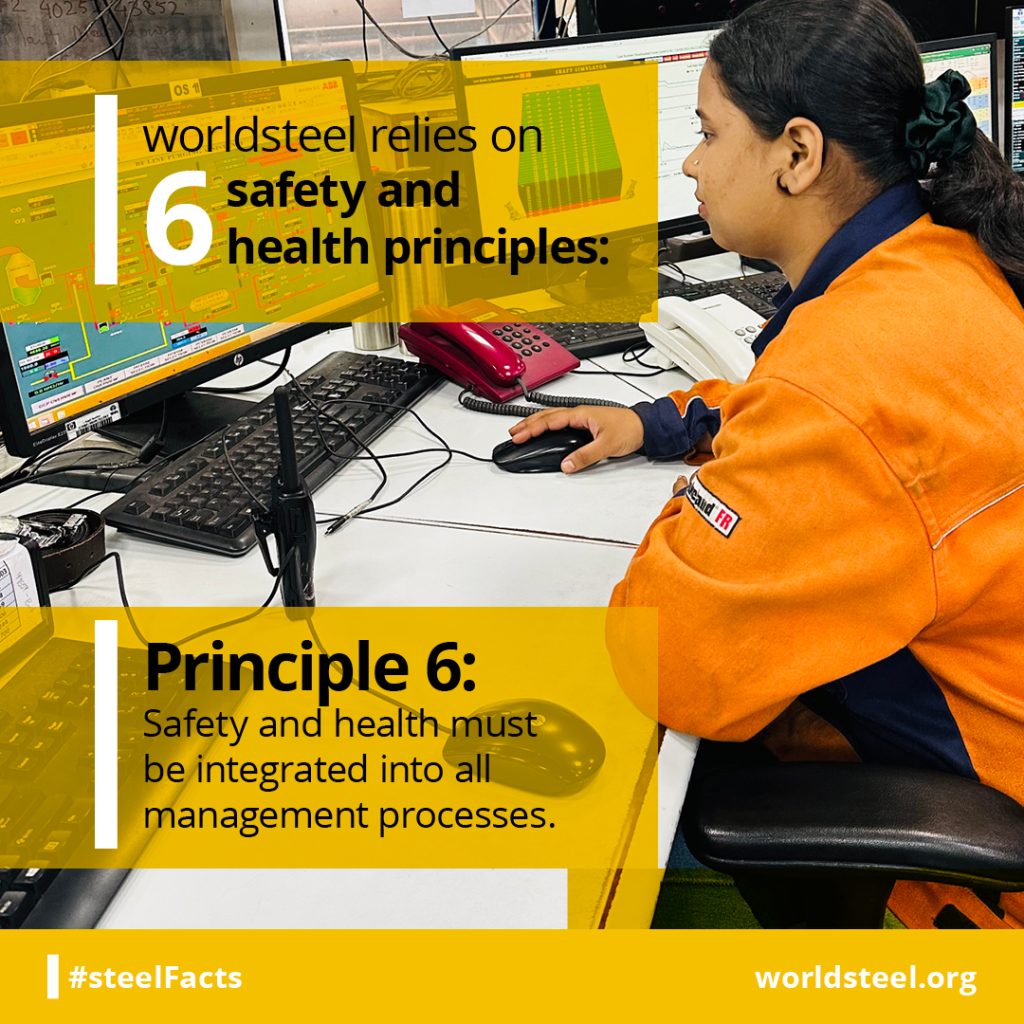
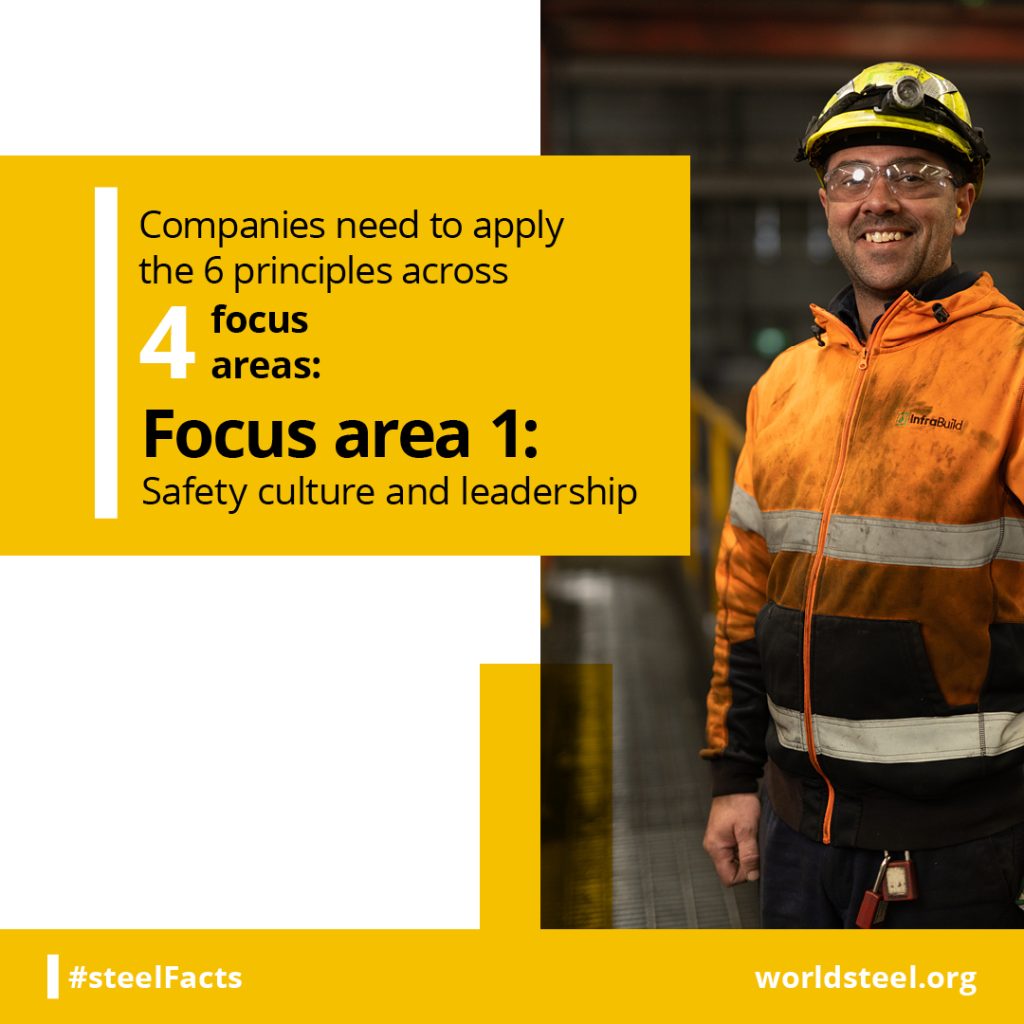
The steel industry is committed to the goal of achieving an injury-free and healthy workplace for all workers, both employees and contractors. worldsteel relies on 6 safety and health principles. All injuries and work-related illness can and must be…
下载
复制该事实的链接
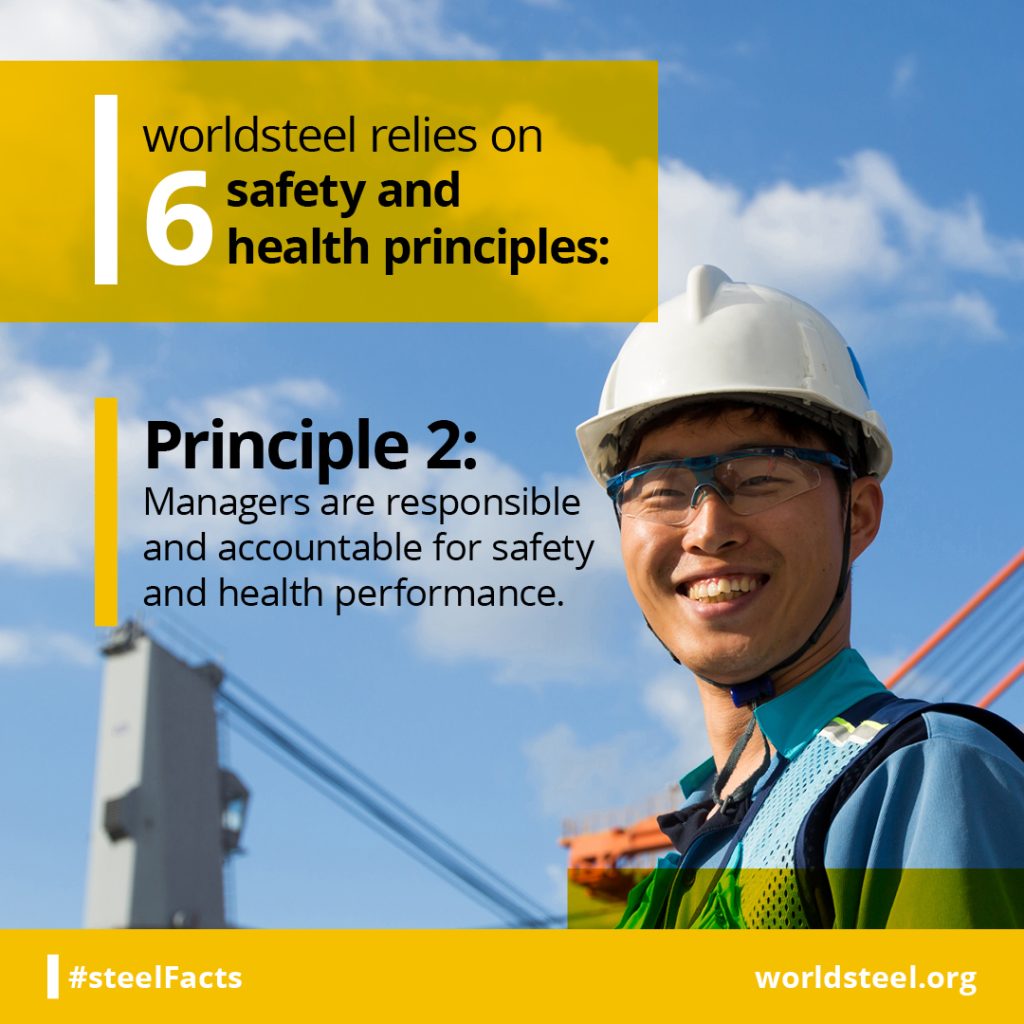
Managers are responsible and accountable for safety and health performance.
下载
复制该事实的链接
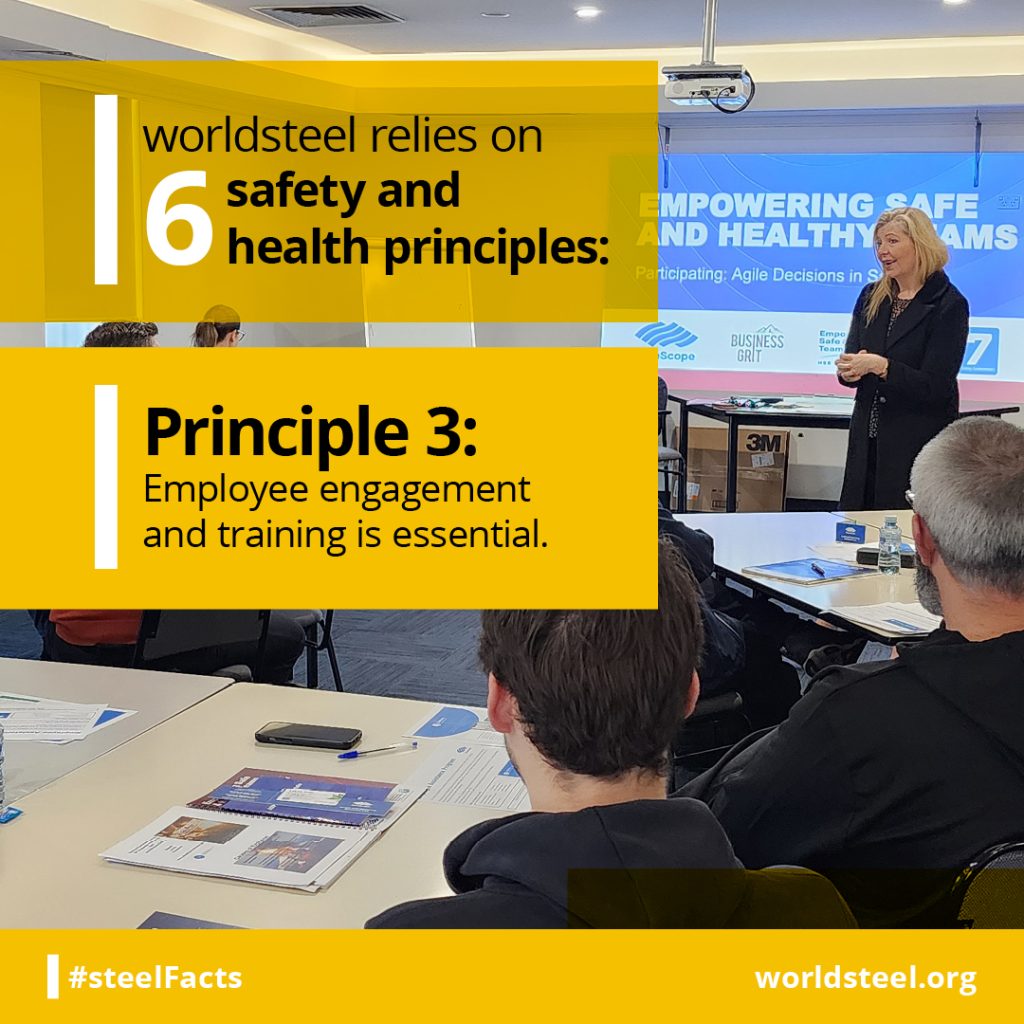
Employee engagement and training is essential.
下载
复制该事实的链接
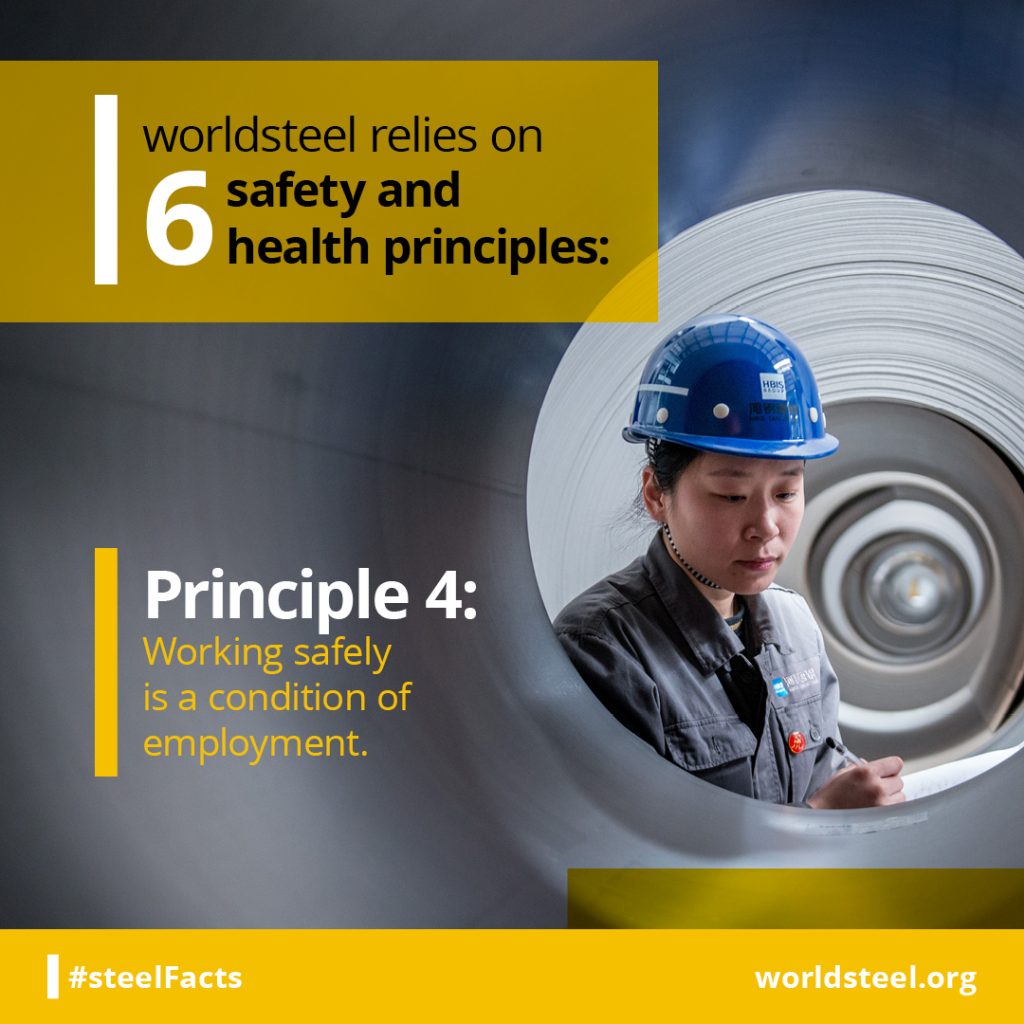
Working safely is a condition of employment.
下载
复制该事实的链接
Excellence in safety and health drives excellent business results.
下载
复制该事实的链接
Safety and health must be integrated into all management processes.
下载
复制该事实的链接
safety culture and leadership
下载
复制该事实的链接
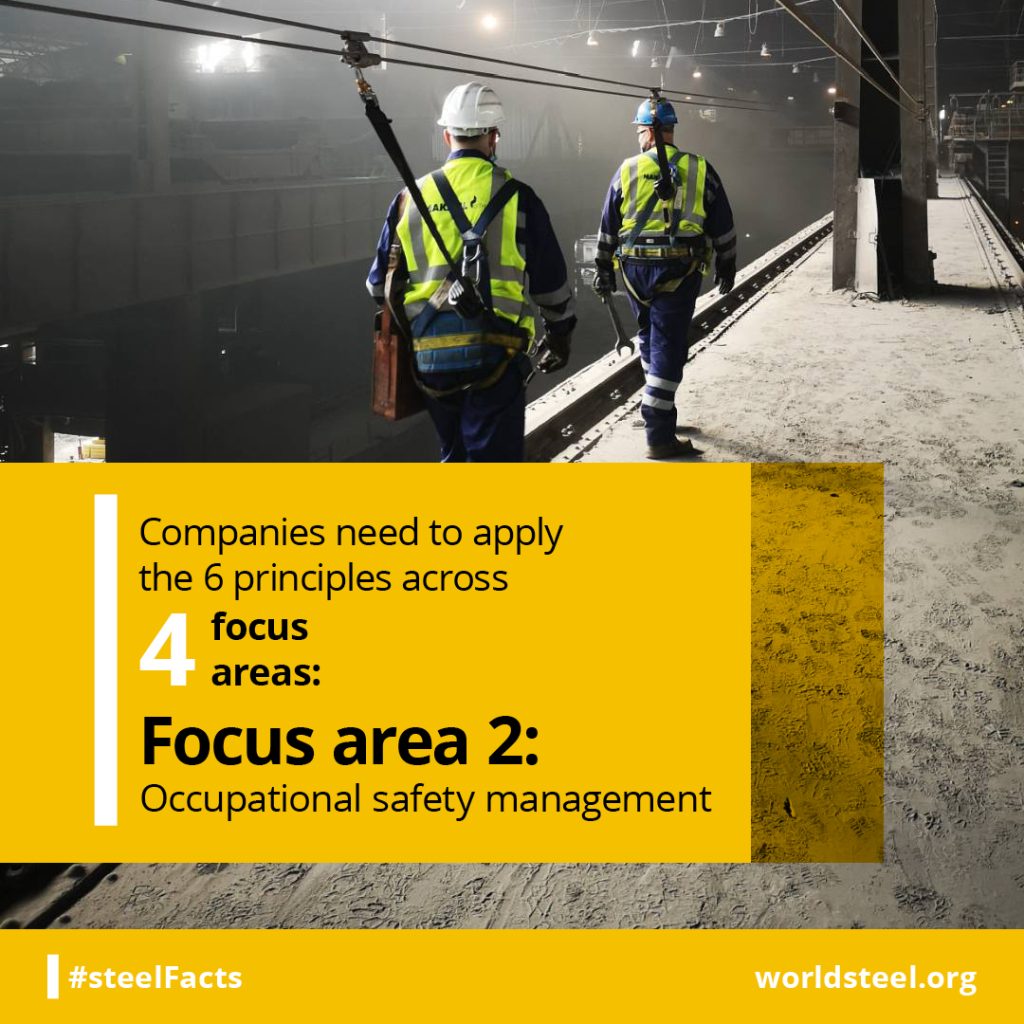
occupational safety management
下载
复制该事实的链接
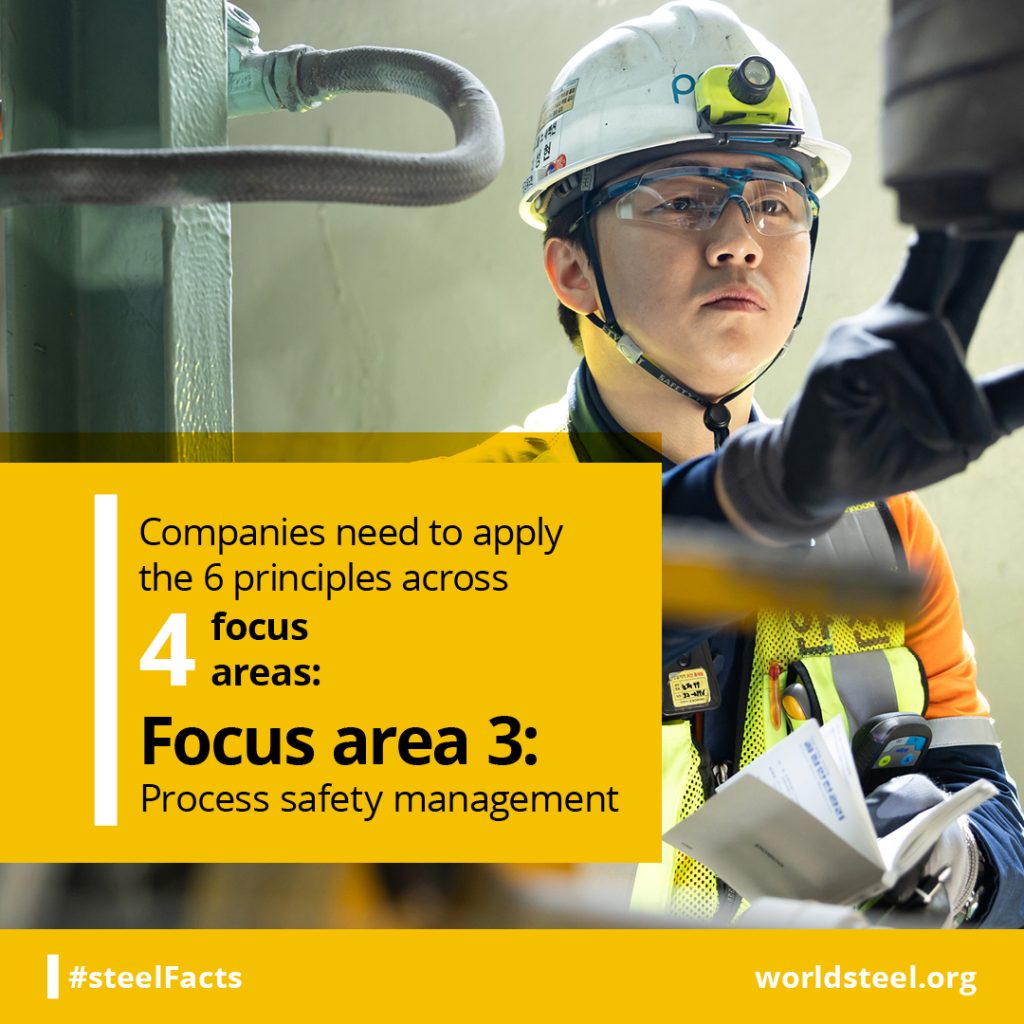
process safety management
下载
复制该事实的链接
下载
复制该事实的链接
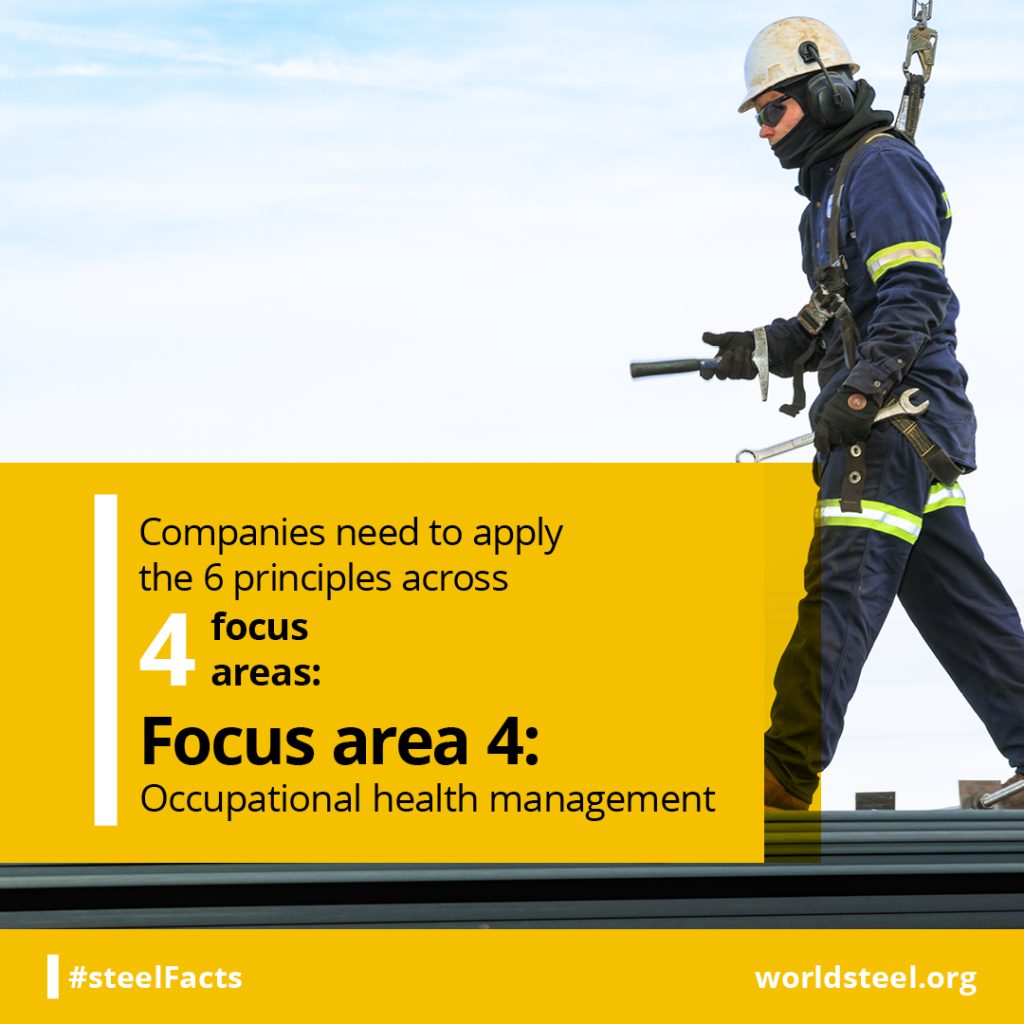
occupational health management
下载
复制该事实的链接
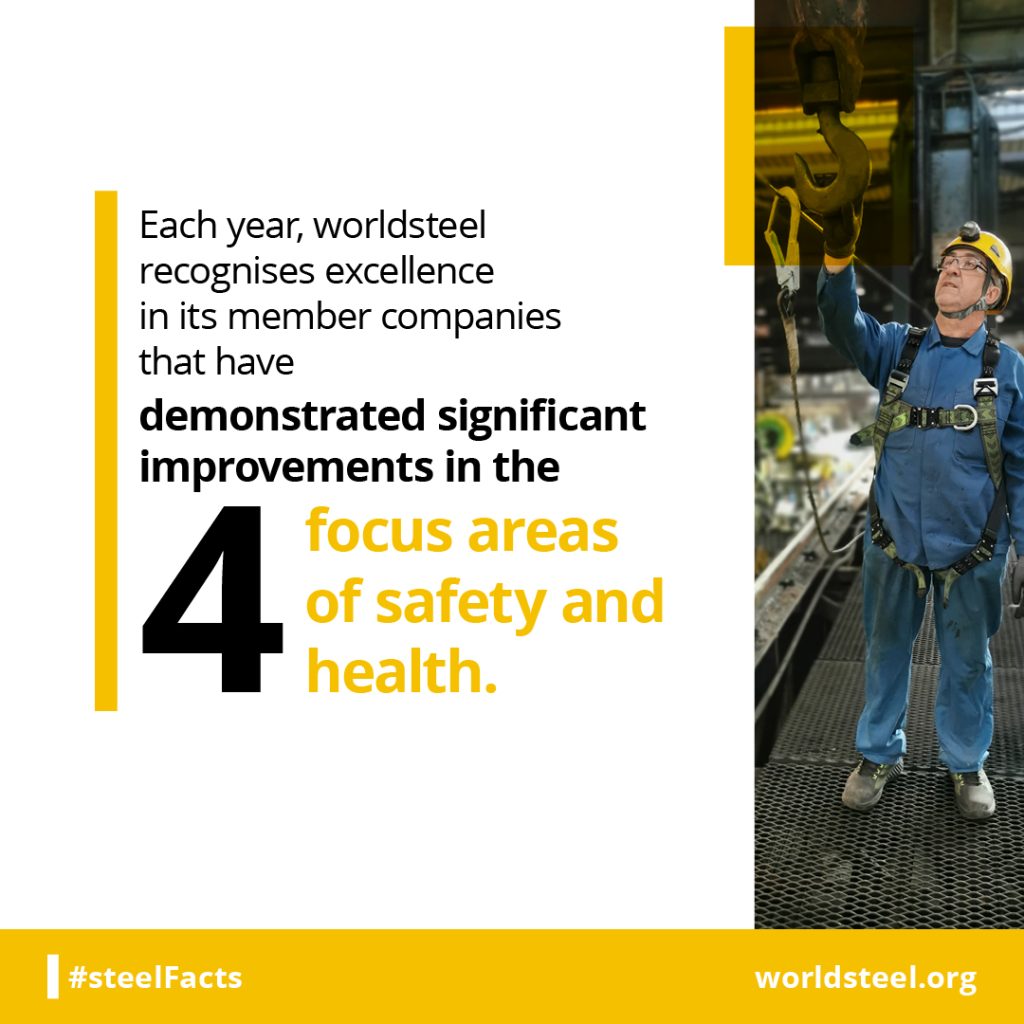
Each year, worldsteel recognises excellence in its member companies that have demonstrated significant improvements in the 4 focus areas of safety and health.
下载
复制该事实的链接
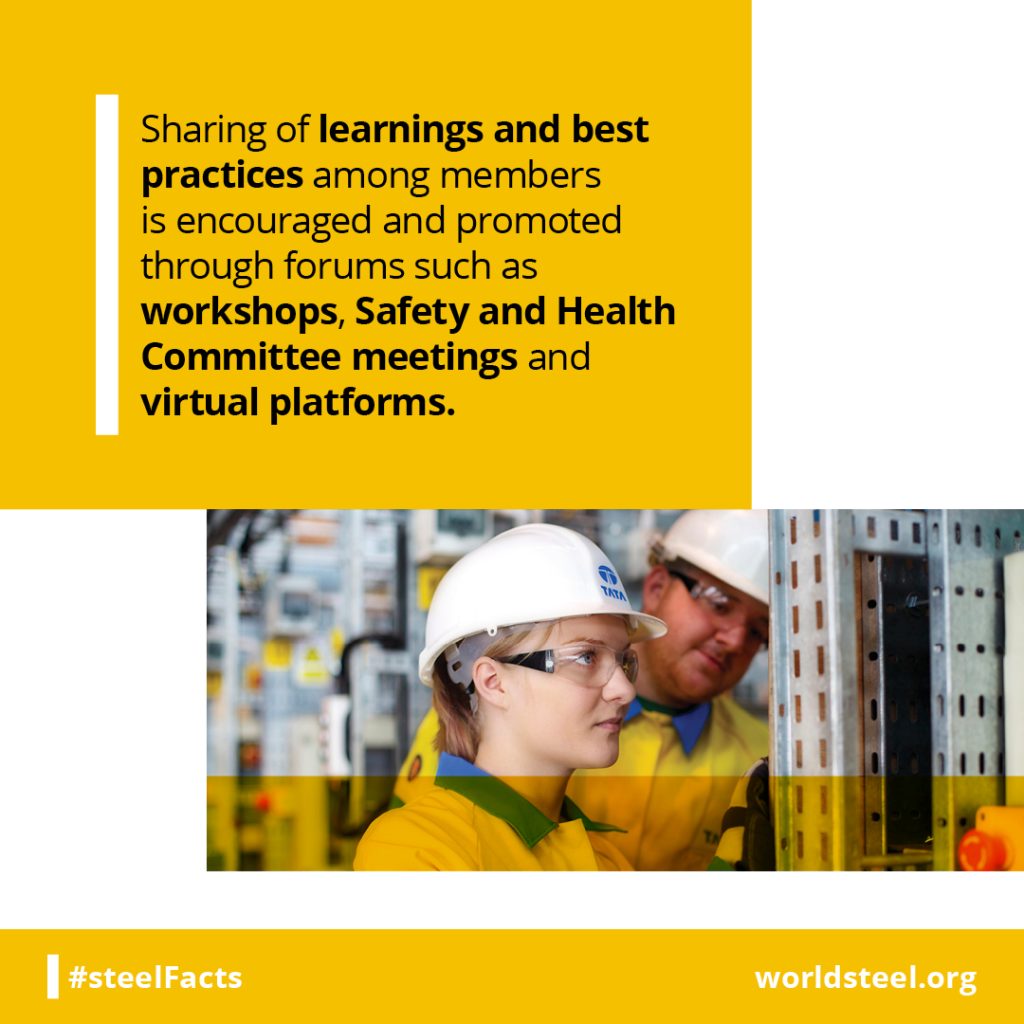
Sharing of learnings and best practices among members is encouraged and promoted through forums such as workshops, Safety and Health Committee meetings and virtual platforms.
下载
复制该事实的链接
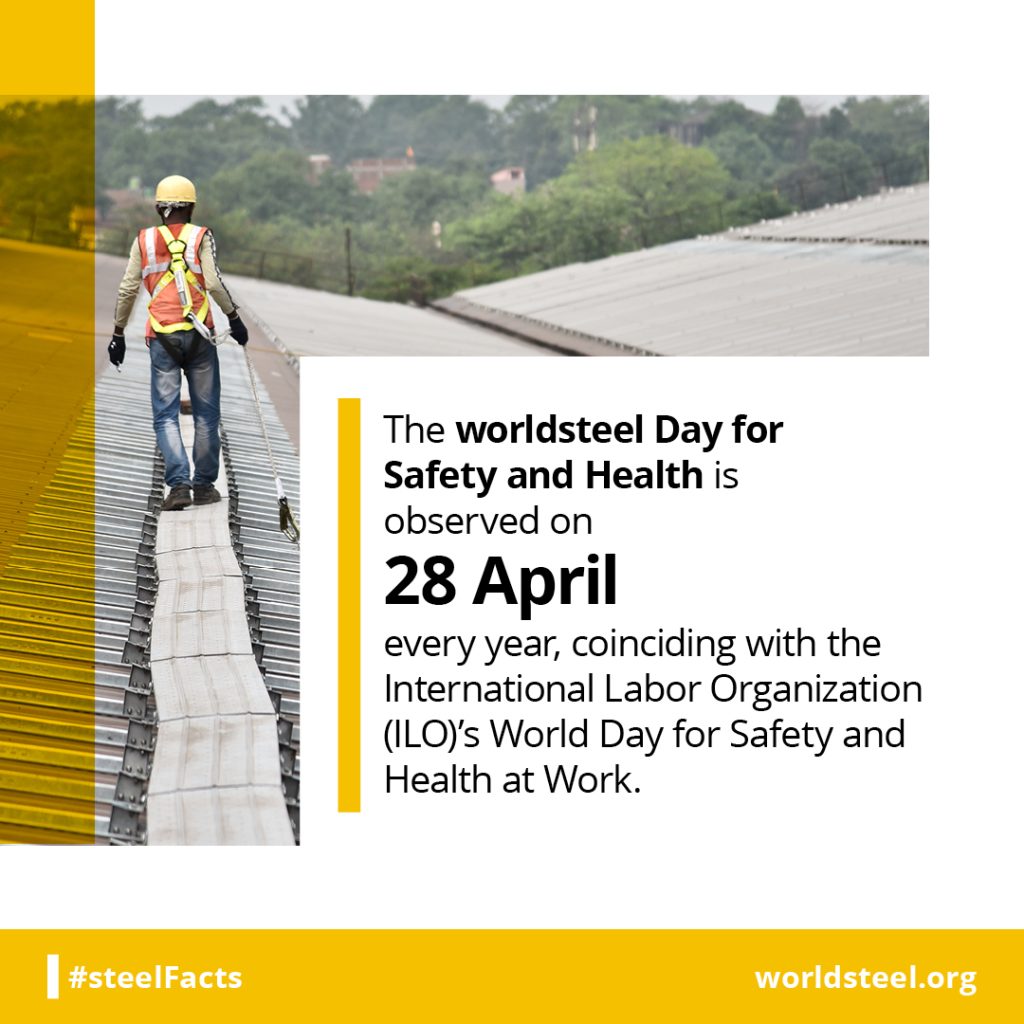
The worldsteel Day for Safety and Health is observed on 28 April every year, coinciding with the International Labor Organization (ILO)’s World Day for Safety and Health at Work.
下载
复制该事实的链接
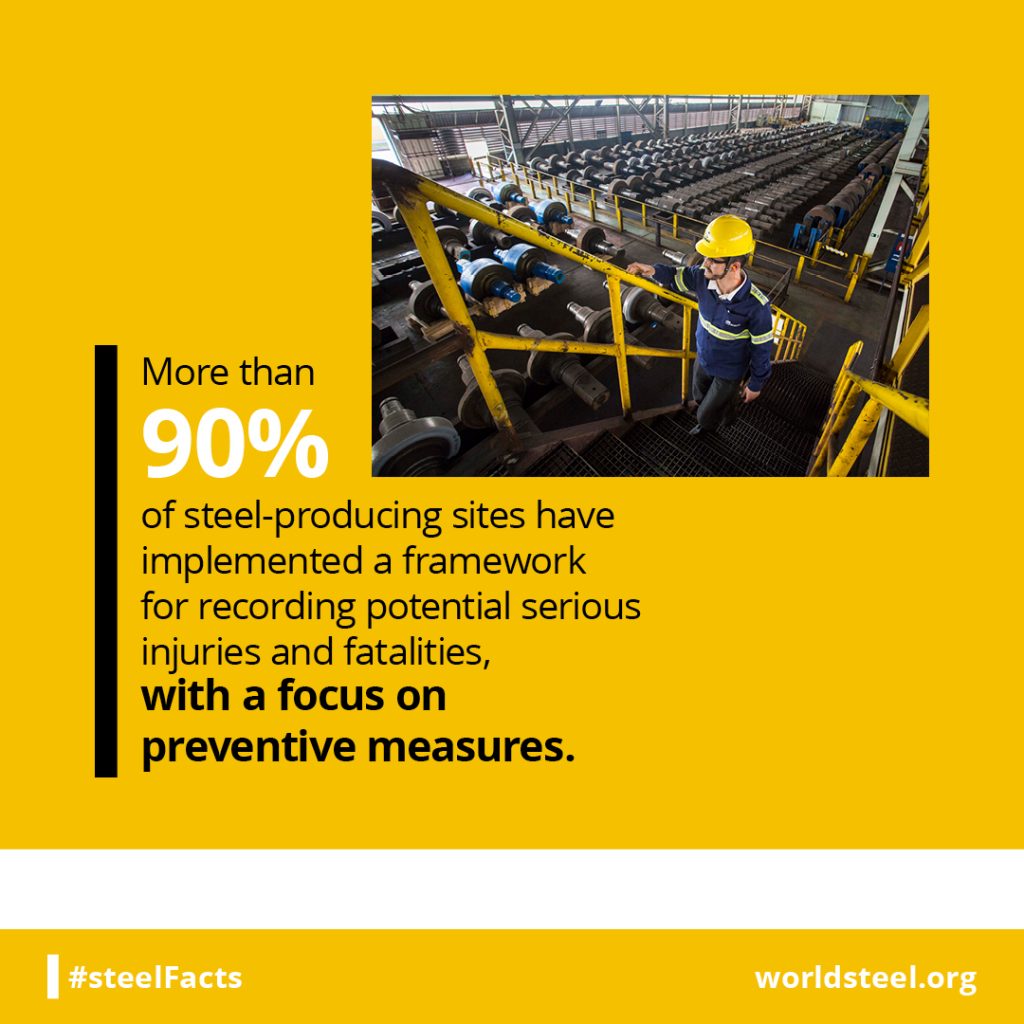
More than 90% of steel-producing sites have implemented a framework for recording potential serious injuries and fatalities, with a focus on preventive measures.
下载
复制该事实的链接
下载
复制该事实的链接
All frequency rates are calculated per 1,000,000 hours worked.
下载
复制该事实的链接
Critical risks faced by contractors are different from those for employees, reflecting the different nature of activities done by each group.
下载
复制该事实的链接
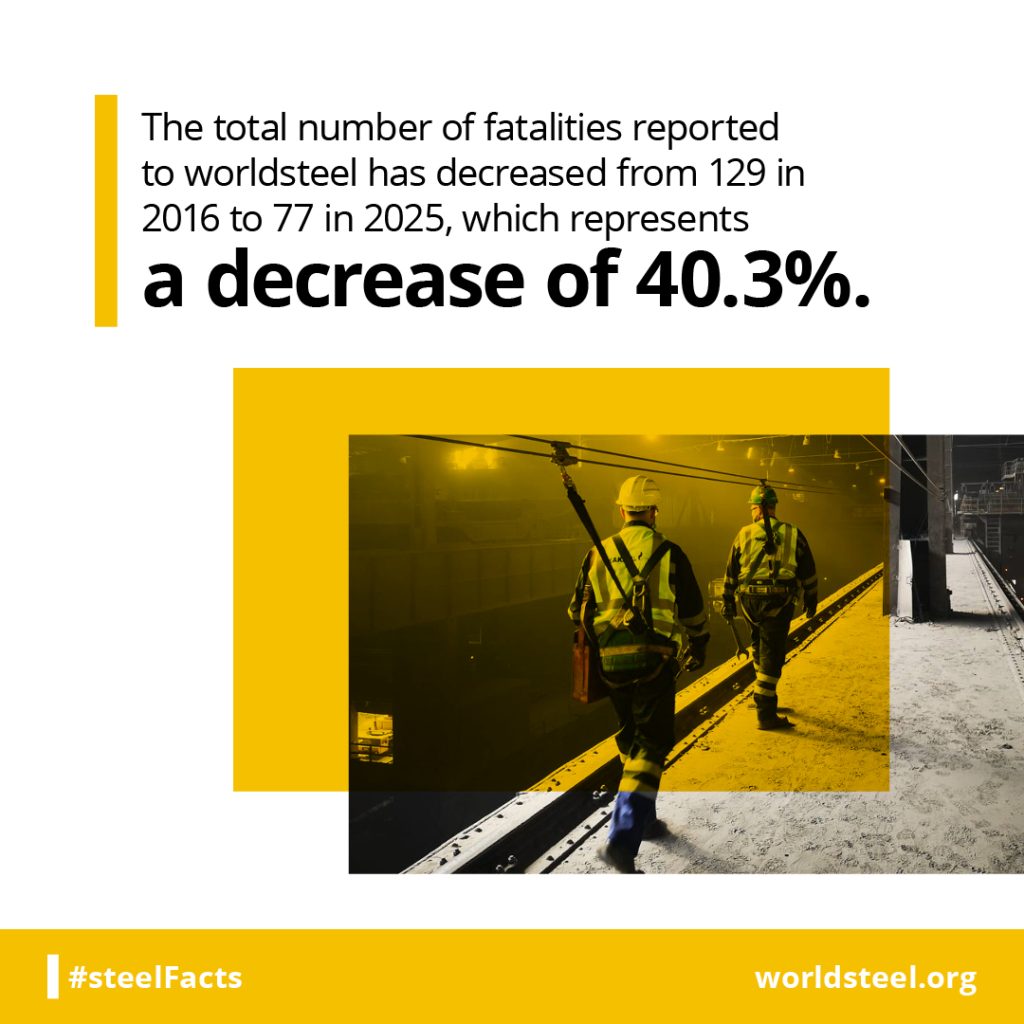
The total number of fatalities reported to worldsteel has decreased from 129 in 2016 to 77 in 2025, which represents a decrease of 40.3%.
下载
复制该事实的链接
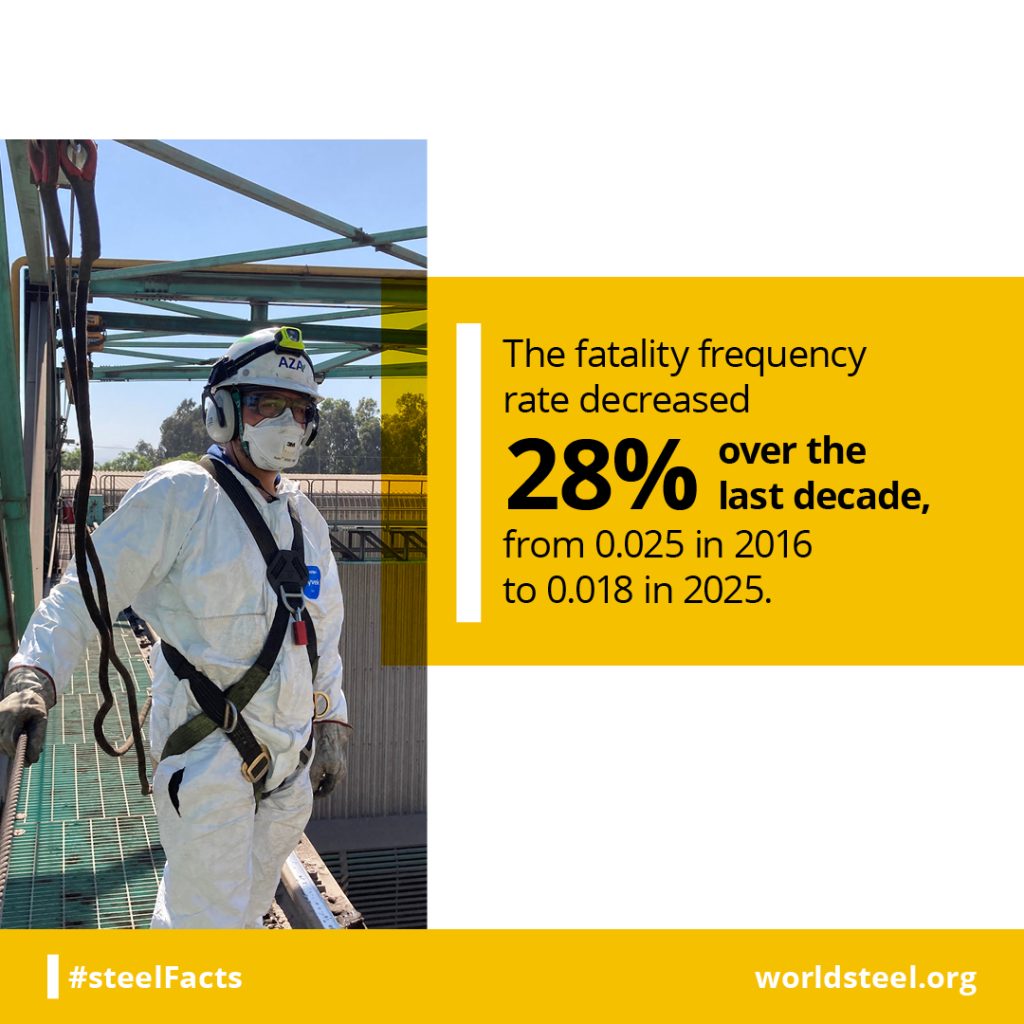
The fatality frequency rate decreased 28% over the last decade, from 0.025 in 2016 to 0.018 in 2025.
下载
复制该事实的链接
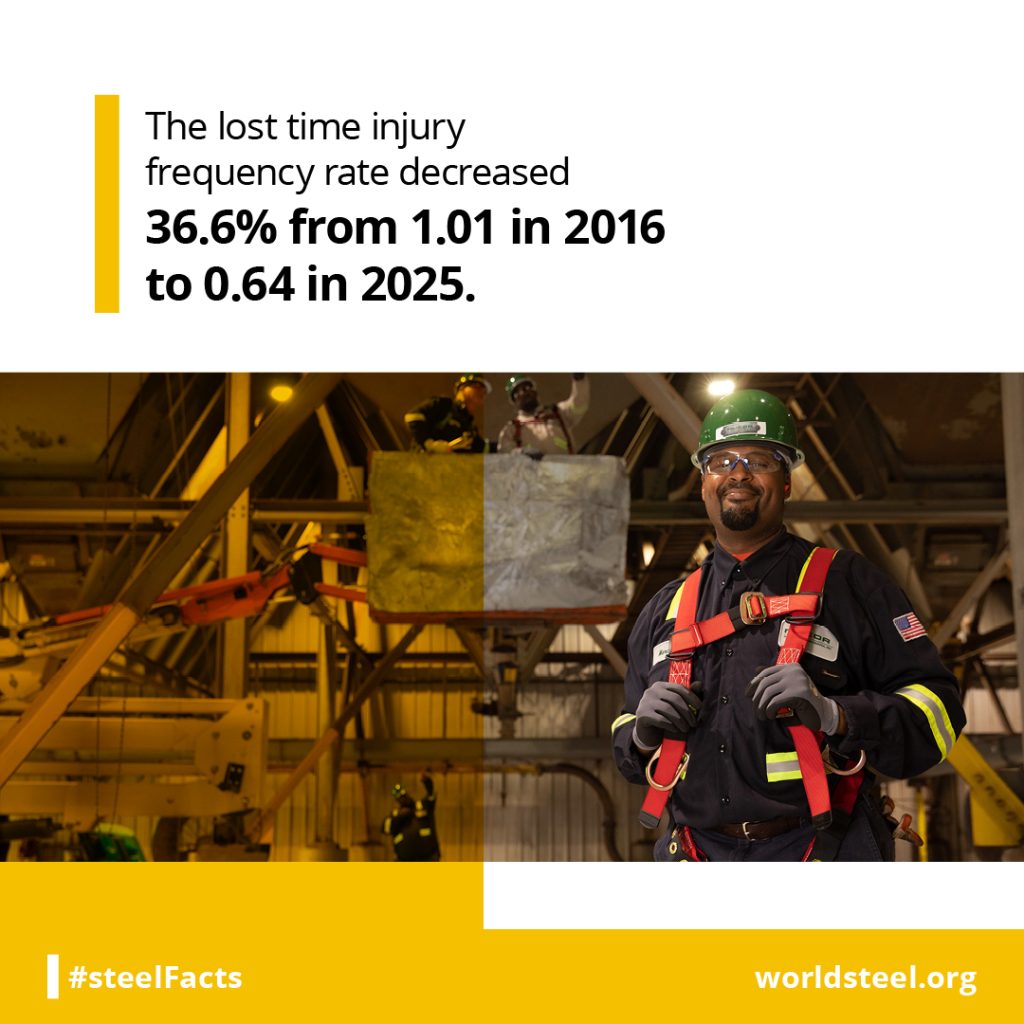
The lost time injury frequency rate decreased 36.6% from 1.01 in 2016 to 0.64 in 2025.
下载
复制该事实的链接
下载
复制该事实的链接
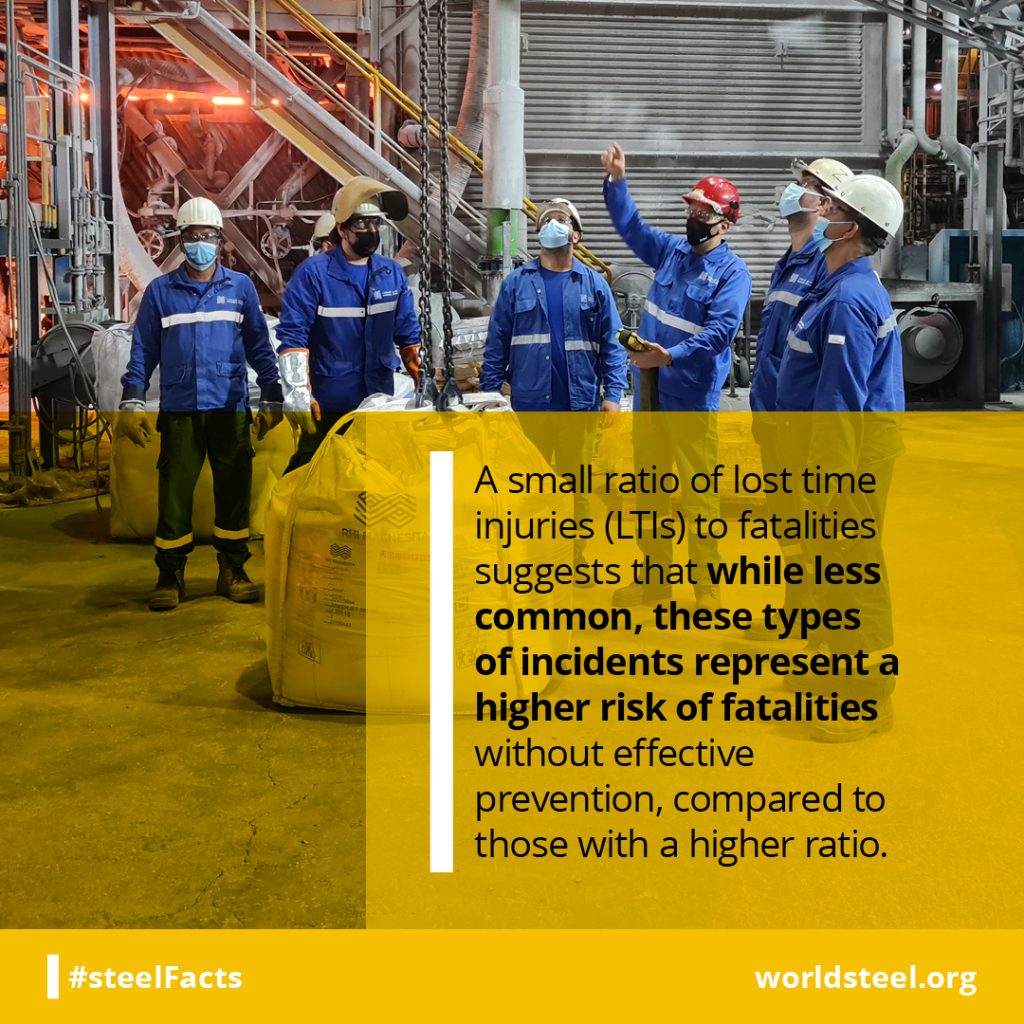
A small ratio of lost time injuries (LTIs) to fatalities suggests that while less common, these types of incidents represent a higher risk of fatalities without effective prevention, compared to those with a higher ratio.
下载
复制该事实的链接
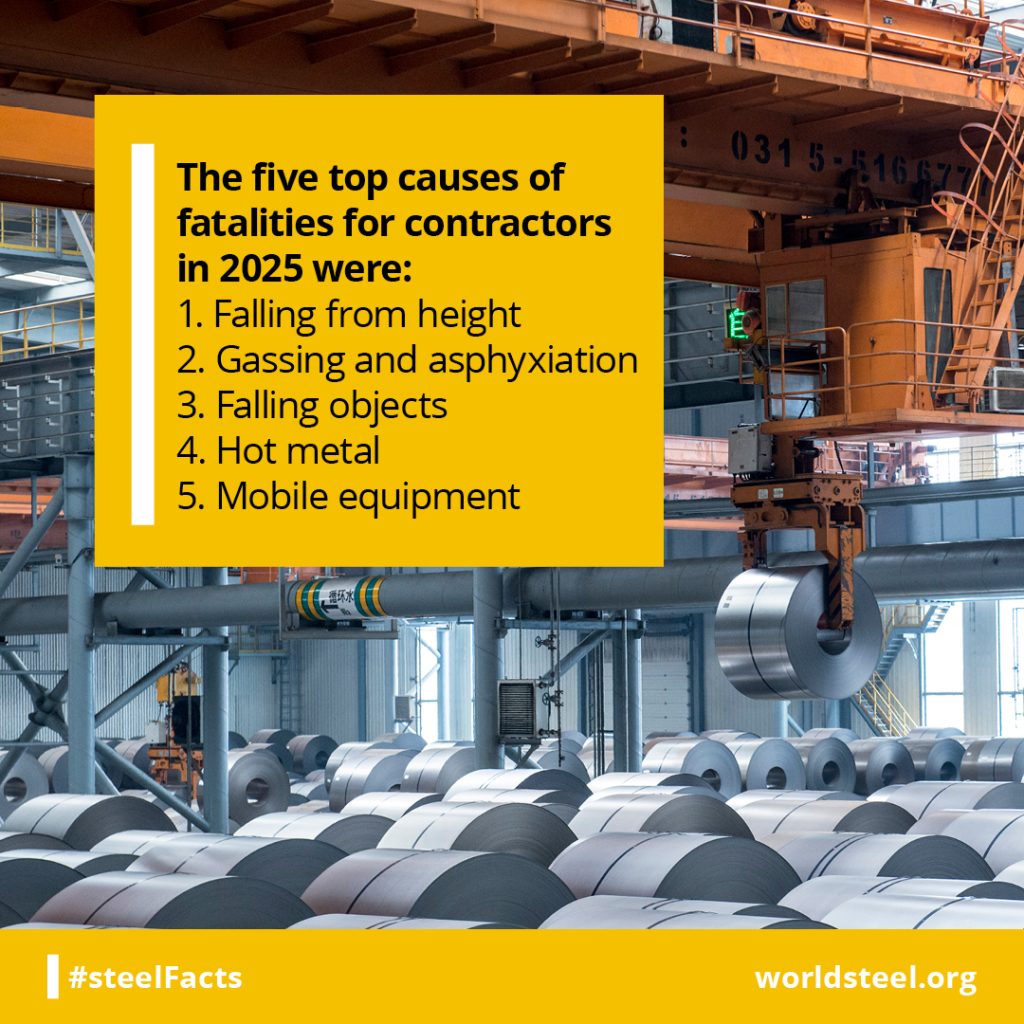
The five top causes of fatalities for contractors are falling from height, gassing and asphyxiation, falling objects, hot metal, and mobile equipment.
下载
复制该事实的链接
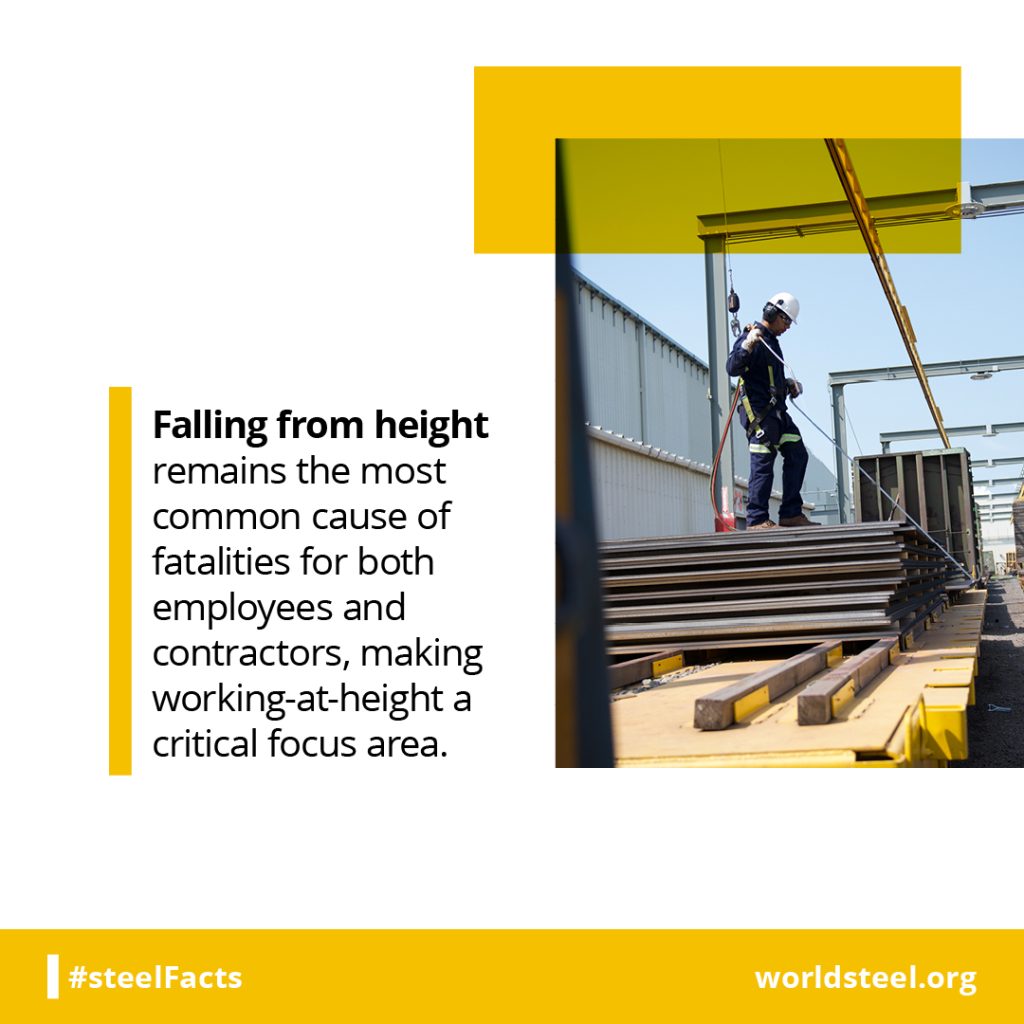
Falling from height remains the most common cause of fatalities for both employees and contractors, making working-at-height a critical focus area.
下载
复制该事实的链接
下载
复制该事实的链接
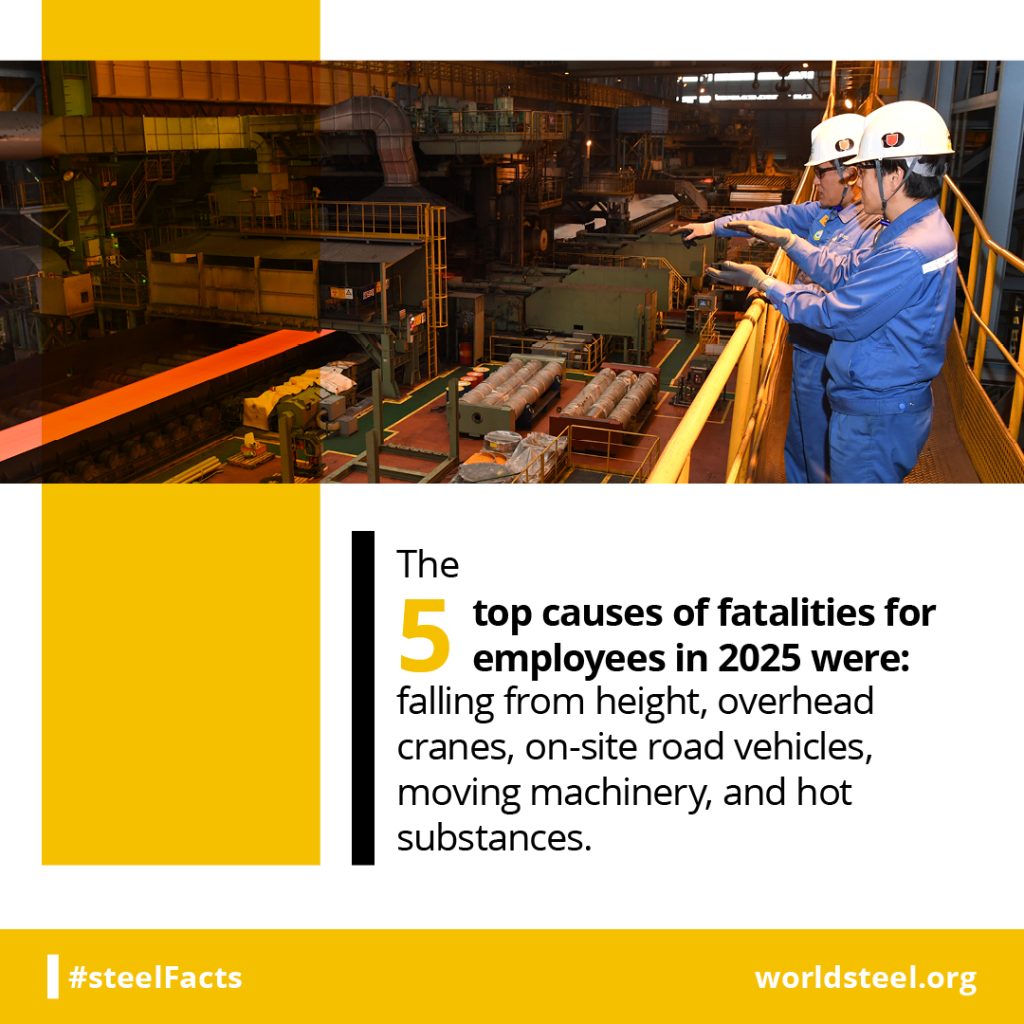
The five top causes of fatalities for employees are falling from height, overhead cranes, on-site road vehicles, moving machinery, and hot substances.
下载
复制该事实的链接
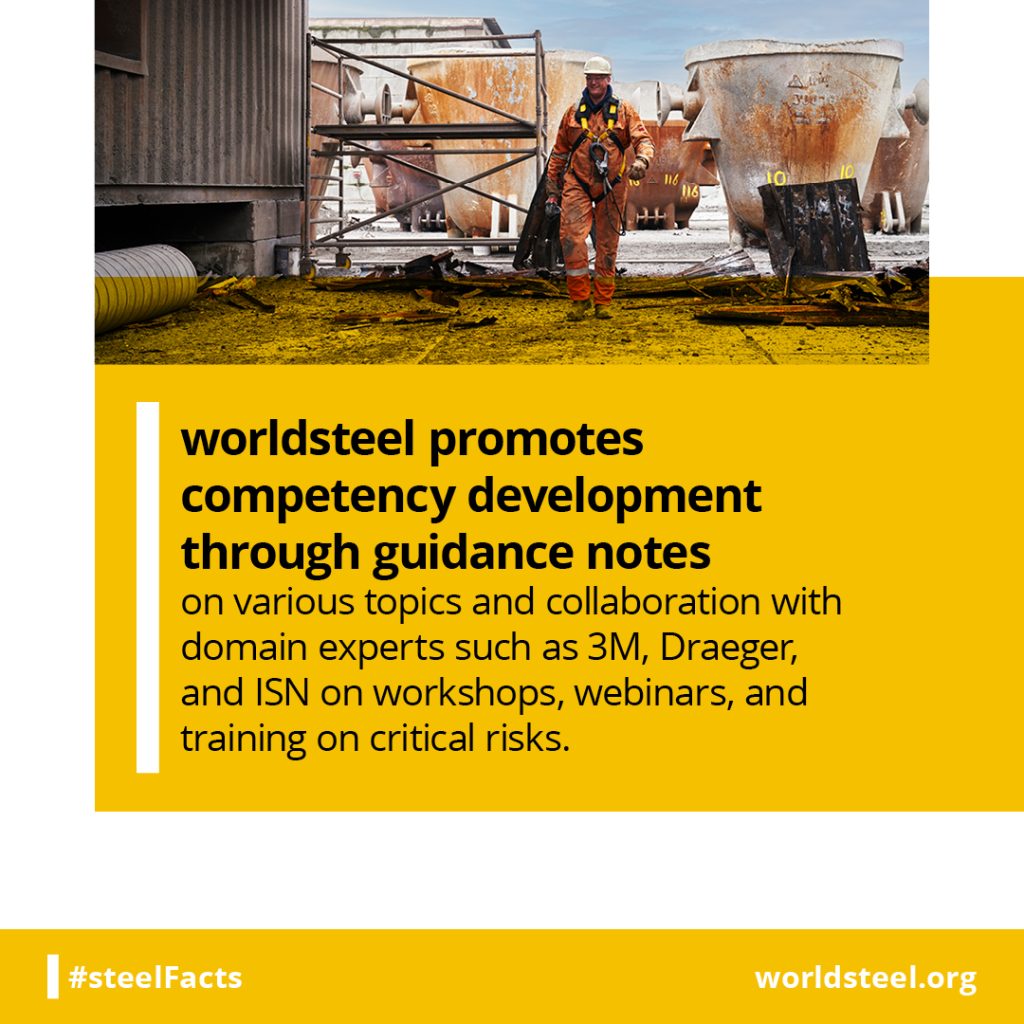
worldsteel promotes competency development through guidance notes on various topics and collaboration with domain experts such as 3M, Draeger, and ISN on workshops, webinars, and training on critical risks.
下载
复制该事实的链接
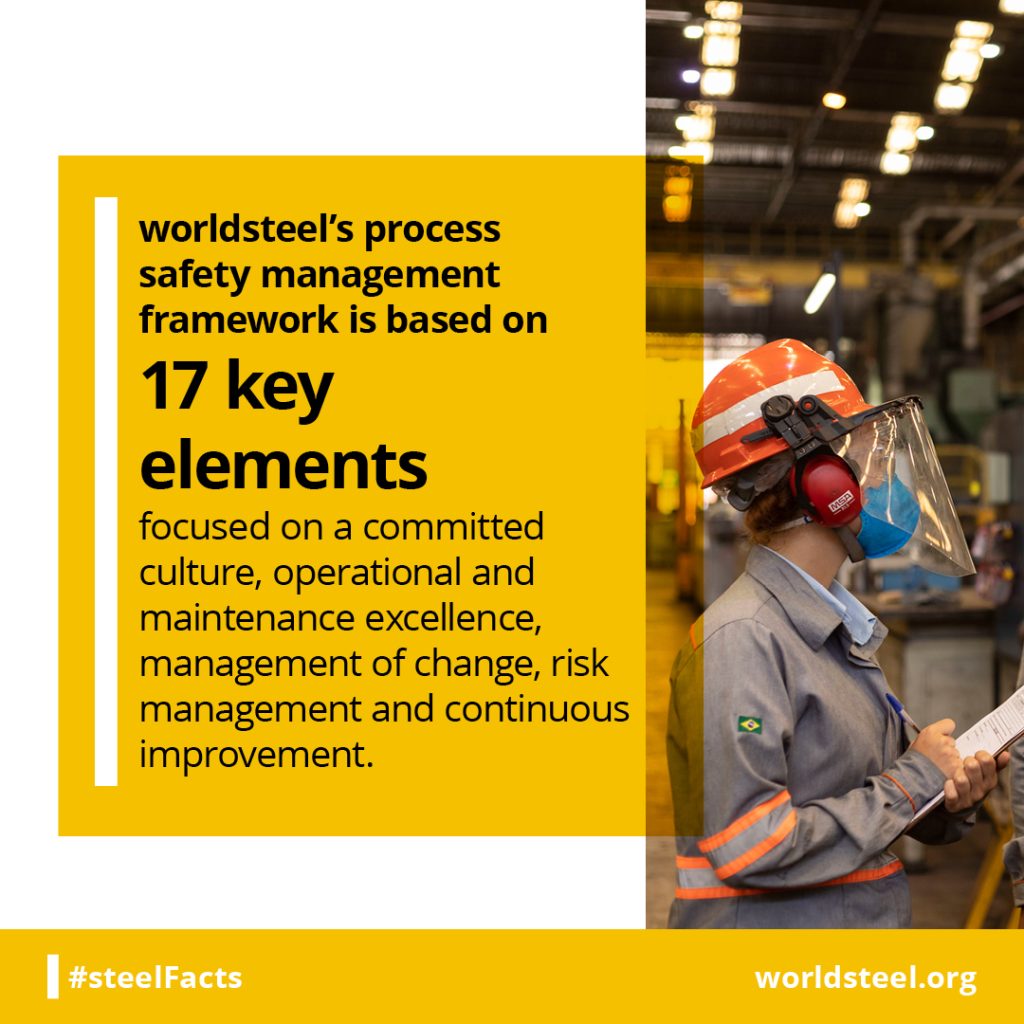
worldsteel’s process safety management framework is based on 17 key elements focused on a committed culture, operational and maintenance excellence, management of change, risk management and continuous improvement.
下载
复制该事实的链接
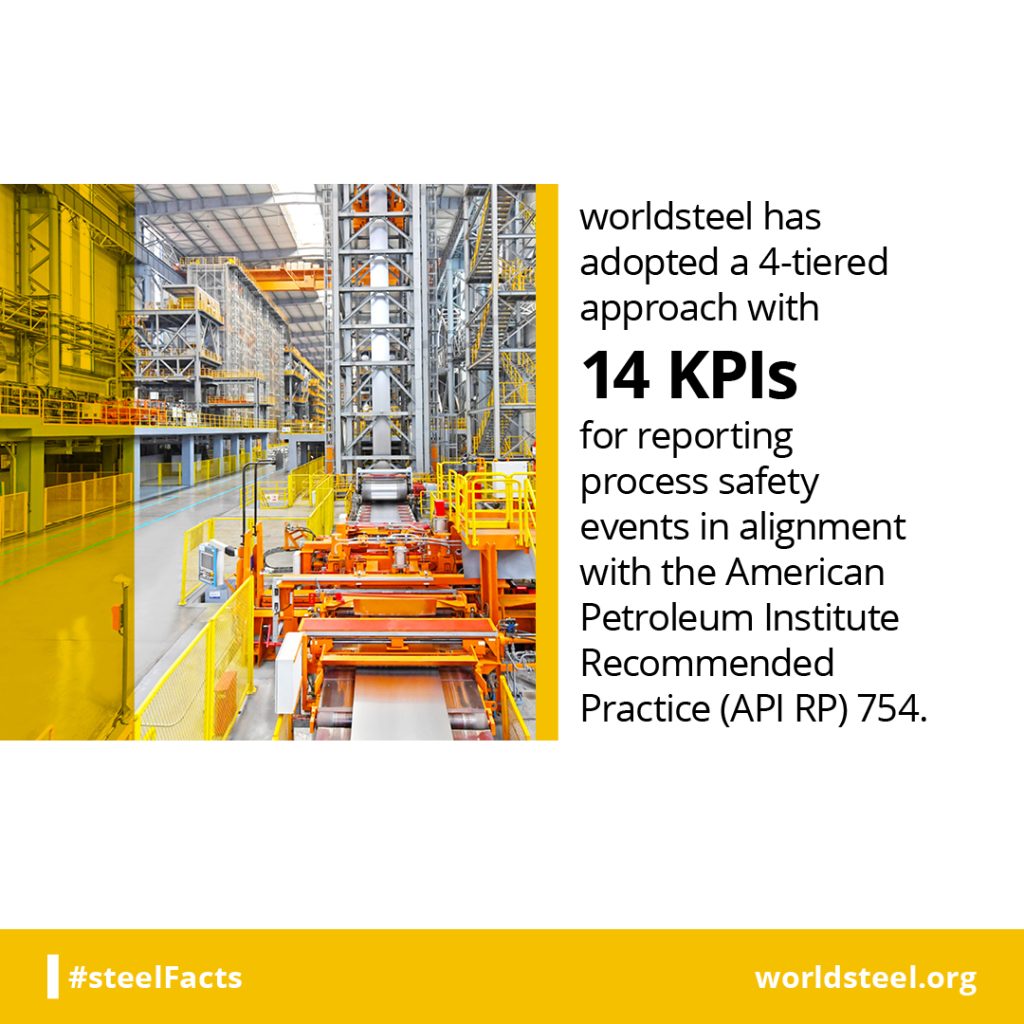
worldsteel has adopted a 4-tiered approach with 14 KPIs for reporting process safety events in alignment with the American Petroleum Institute Recommended Practice (API RP) 754.
下载
复制该事实的链接
Why safety and health in the steel industry matters
下载
复制该事实的链接
Safety and health-Our priorities
Climate action 2026
下载
复制该事实的链接
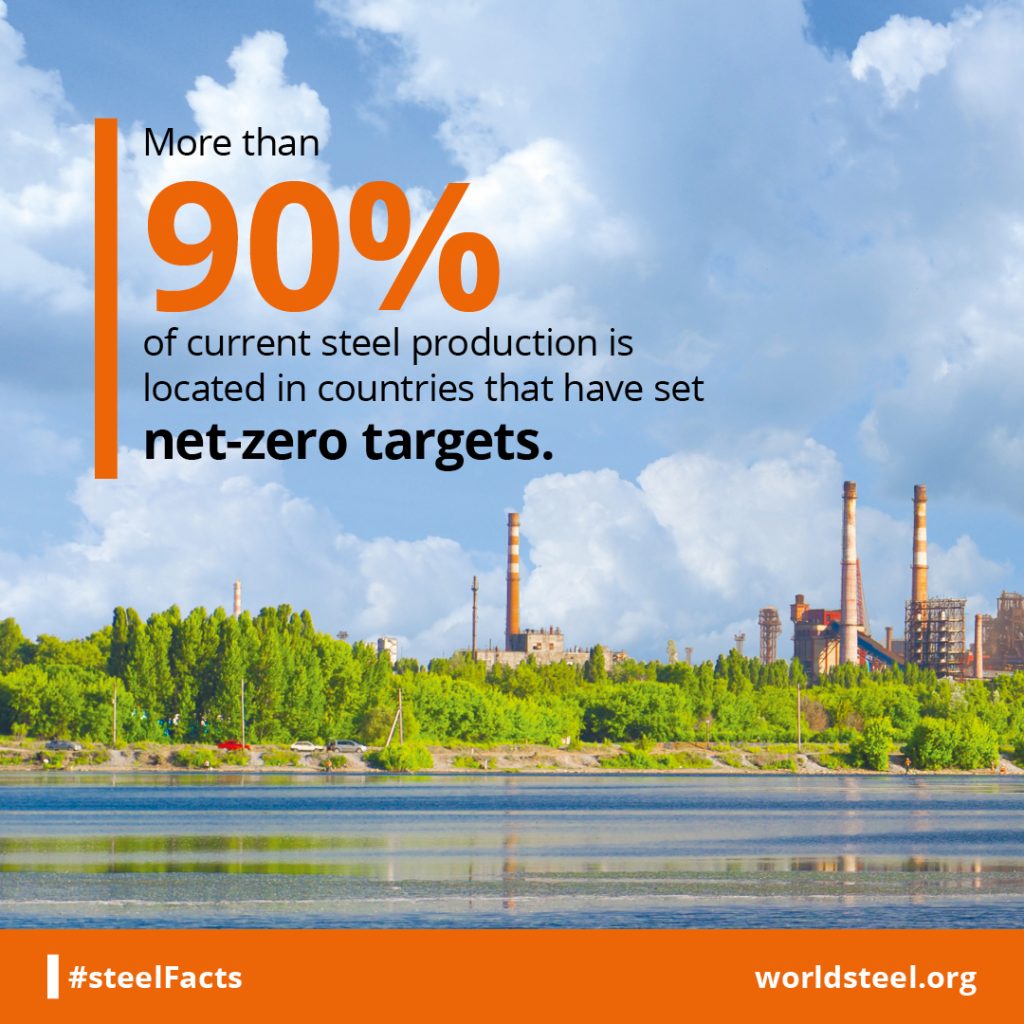
Over 90% of current steel production is located in countries that have set net-zero targets.
下载
复制该事实的链接
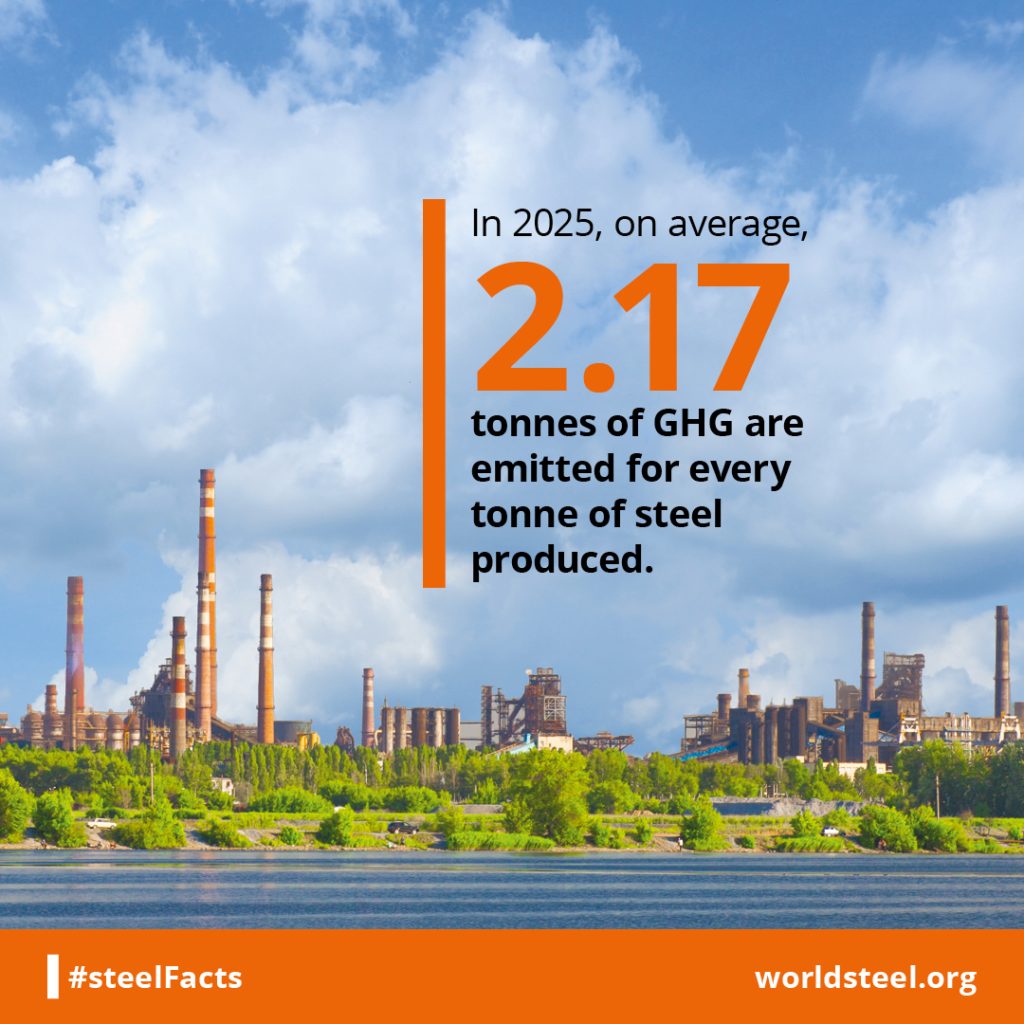
In 2025, on average, 2.17 tonnes of GHG are emitted for every tonne of steel produced.
下载
复制该事实的链接
下载
复制该事实的链接
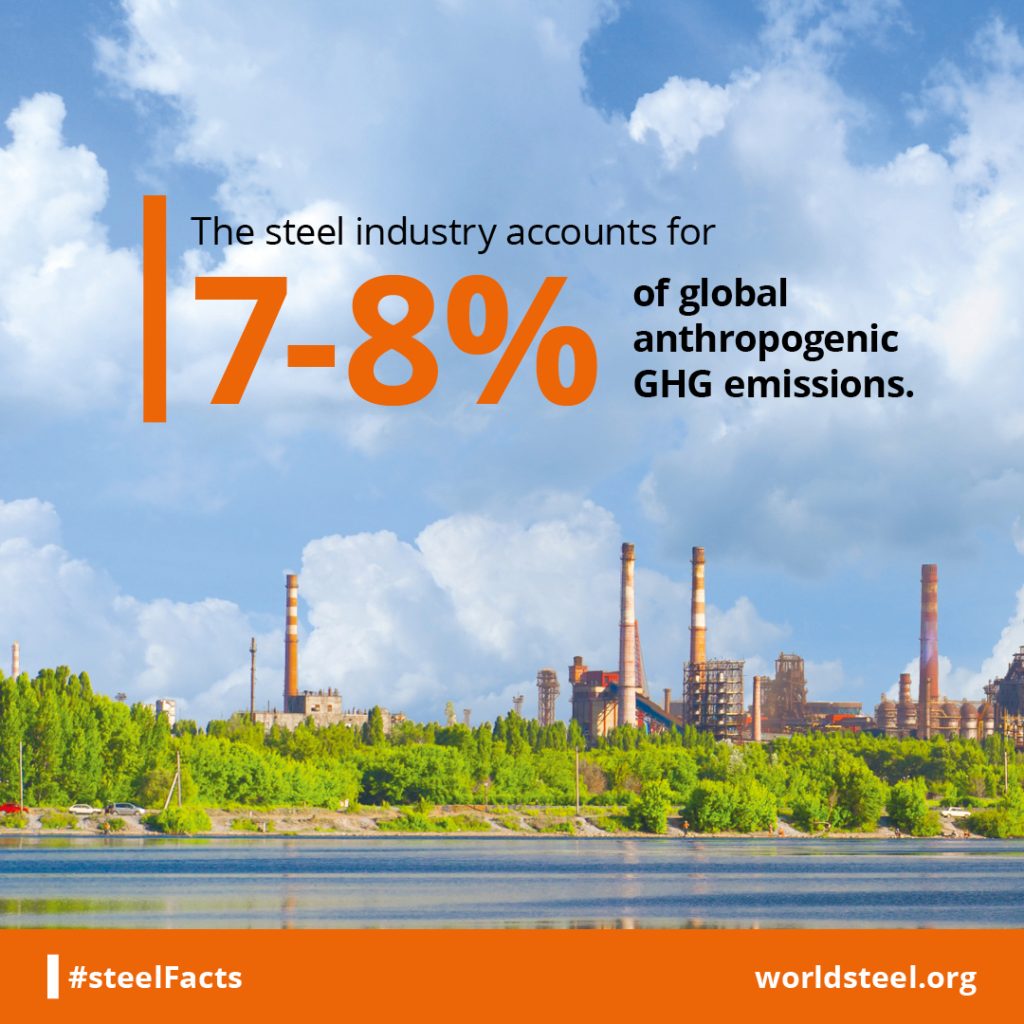
The steel industry accounts for 7-8% of global anthropogenic GHG emissions.
下载
复制该事实的链接
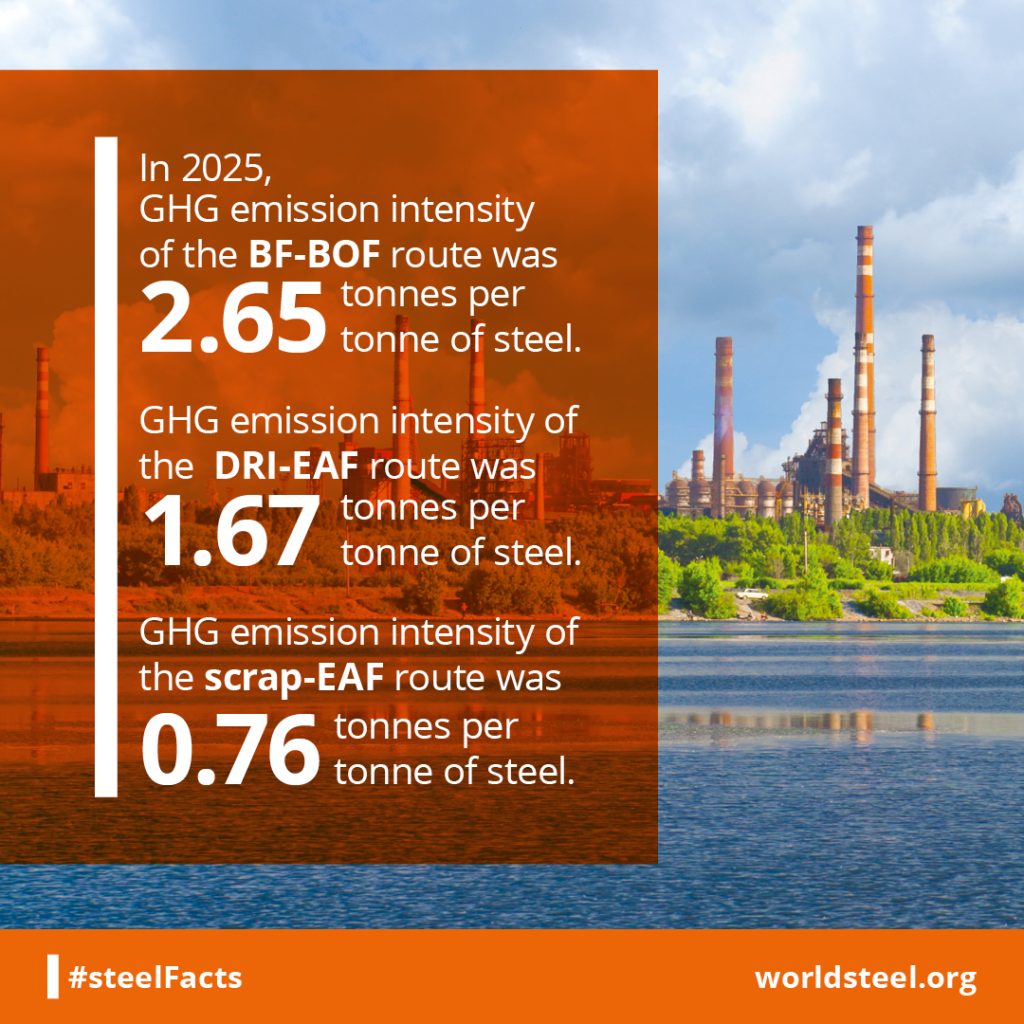
In 2025, the average GHG emission intensity of the BF-BOF route was 2.65 tonnes per tonne of steel.
下载
复制该事实的链接
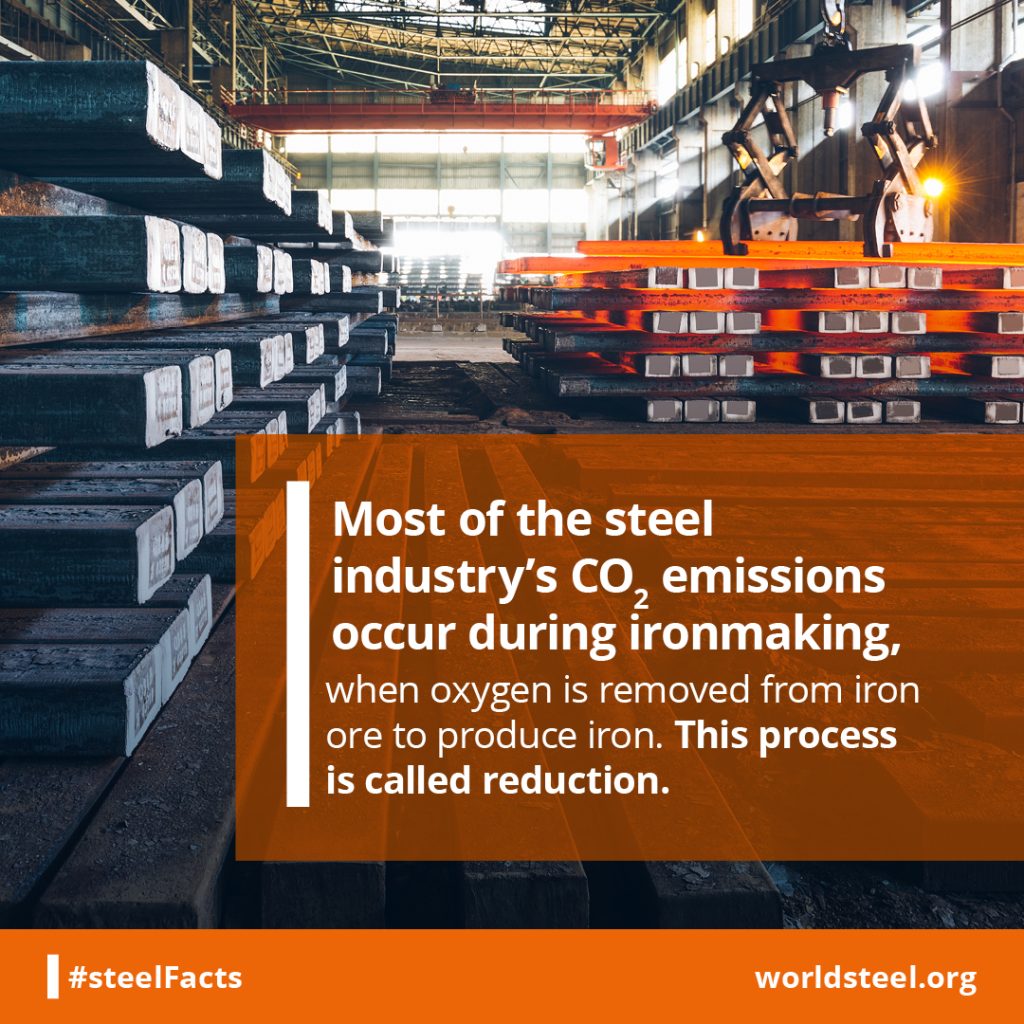
Most of the steel industry's CO₂ emissions occur during ironmaking, when oxygen is removed from iron ore to produce iron. This process is called reduction.
下载
复制该事实的链接
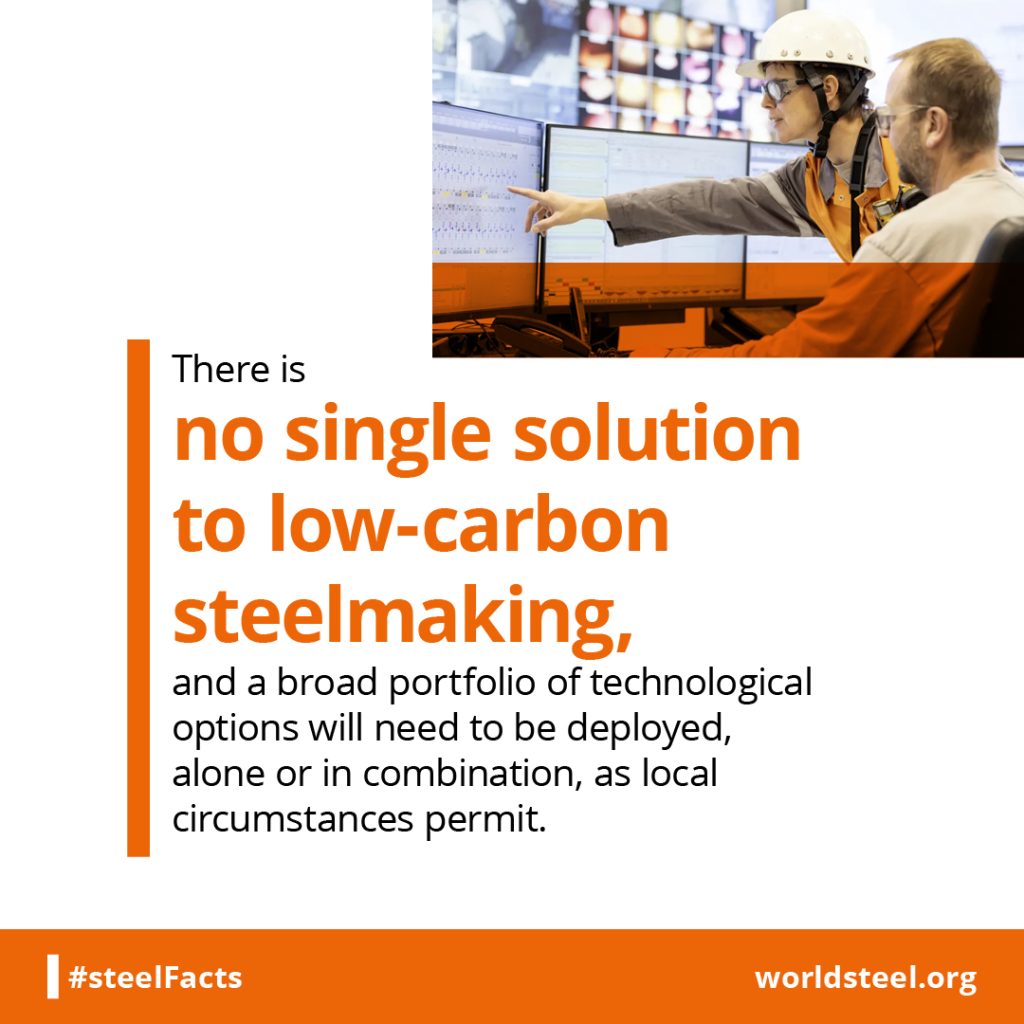
There is no single solution to low-carbon steelmaking, and a broad portfolio of technological options will need to be deployed, alone or in combination, as local circumstances permit.
下载
复制该事实的链接
One medium-term solution is to prevent CO₂ emissions by using carbon capture, utilisation, and storage (CCUS).
下载
复制该事实的链接
下载
复制该事实的链接
Expanding production with already available technologies such as natural gas-based DRI (direct reduced iron) and EAF (electric arc furnace) routes can significantly reduce carbon emissions.
下载
复制该事实的链接
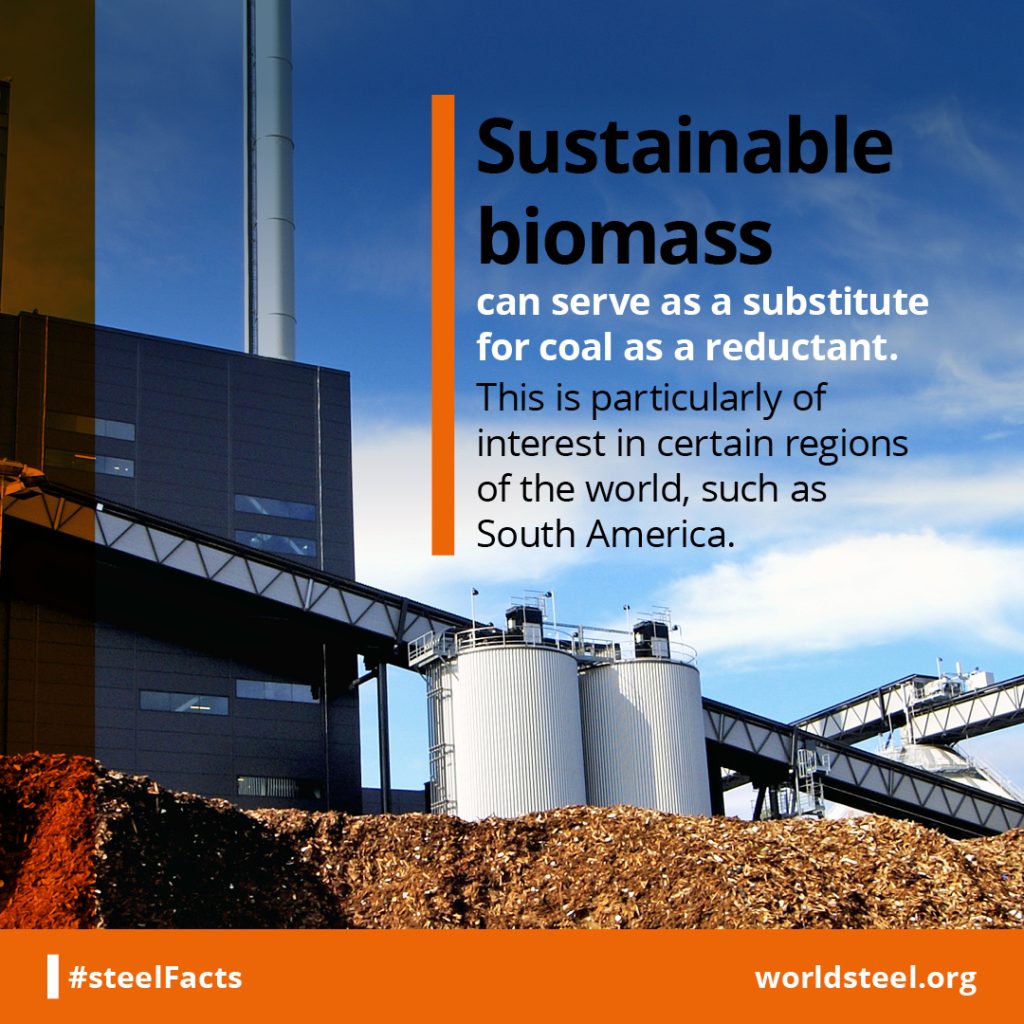
Sustainable biomass can serve as a substitute for coal as a reductant. This is particularly of interest in certain regions of the world, such as South America.
下载
复制该事实的链接
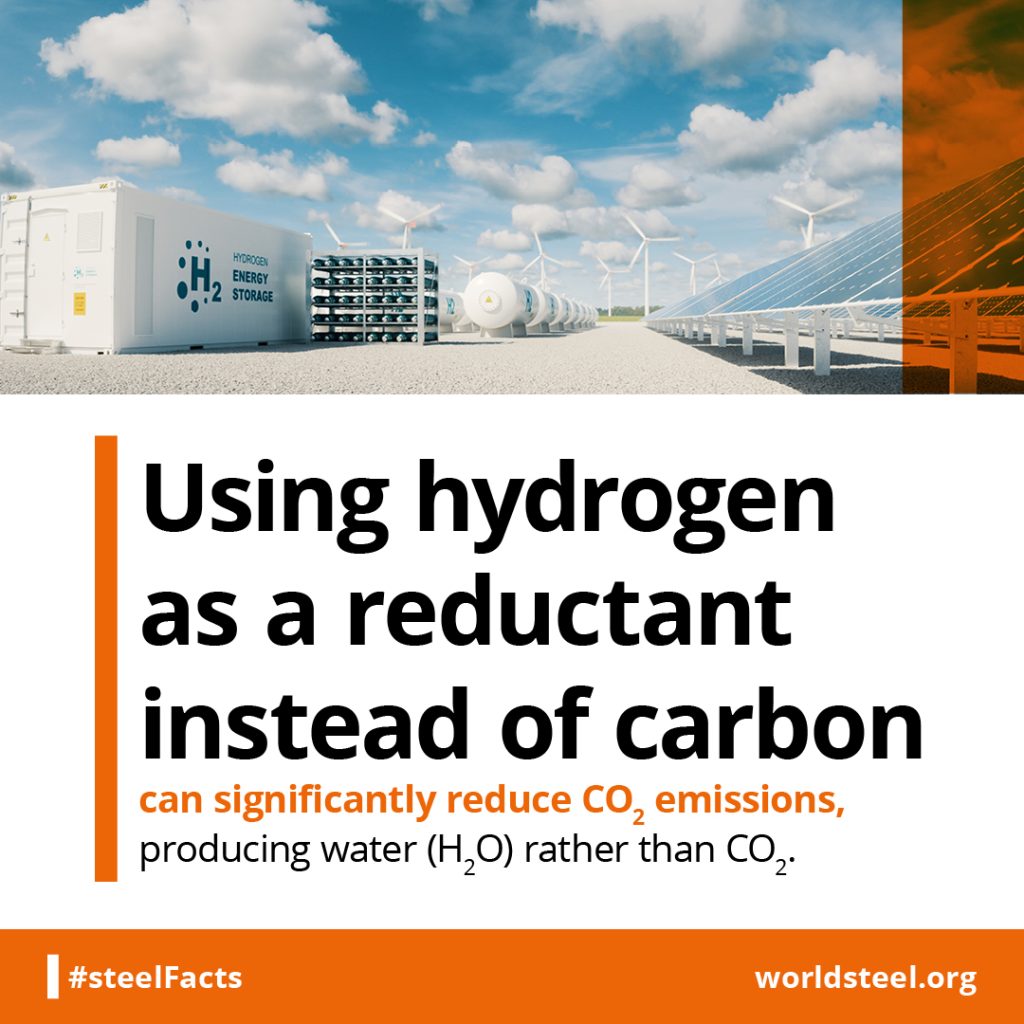
Using hydrogen as a reductant instead of carbon can significantly reduce CO₂ emissions, producing water (H₂O) rather than CO₂.
下载
复制该事实的链接
Colours are commonly used to distinguish between hydrogen production methods, including low-carbon options.
下载
复制该事实的链接
Green hydrogen is produced by water electrolysis using renewable energy.
下载
复制该事实的链接
Blue hydrogen is derived from natural gas using steam methane reforming, combined with carbon capture and storage (CCS).
下载
复制该事实的链接
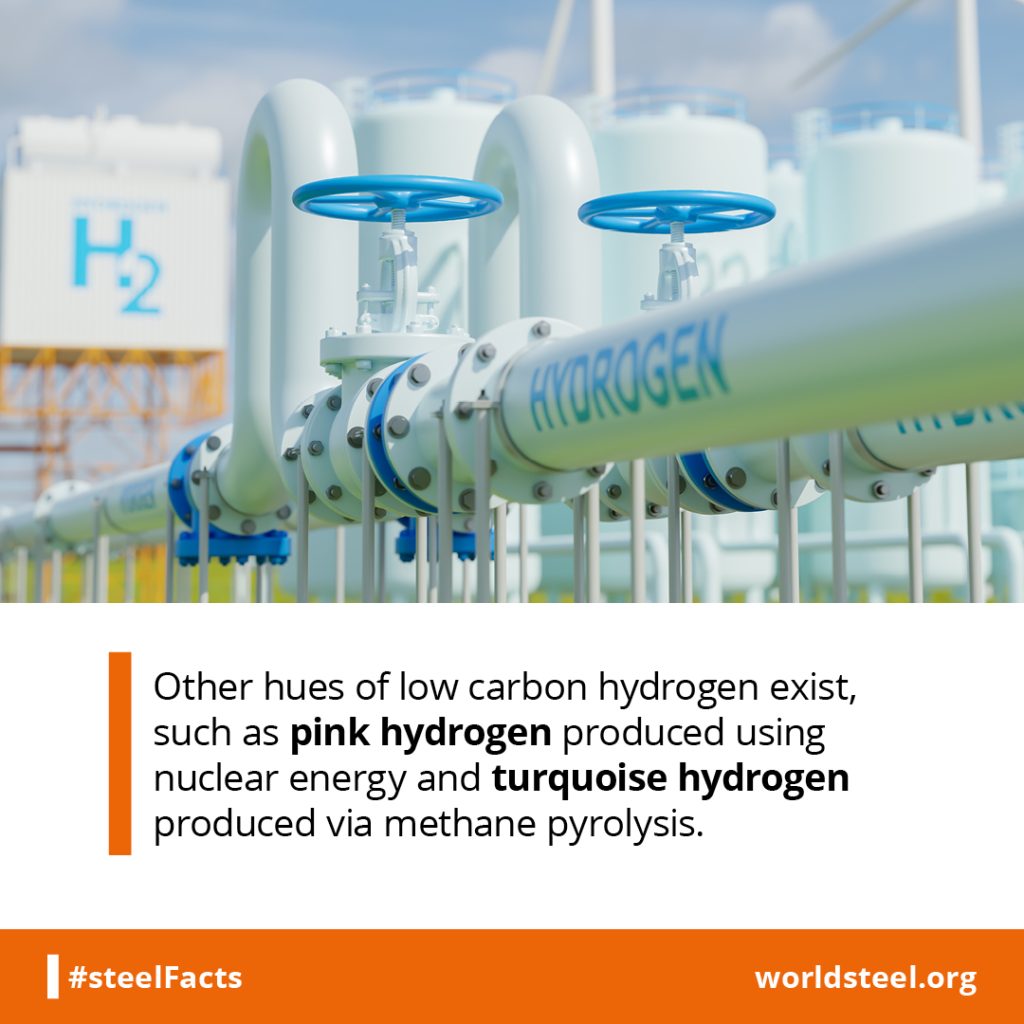
Other hues of low-carbon hydrogen exist, such as pink hydrogen produced using nuclear energy and turquoise hydrogen produced via methane pyrolysis.
下载
复制该事实的链接
下载
复制该事实的链接
New steelmaking technologies under development can use hydrogen of any colour; what matters is that the hydrogen is manufactured with minimal greenhouse gas emissions.
下载
复制该事实的链接
Technologies are also under development that reduce iron ore directly using electricity in an electrolysis-based process, though these are less mature and will likely take longer to develop and deploy.
下载
复制该事实的链接
End-of-life plastics and other waste materials can also replace coal and coke as reducing agents in ironmaking, a circular economy practice that reduces emissions.
下载
复制该事实的链接
Steel is the world's most recycled metal.
下载
复制该事实的链接
下载
复制该事实的链接
The availability of scrap steel is increasing, helping reduce the GHG emissions intensity of steel production.
下载
复制该事实的链接
Recycling steel supports climate action by conserving resources and avoiding emissions associated with virgin steel production.
下载
复制该事实的链接
On average, new steel products contain 30% recycled steel. Steel keeps its value through multiple lifecycles, becoming new products such as cans, trains, bridges and buildings.
下载
复制该事实的链接
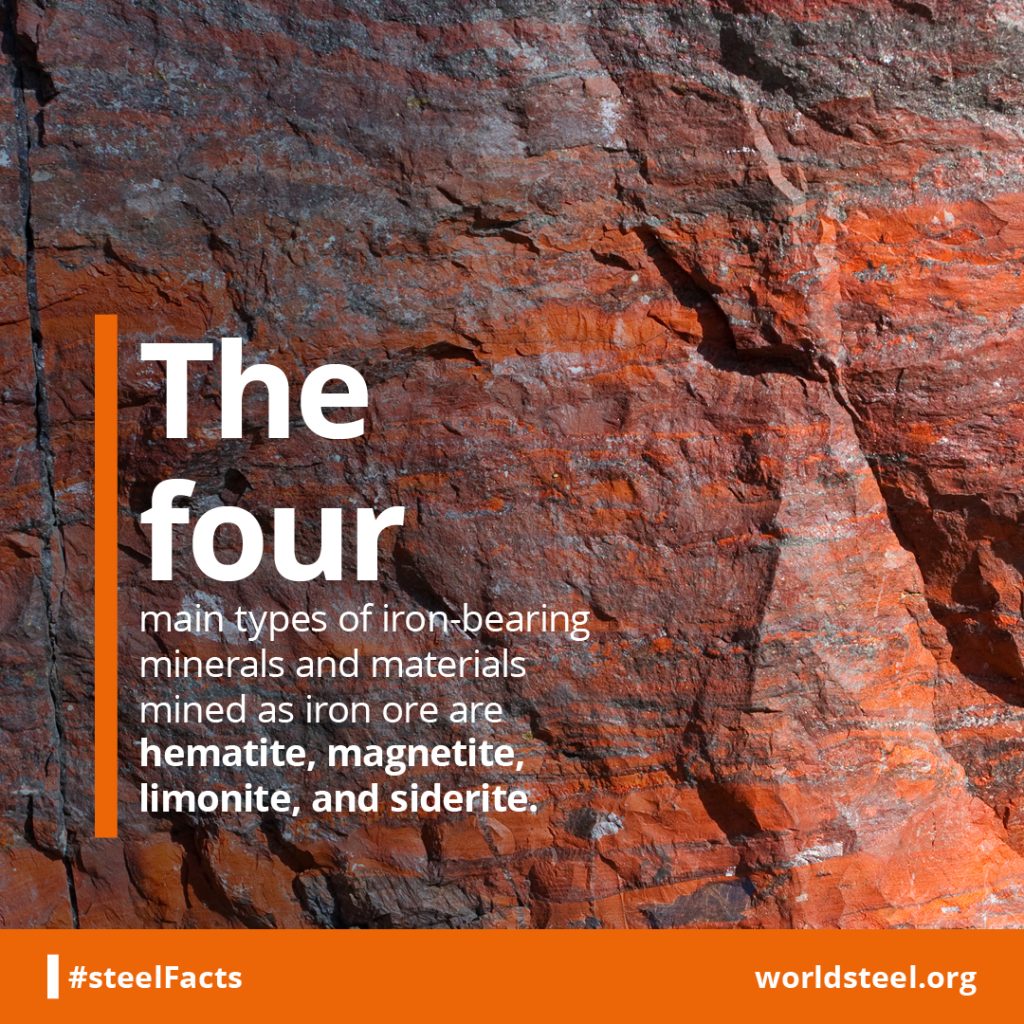
The four main types of iron-bearing minerals and materials mined as iron ore are hematite, magnetite, limonite, and siderite.
下载
复制该事实的链接
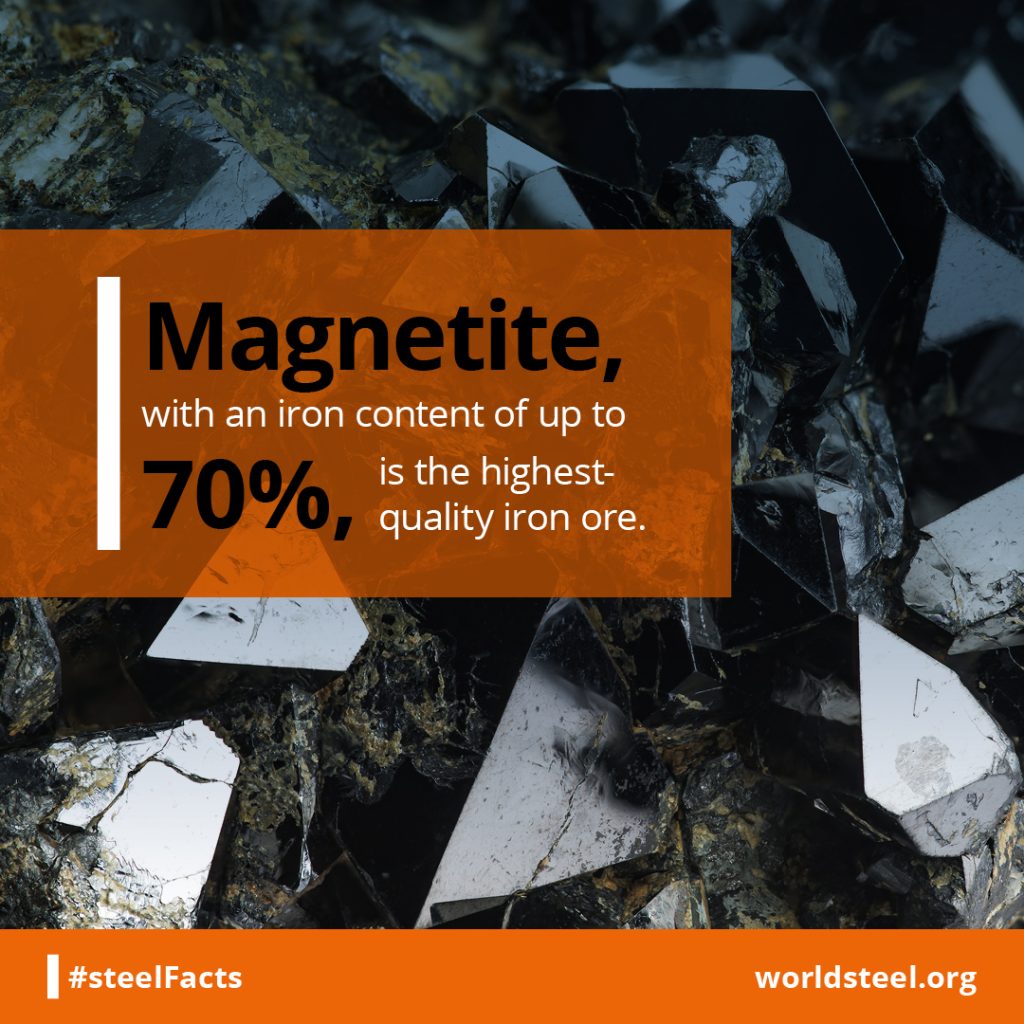
Magnetite, with an iron content of up to 70%, is the highest-quality iron ore.
下载
复制该事实的链接
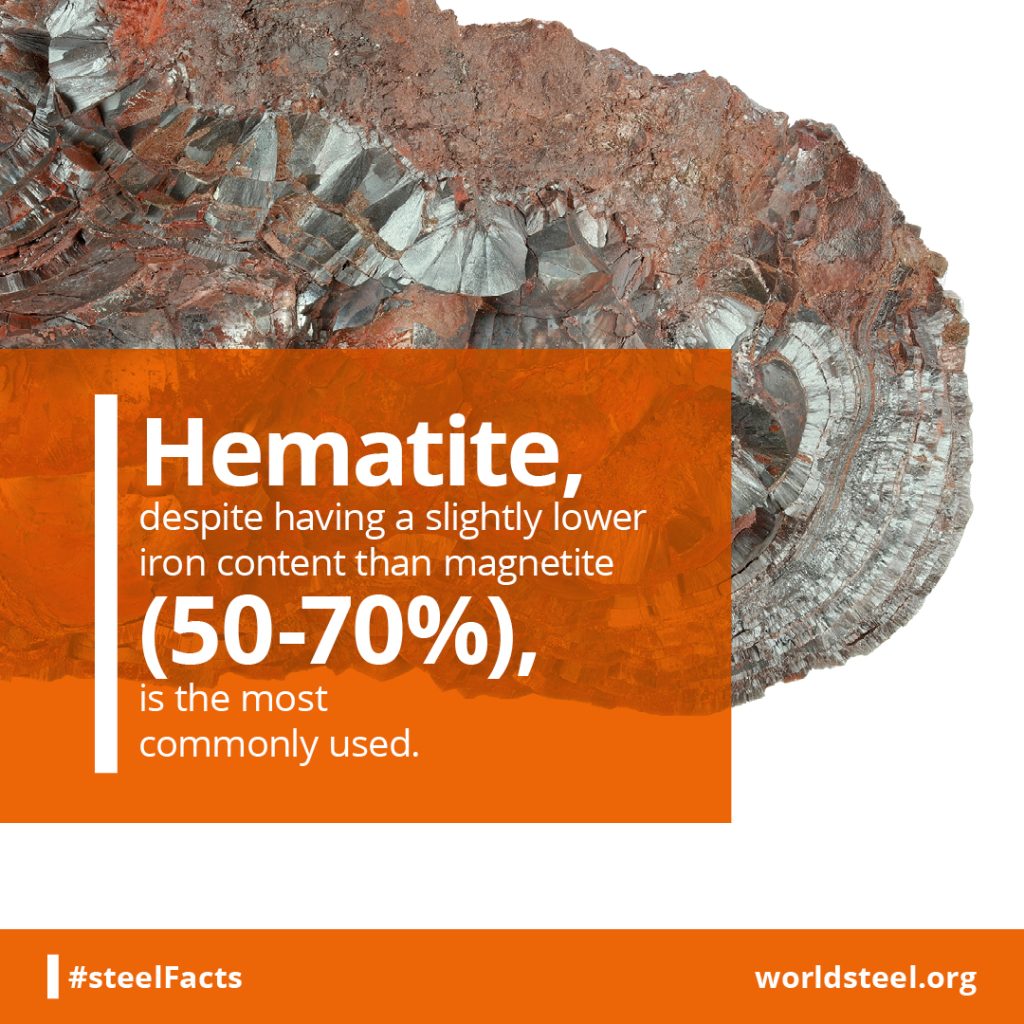
Hematite, despite having a slightly lower iron content than magnetite (50-70%), is the most commonly used.
下载
复制该事实的链接
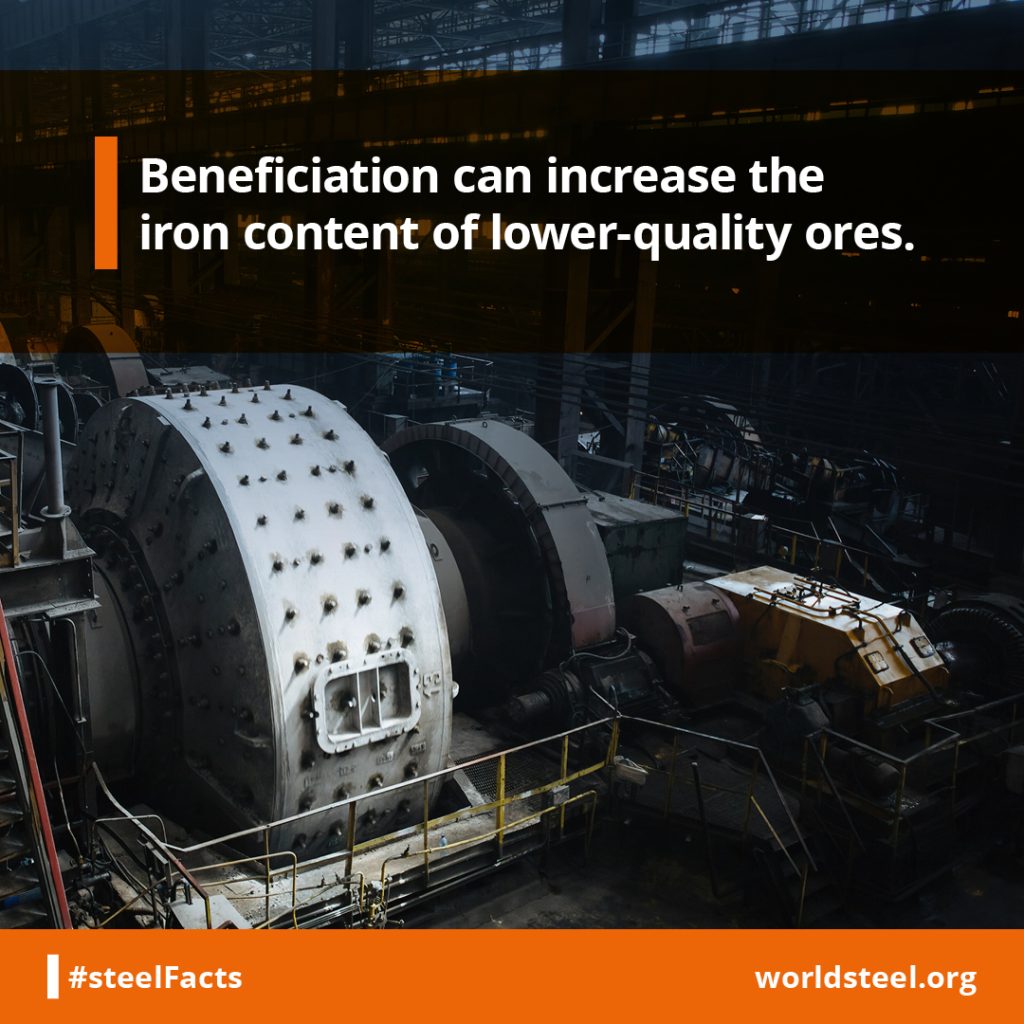
Beneficiation can increase the iron content of lower-quality ores.
下载
复制该事实的链接
下载
复制该事实的链接
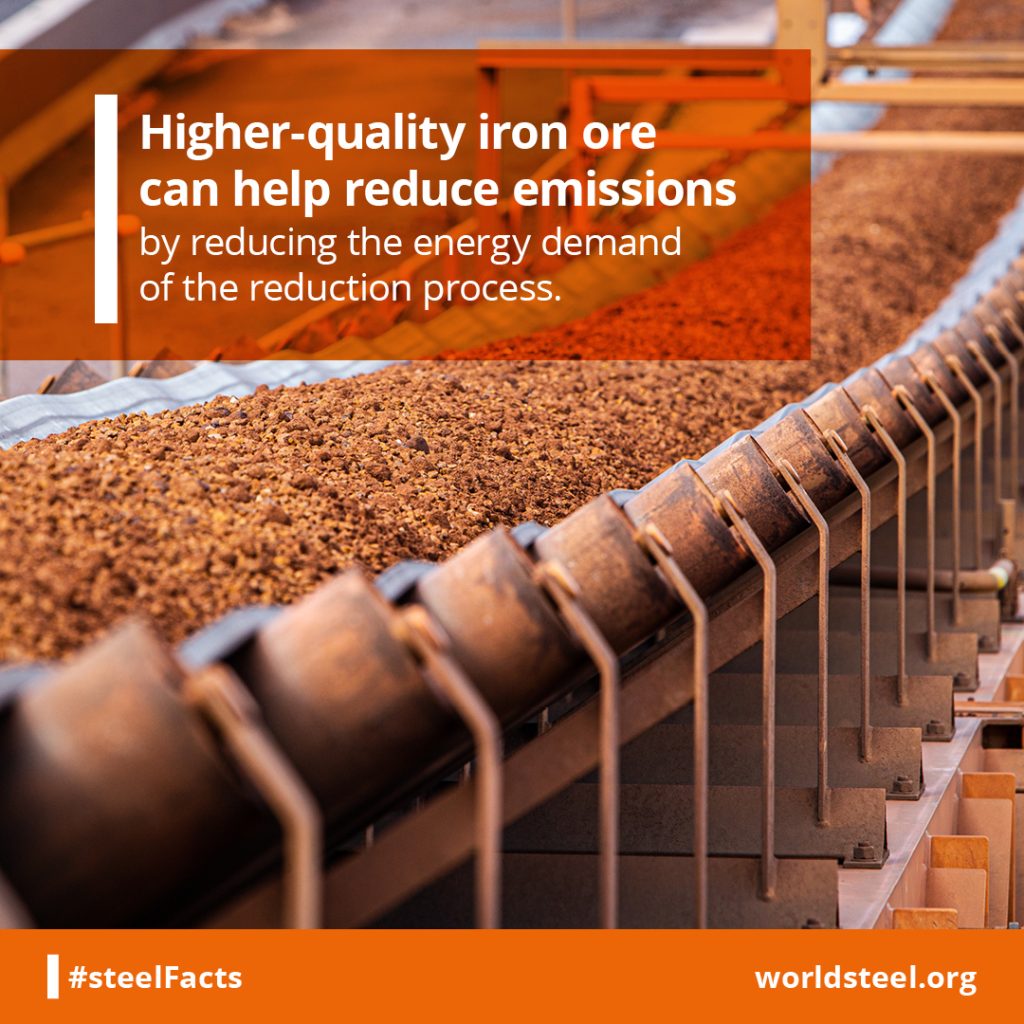
Higher-quality iron ore can help reduce emissions from iron production by reducing the energy demand of the reduction process.
下载
复制该事实的链接
Steel enables society’s overall decarbonisation — almost every greenhouse gas mitigation technology relies on steel, including thermal and renewable energy generation, electrification, mass transport, and the hydrogen economy.
下载
复制该事实的链接
Without steel, the goals of the Paris Agreement will not be achieved.
下载
复制该事实的链接
The steel industry is dedicated to collaborating with partners across its ecosystem, including suppliers, customers, governments, and other industries, to find solutions.
下载
复制该事实的链接
下载
复制该事实的链接
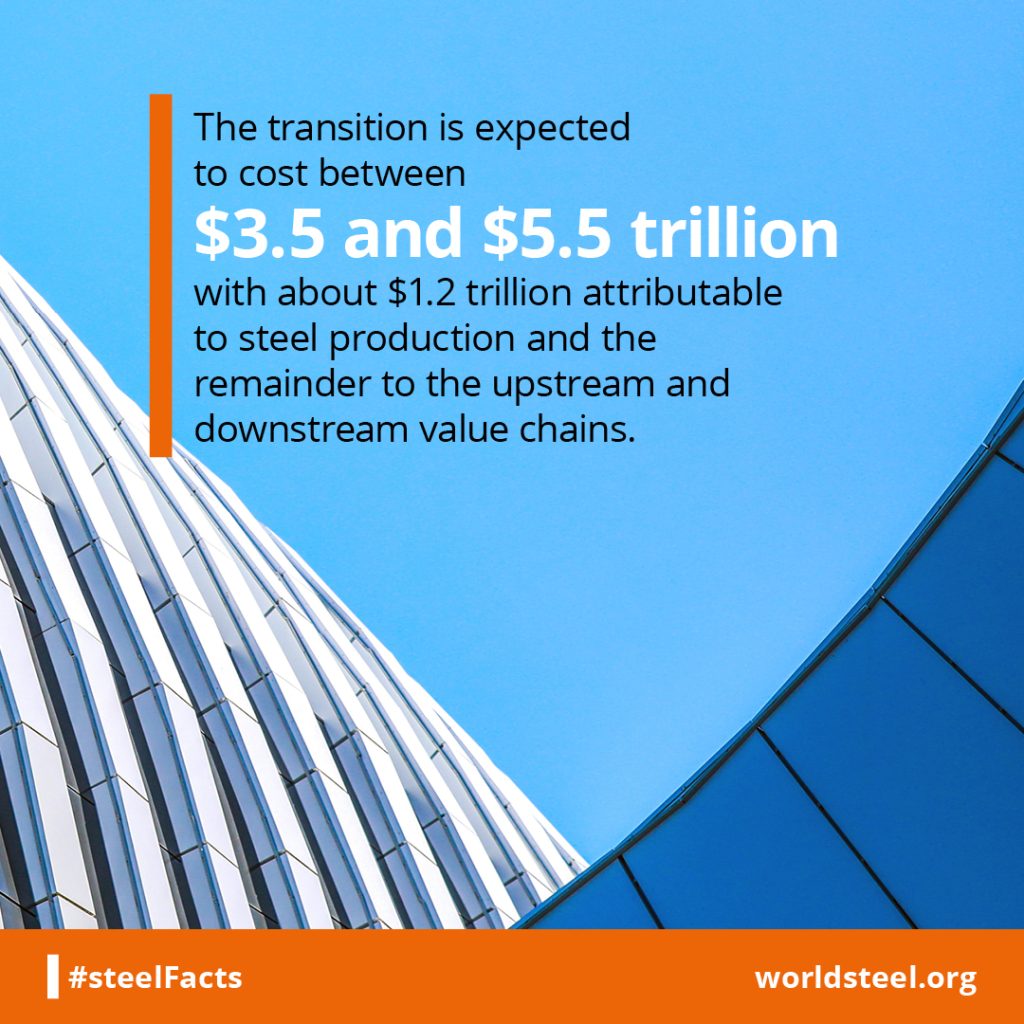
The transition is expected to cost between $3.5 and $5.5 trillion, with about $1.2 trillion attributable to steel production and the remainder to the upstream and downstream value chains.
下载
复制该事实的链接
Why steel matters for the climate transition
下载
复制该事实的链接
Climate action - Our priorities
Sustainable steel 2026
下载
复制该事实的链接
下载
复制该事实的链接
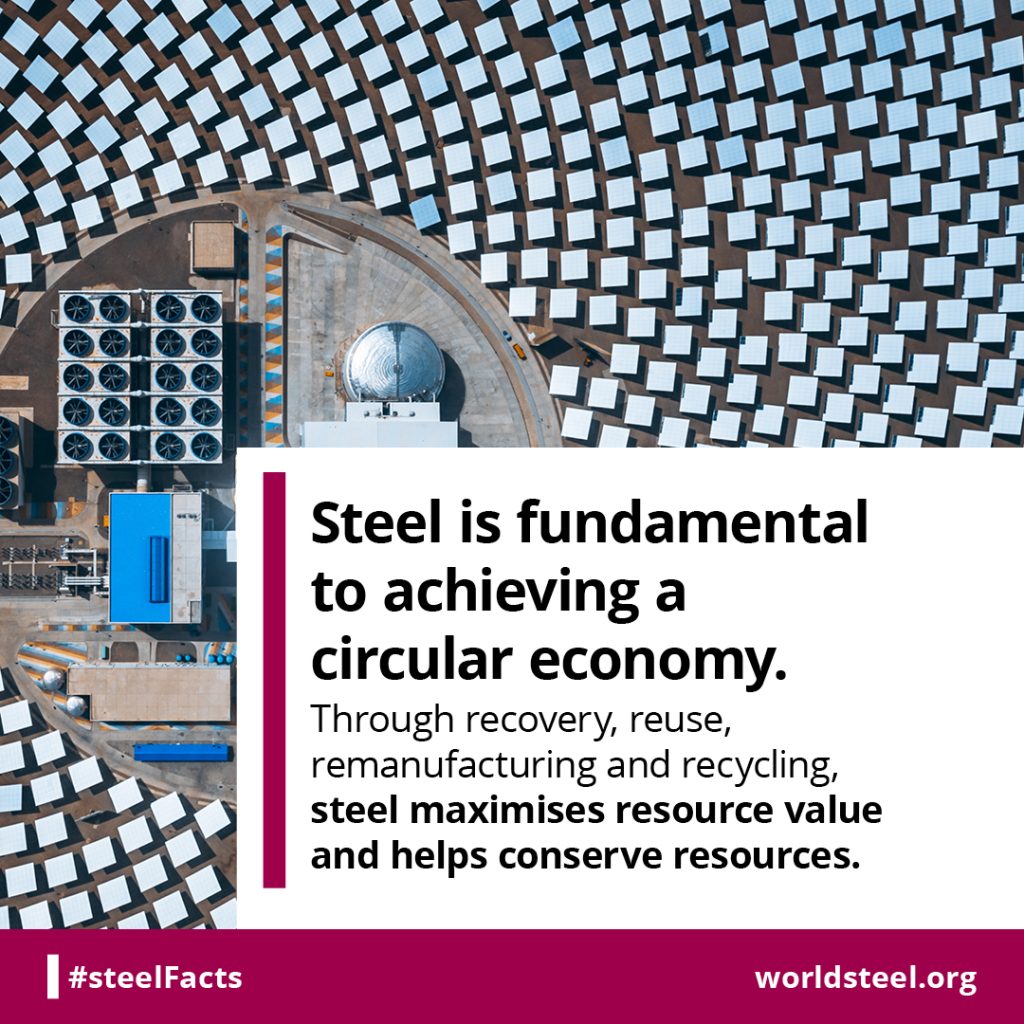
Steel is fundamental to achieving a circular economy.
下载
复制该事实的链接
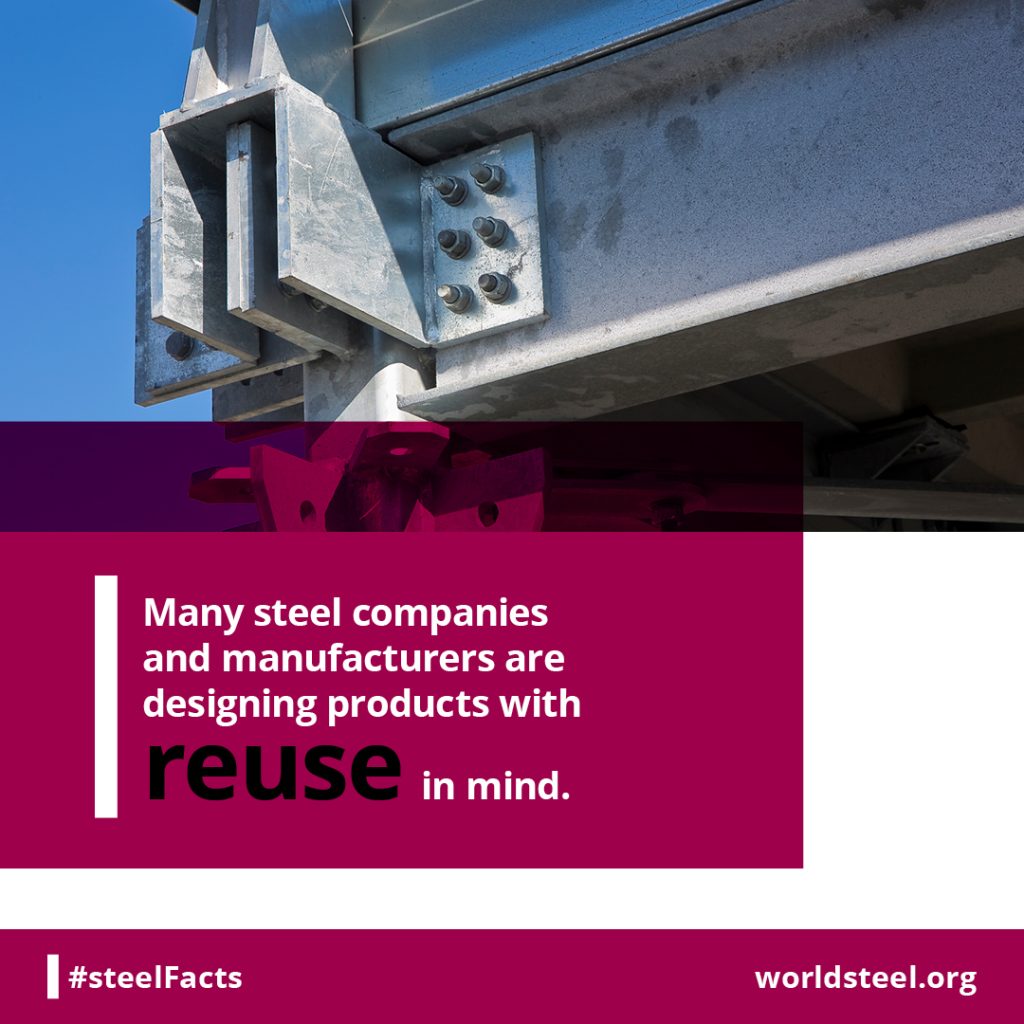
Many steel companies and manufacturers are designing products with reuse in mind.
下载
复制该事实的链接
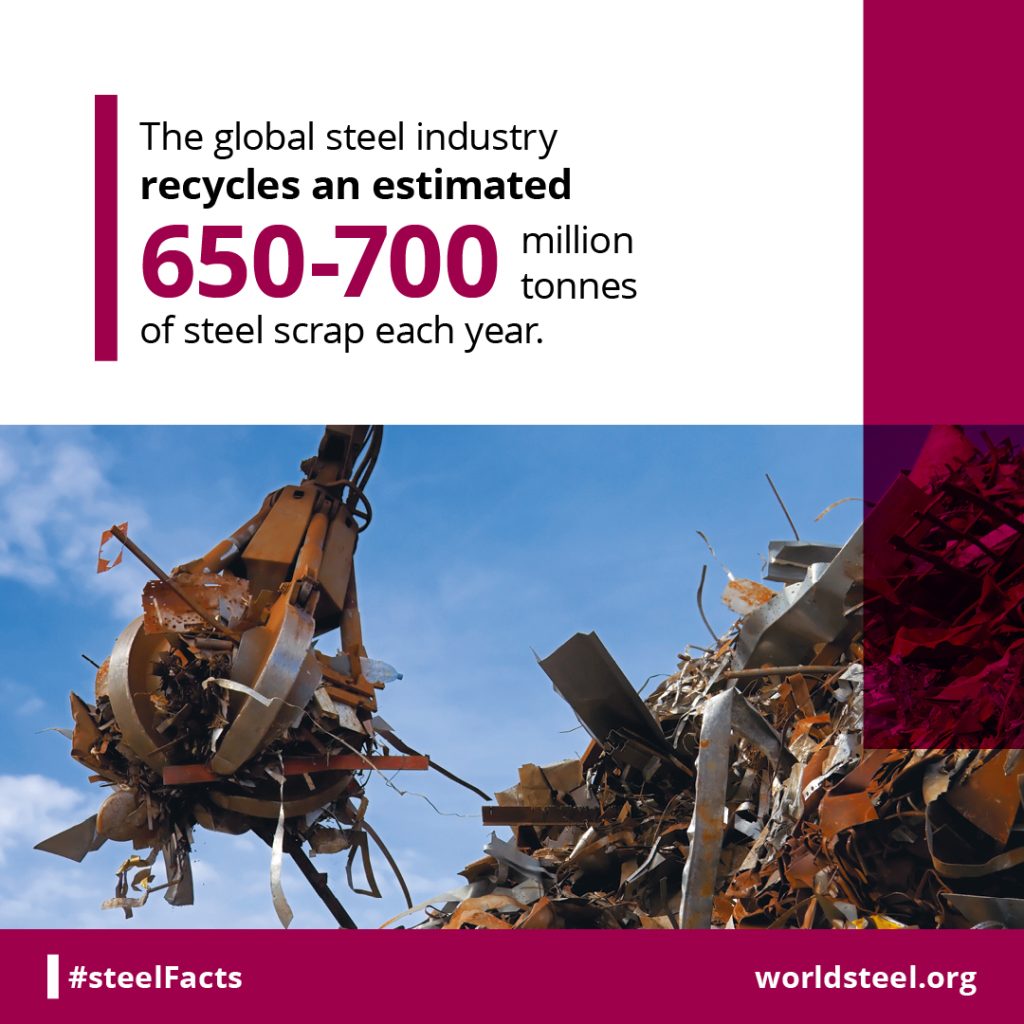
The global steel industry recycles an estimated 650-700 million tonnes of steel scrap each year.
下载
复制该事实的链接
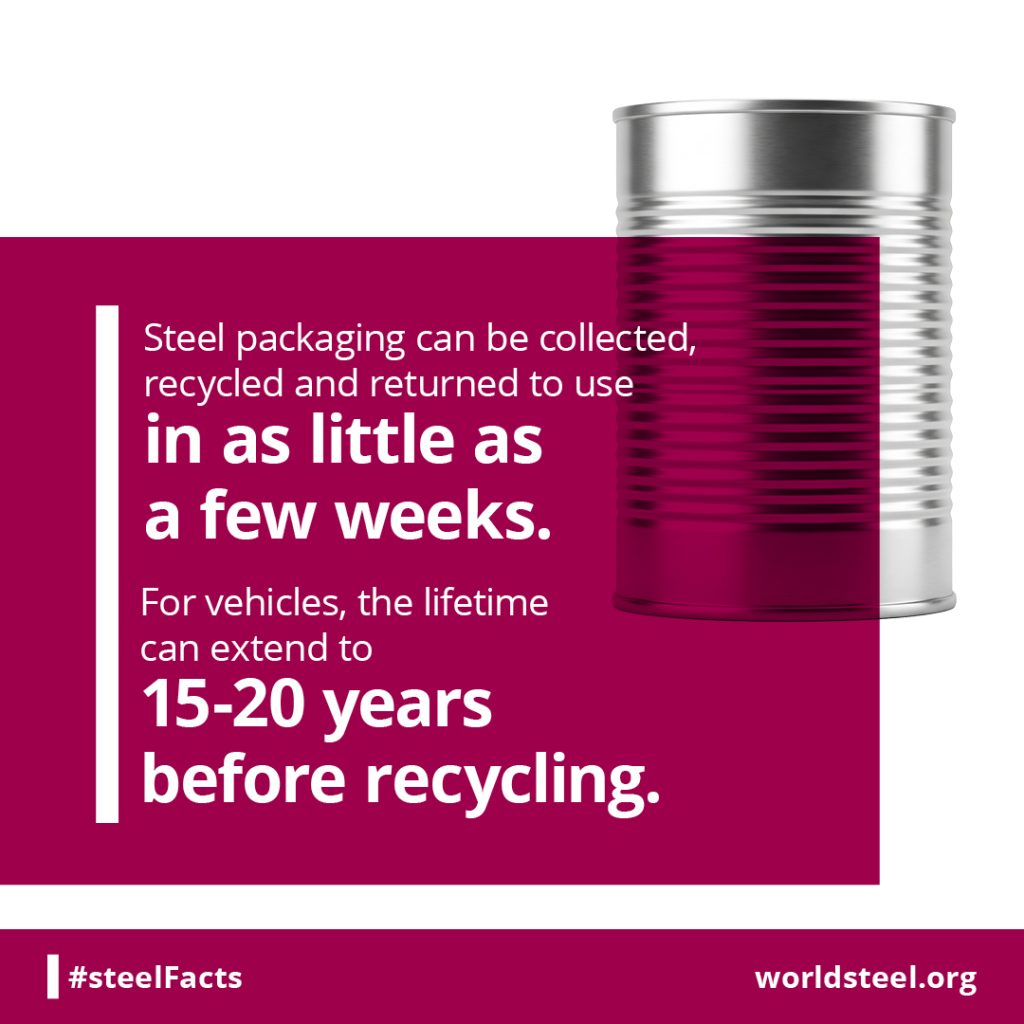
Steel packaging can be collected, recycled and returned to use in as little as a few weeks. For vehicles, the lifetime can extend to 15-20 years before recycling.
下载
复制该事实的链接
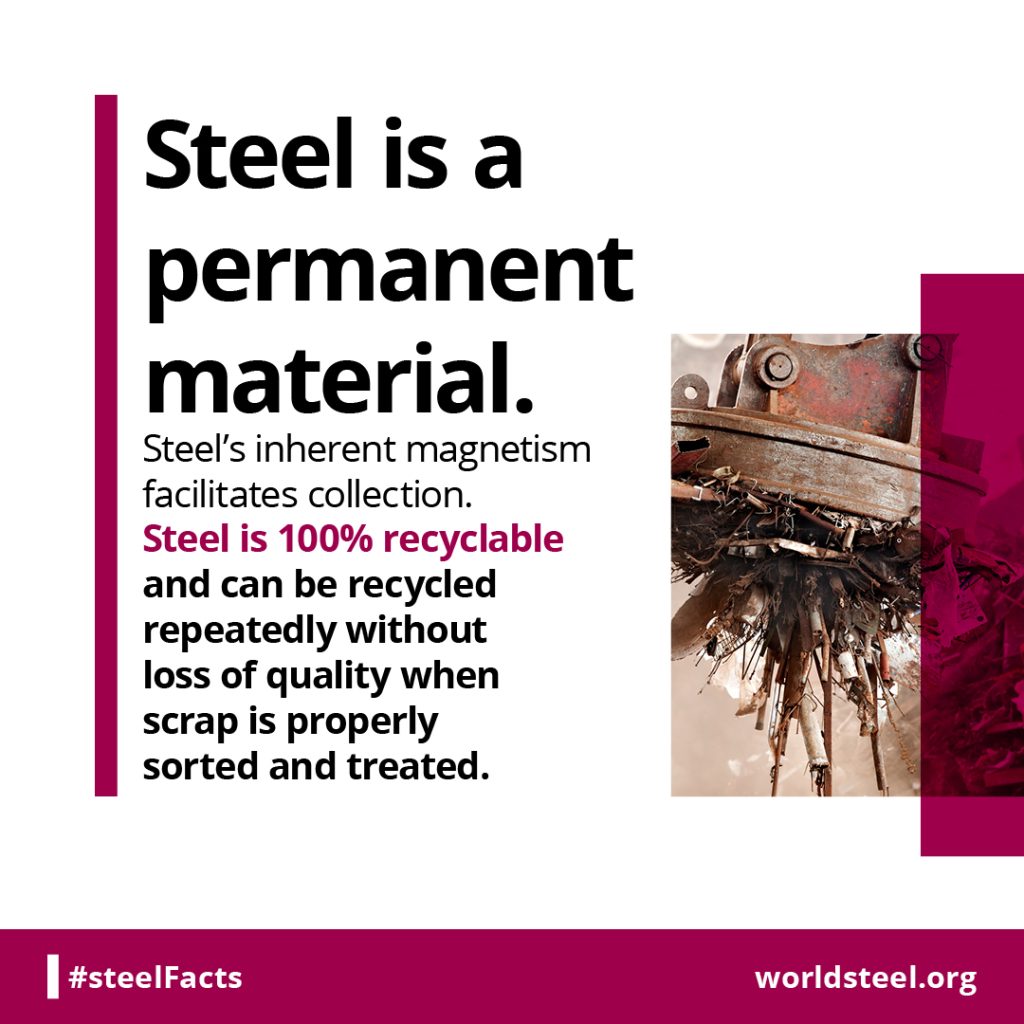
Steel is a permanent material. Steel’s inherent magnetism facilitates collection. Steel is 100% recyclable and can be recycled repeatedly without loss of quality when scrap is properly sorted and treated.
下载
复制该事实的链接
下载
复制该事实的链接
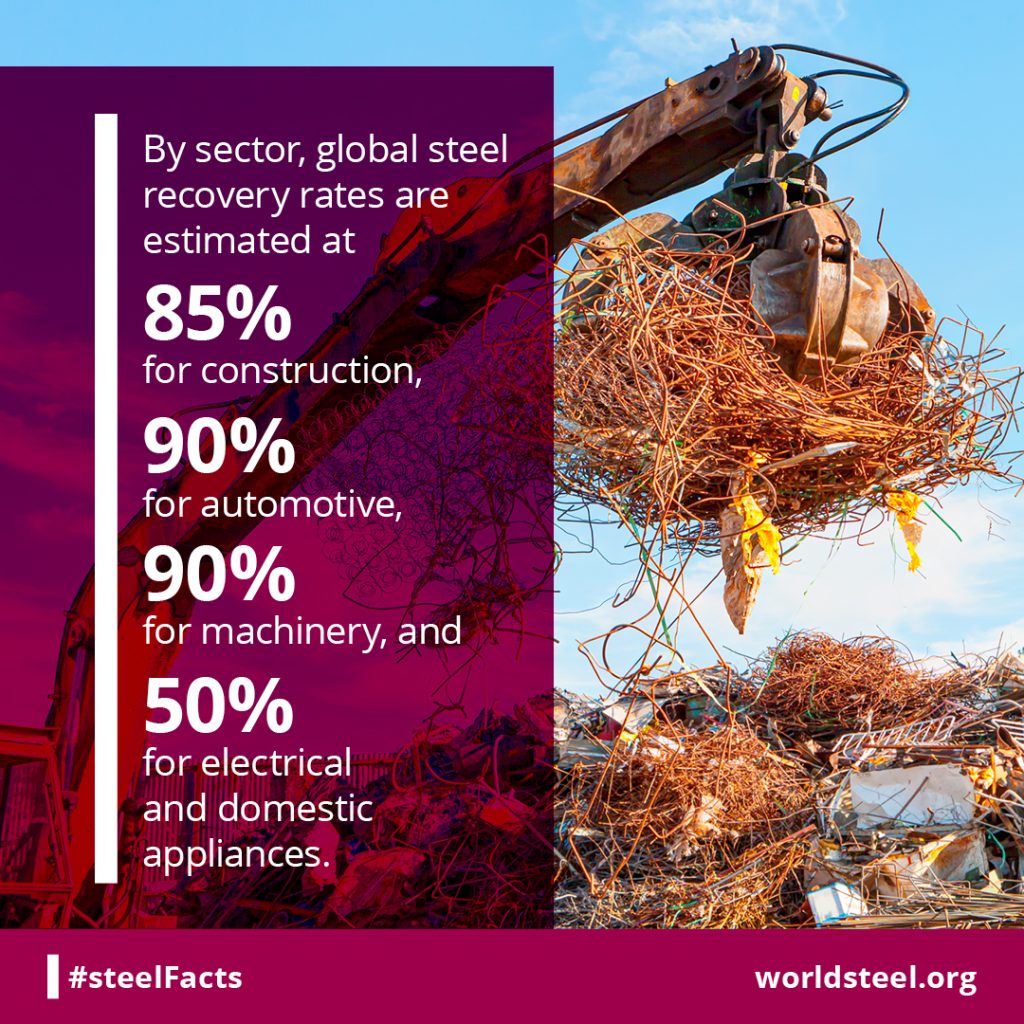
By sector, global steel recovery rates are estimated at 85% for construction, 90% for automotive, 90% for machinery, and 50% for electrical and domestic appliances.
下载
复制该事实的链接
New technologies are emerging to convert steelmaking gases into methanol and ethanol, reducing CO₂ emissions, conserving energy, and lessening fossil fuel reliance in sectors like transportation.
下载
复制该事实的链接
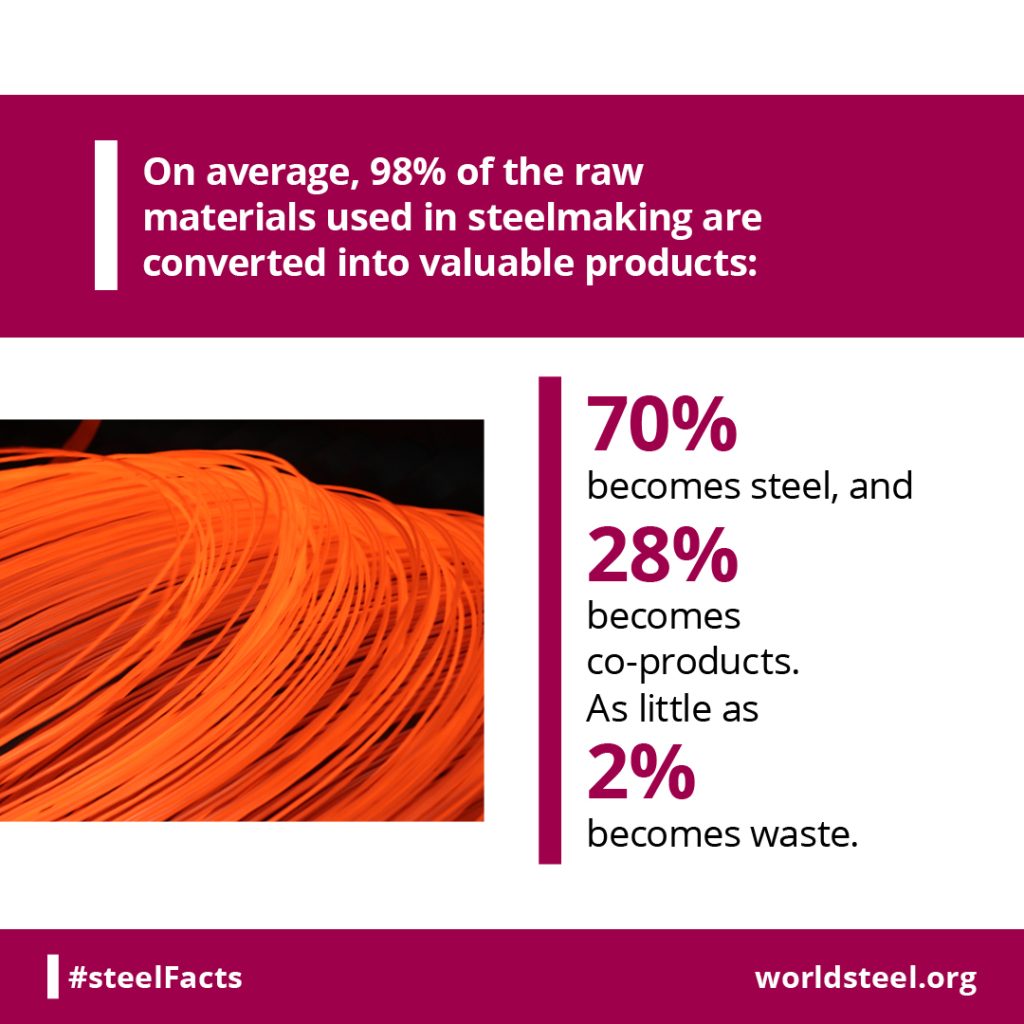
On average, 98% of the raw materials used in steelmaking are converted into valuable products: 70% becomes steel, and 28% becomes co-products. As little as 2% becomes waste.
下载
复制该事实的链接
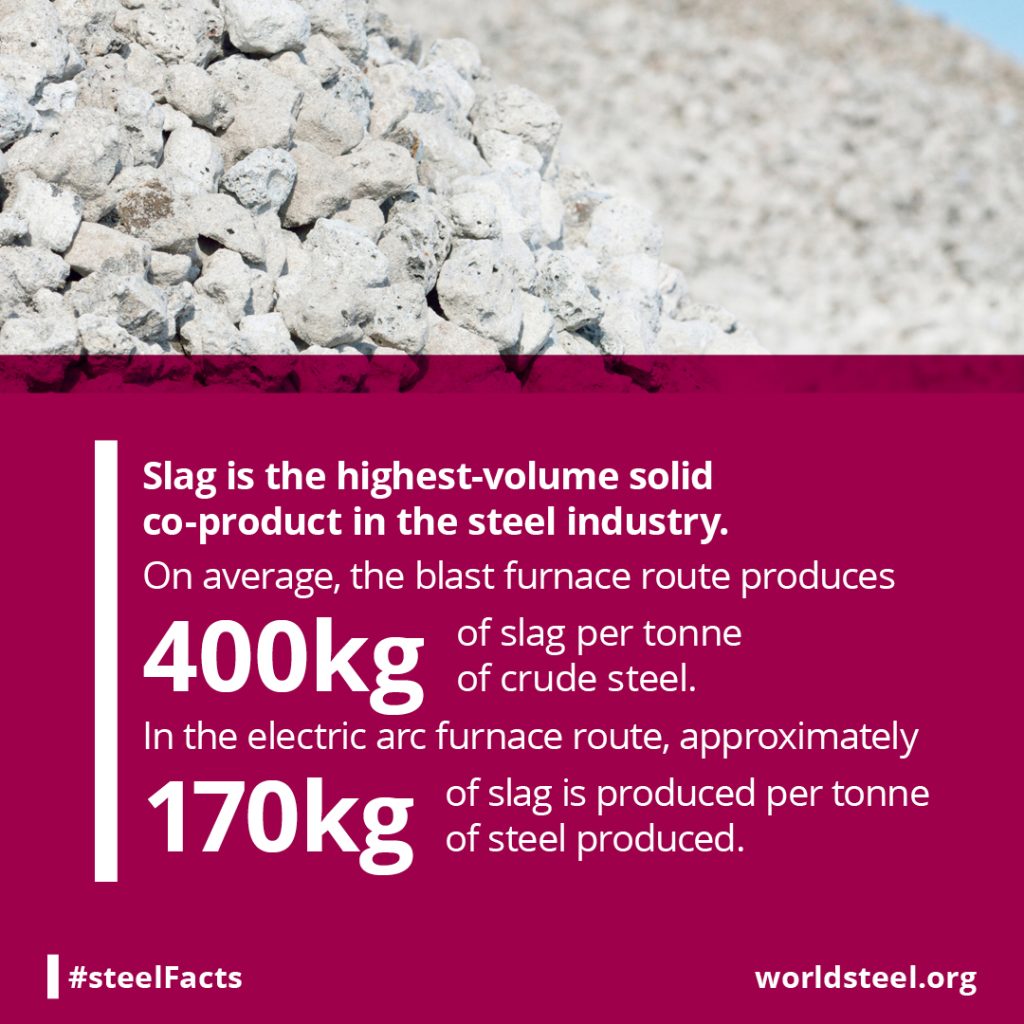
Slag is the highest-volume solid co-product in the steel industry. On average, the blast furnace route produces 400 kg of slag per tonne of crude steel. In the electric arc furnace route, approximately 170 kg of slag is produced per tonne of steel pr…
下载
复制该事实的链接
Nearly 100% of the steel industry’s co-products can be used, providing valuable materials and energy for other sectors.
下载
复制该事实的链接
下载
复制该事实的链接
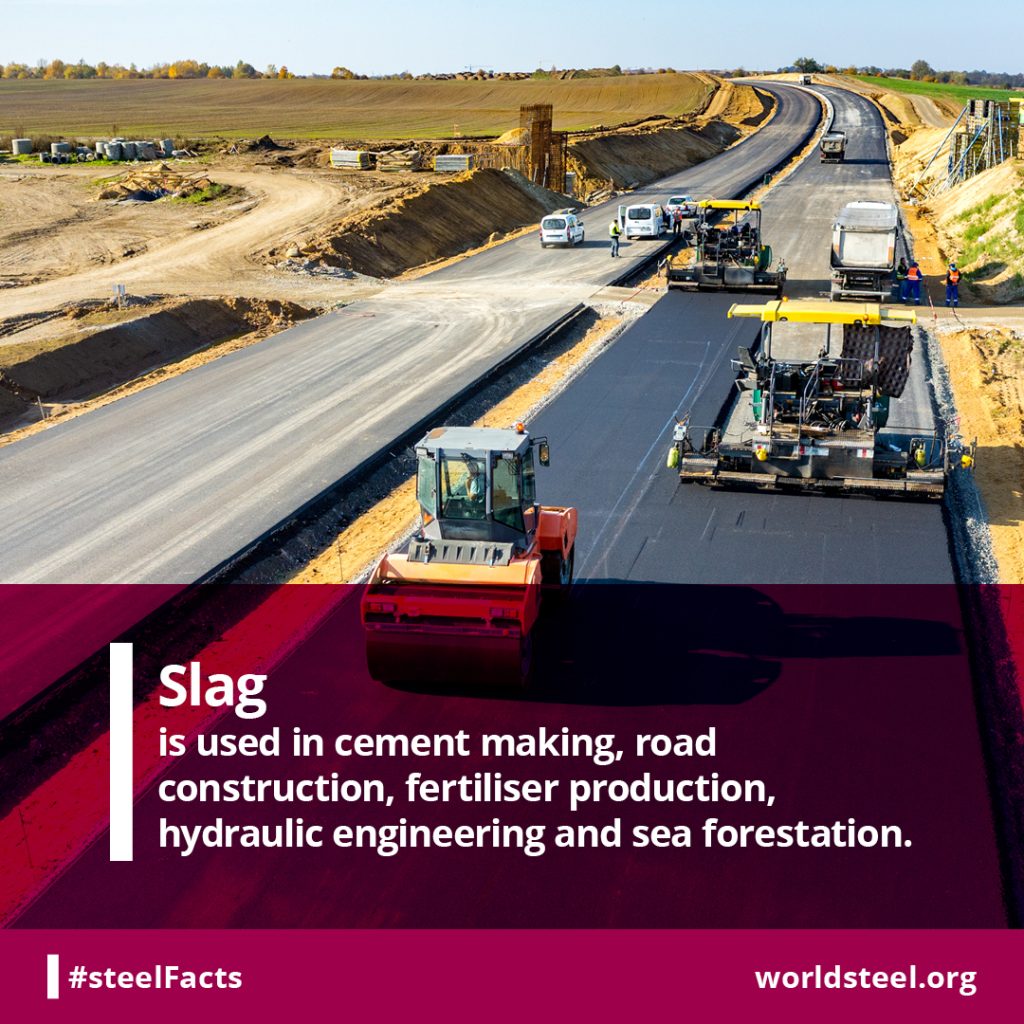
Slag is used in cement making, road construction, fertiliser production, hydraulic engineering and sea forestation.
下载
复制该事实的链接
Steelmaking process gases are used to produce heat and/or electricity.
下载
复制该事实的链接
When process gases are fully reused, they can meet 60% to 100% of the plant’s electricity demand.
下载
复制该事实的链接
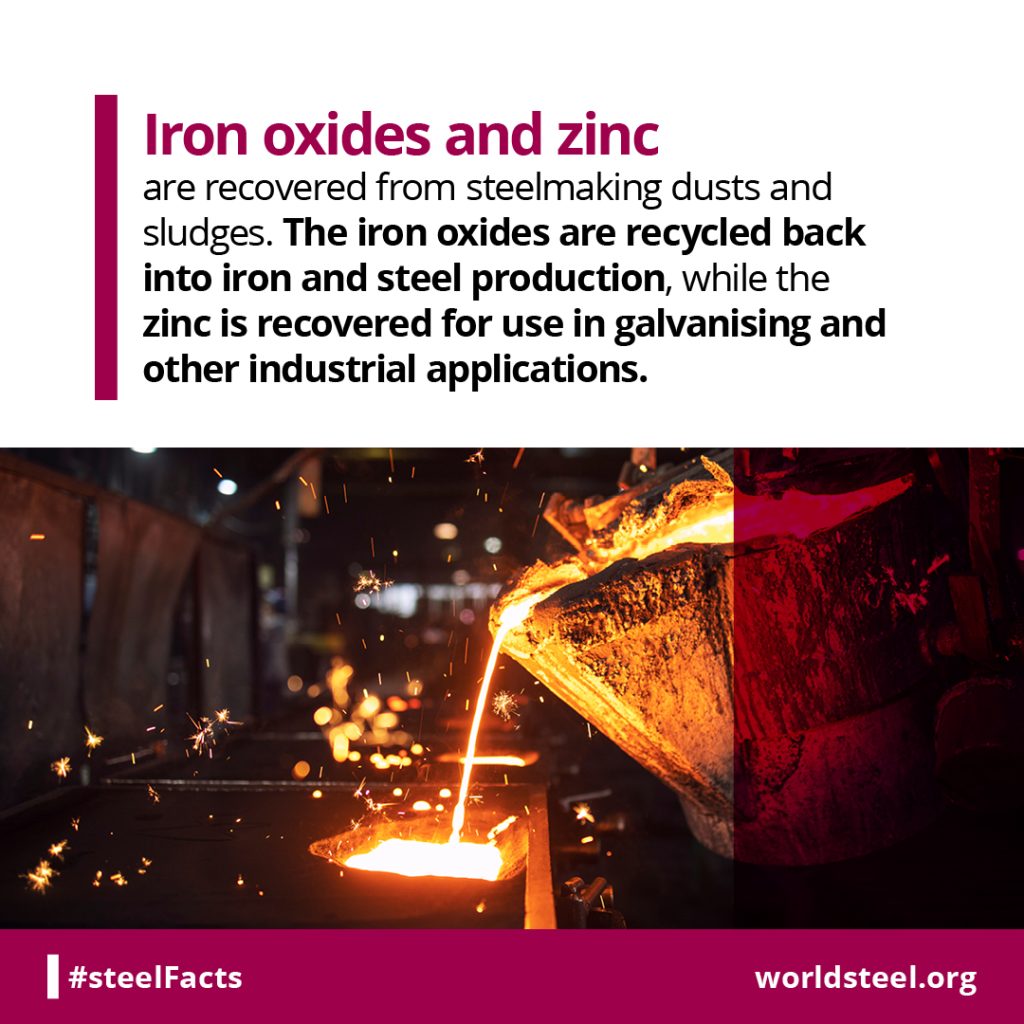
Iron oxides and zinc are recovered from steelmaking dusts and sludges. The iron oxides are recycled back into iron and steel production, while the zinc is recovered for use in galvanising and other industrial applications.
下载
复制该事实的链接
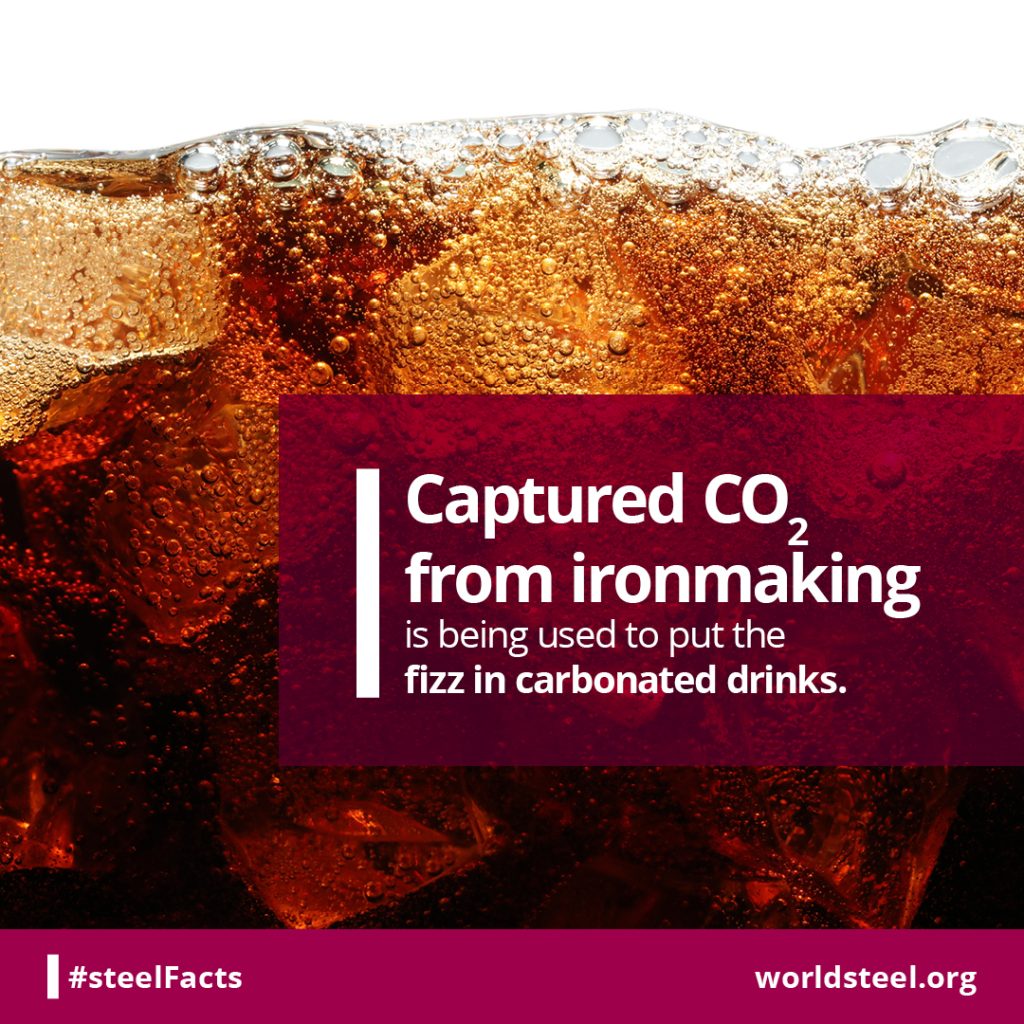
Captured CO2 from ironmaking is being used to put the fizz in carbonated drinks
下载
复制该事实的链接
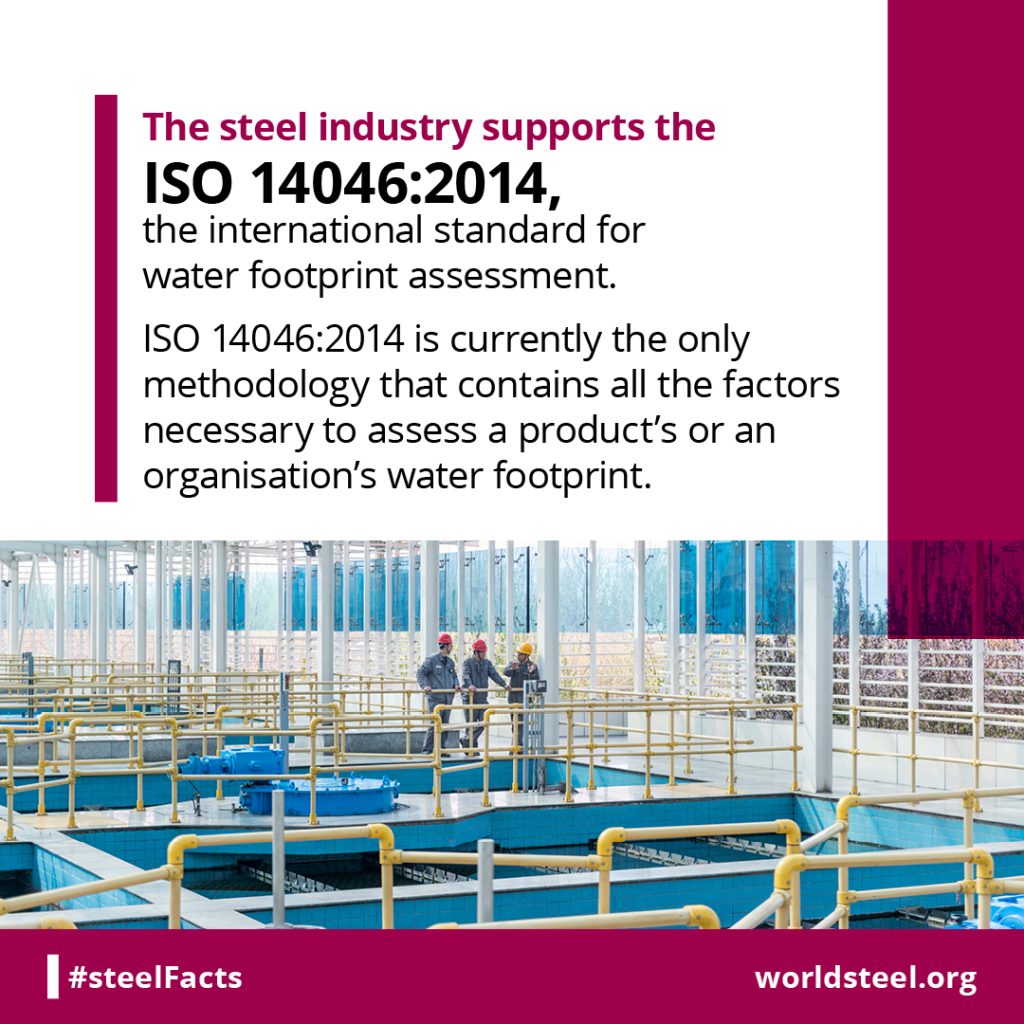
The steel industry supports ISO 14046:2014, the international standard for water footprint assessment. ISO 14046:2014 is currently the only methodology that contains all the factors necessary to assess a product’s or an organisation’s water footprint…
下载
复制该事实的链接
下载
复制该事实的链接
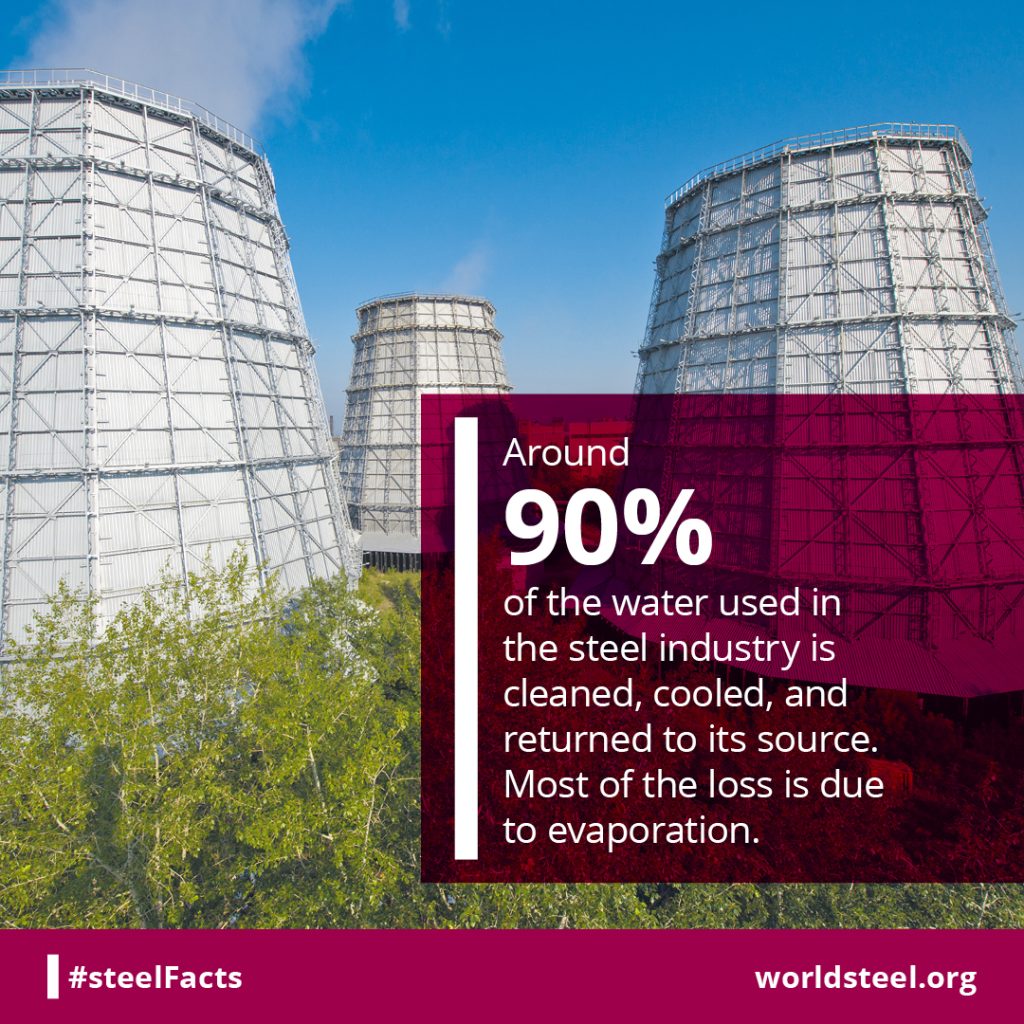
Around 90% of the water used in the steel industry is cleaned, cooled, and returned to its source. Most of the loss is due to evaporation.
下载
复制该事实的链接
Water from the steel industry that returns to rivers and other sources is often cleaner than when it was extracted.
下载
复制该事实的链接
Sea water is used almost exclusively in cooling operations, and losses during these processes may account for less than 1% of the total due to evaporation.
下载
复制该事实的链接
下载
复制该事实的链接
Fabric dust filters in steel plants typically achieve a collection efficiency of more than 99%, even for very small particle sizes.
下载
复制该事实的链接
The industry uses advanced technologies to control emissions of SOx, NOx, dust, and heavy metals, meeting increasingly stringent regulatory requirements.
下载
复制该事实的链接
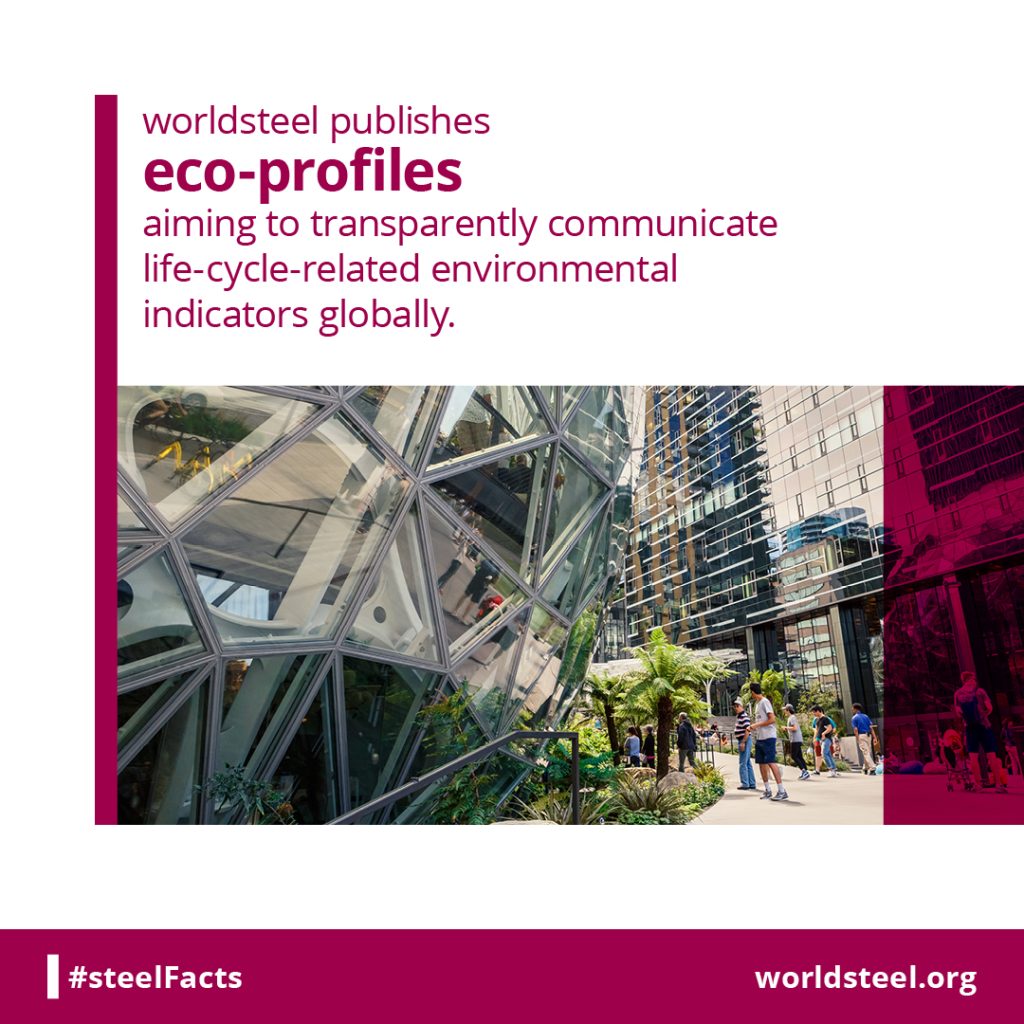
worldsteel’s eco-profiles aim to transparently communicate life-cycle-related environmental indicators globally.
下载
复制该事实的链接
Steel supports a circular economy because it is durable, reusable, remanufacturable, and recyclable.
下载
复制该事实的链接
Our priority is to maximise resource efficiency, increase circularity, improve environmental performance, reduce waste and air pollution, support transparent data disclosure, and promote the responsible use of steel industry co-products.
Our people 2026
下载
复制该事实的链接
下载
复制该事实的链接
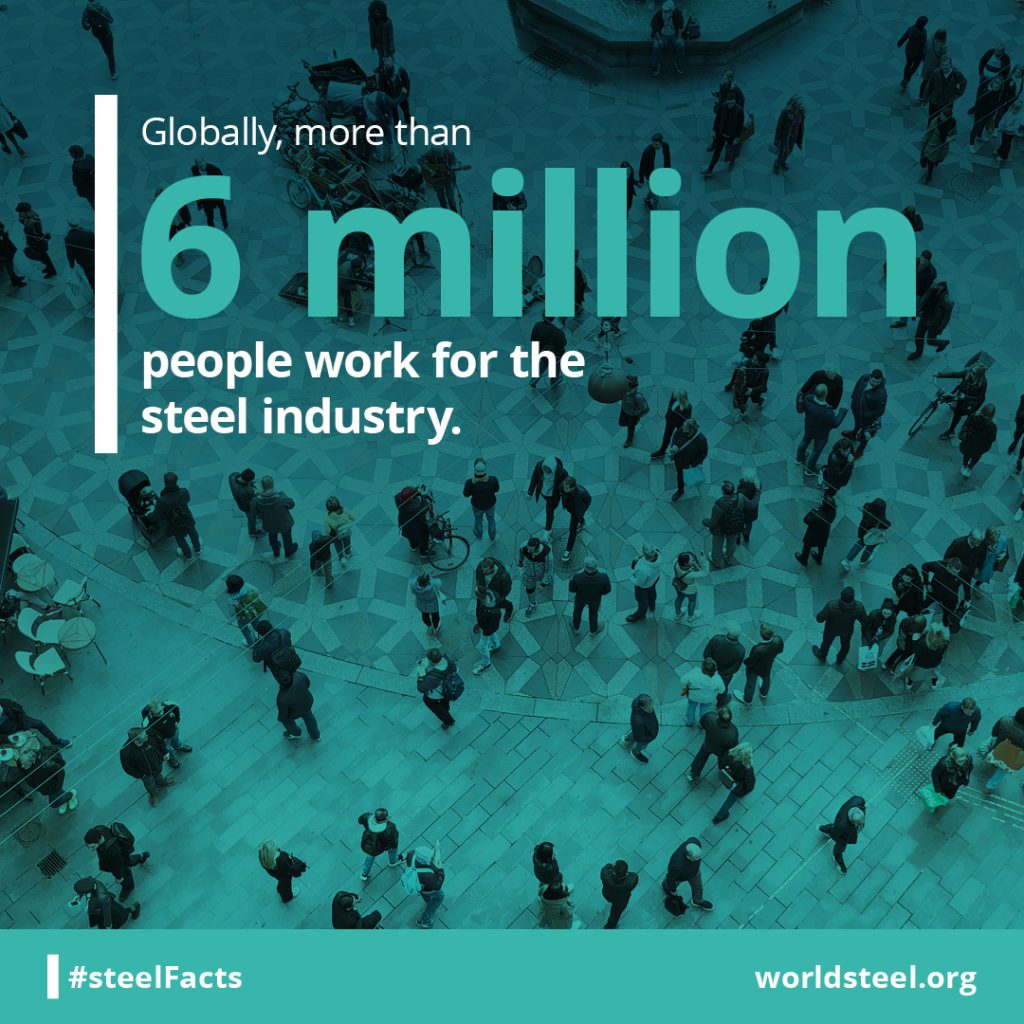
Globally, over 6 million people work for the steel industry.
下载
复制该事实的链接
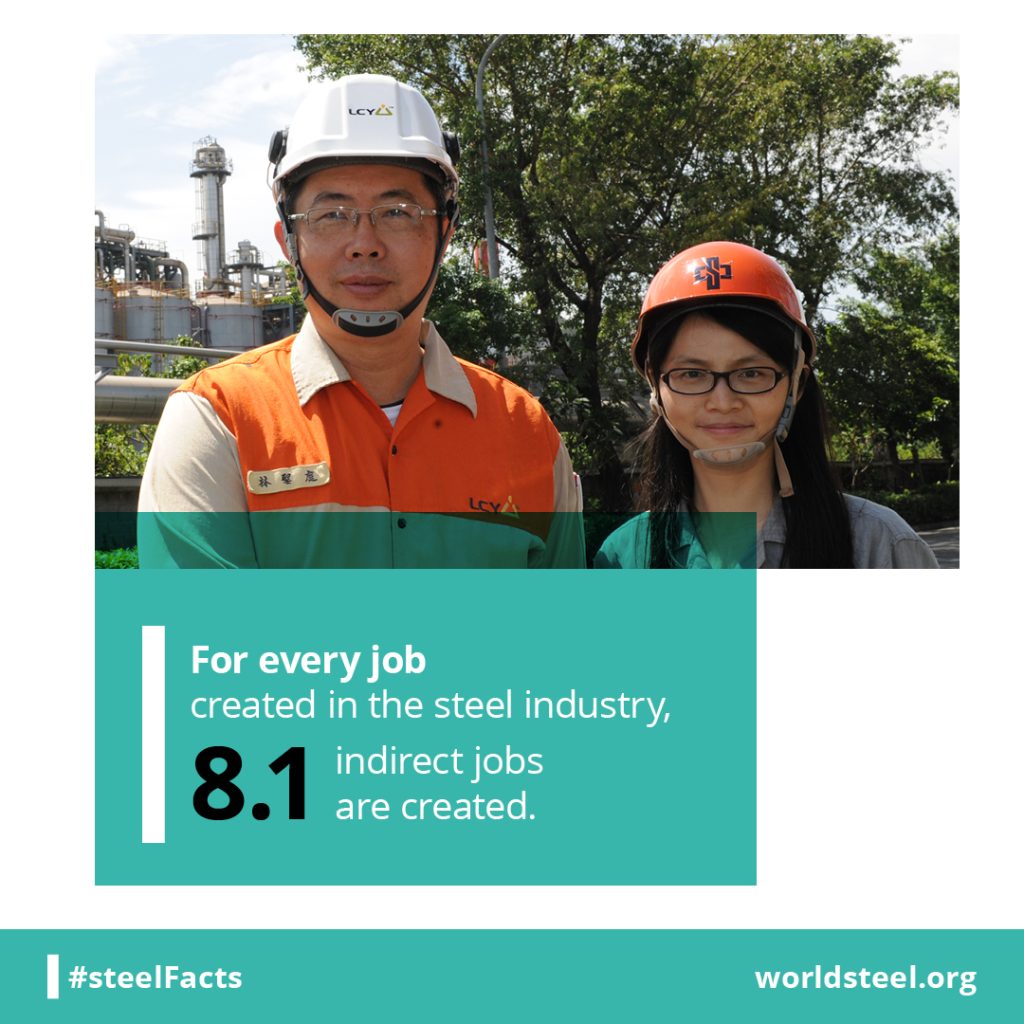
For every job created in the steel industry, 8.1 indirect jobs are created.
下载
复制该事实的链接
The steel industry supports 49.3 million jobs.
下载
复制该事实的链接
The steel industry contributed approximately 3.8% of global GDP in 2017 and supported 96 million jobs worldwide.
下载
复制该事实的链接
For every job in the steel sector, 6.5 more jobs are supported throughout its supply chain. In total, 40.5 million people work within the steel industry's global supply chain.
下载
复制该事实的链接
下载
复制该事实的链接
The steel industry’s net-zero transition will require the best and brightest talent.
下载
复制该事实的链接
下载
复制该事实的链接
A job in the steel industry gives you a unique opportunity to contribute to climate change solutions.
下载
复制该事实的链接
The steel industry recognises the importance of a sustainable and just transition.
下载
复制该事实的链接
下载
复制该事实的链接
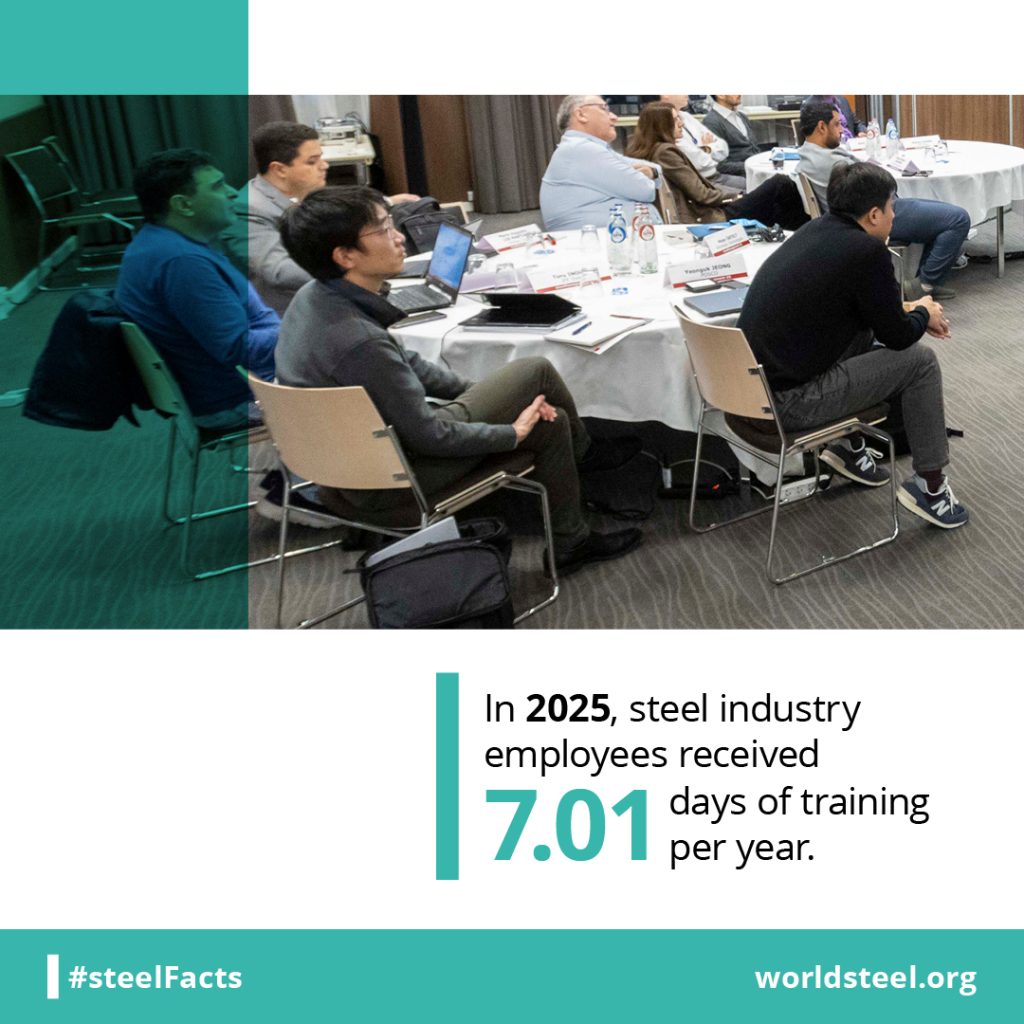
In 2025, steel industry employees received 7.01 days of training per year.
下载
复制该事实的链接
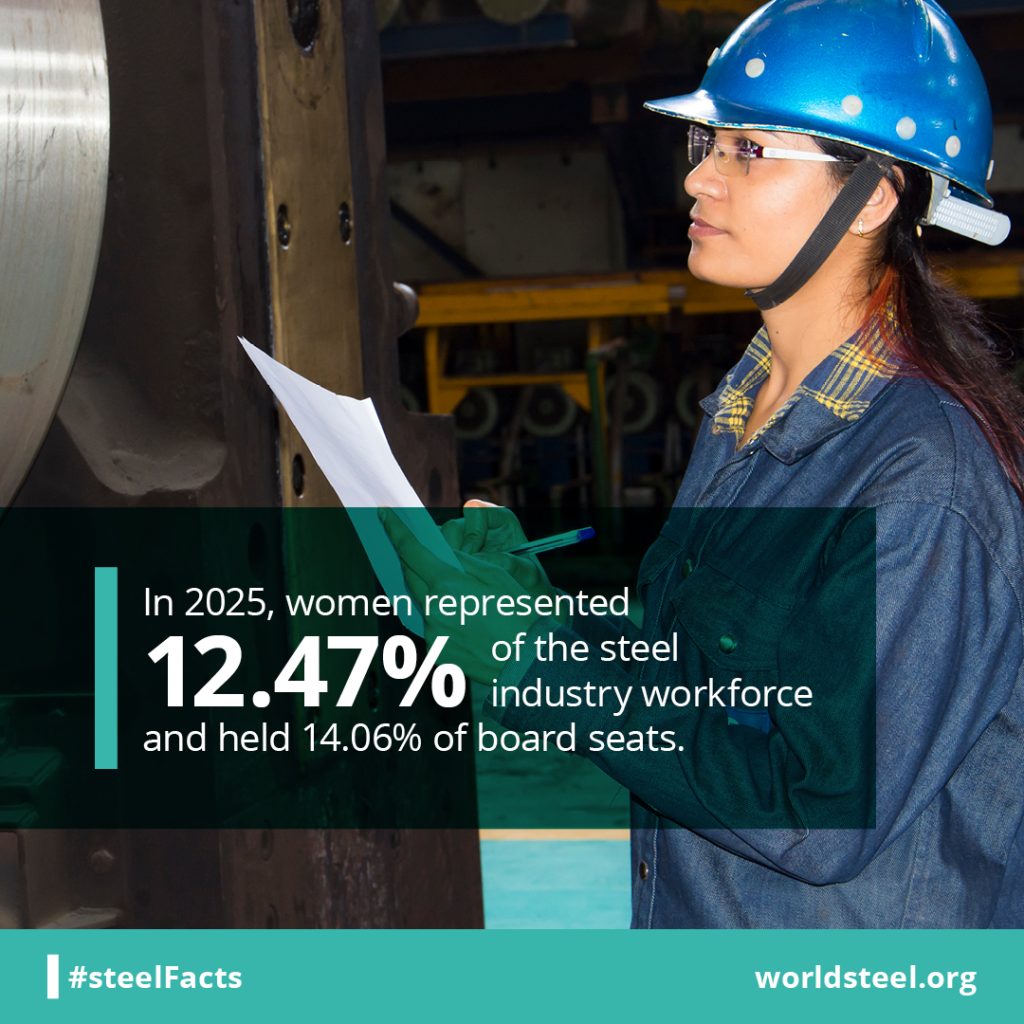
In 2025, women represented 12.47% of the steel industry workforce and held 14.06% of board seats.
下载
复制该事实的链接
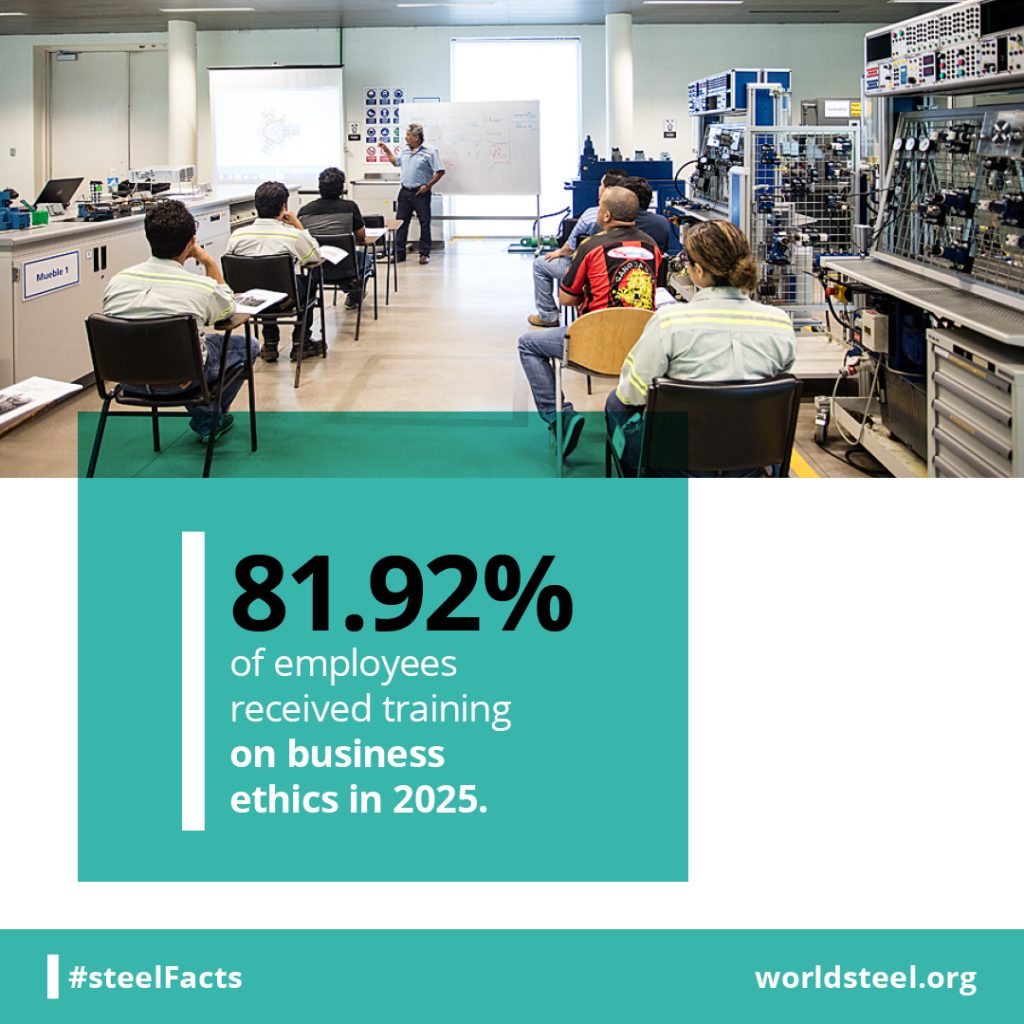
81.92% of employees received training on business ethics in 2025
下载
复制该事实的链接
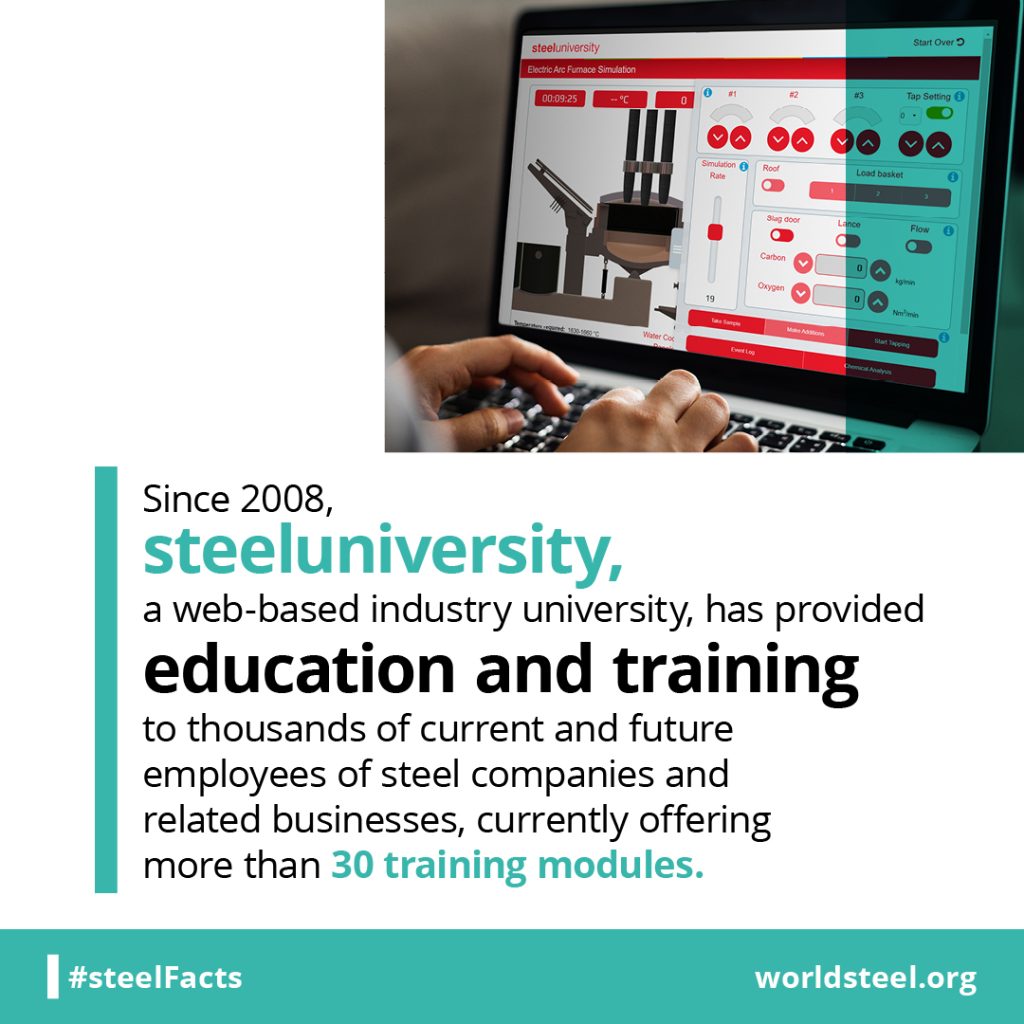
Since 2008, steeluniversity, a web-based industry university, has provided education and training to thousands of current and future employees of steel companies and related businesses, currently offering more than 30 training modules.
下载
复制该事实的链接
下载
复制该事实的链接
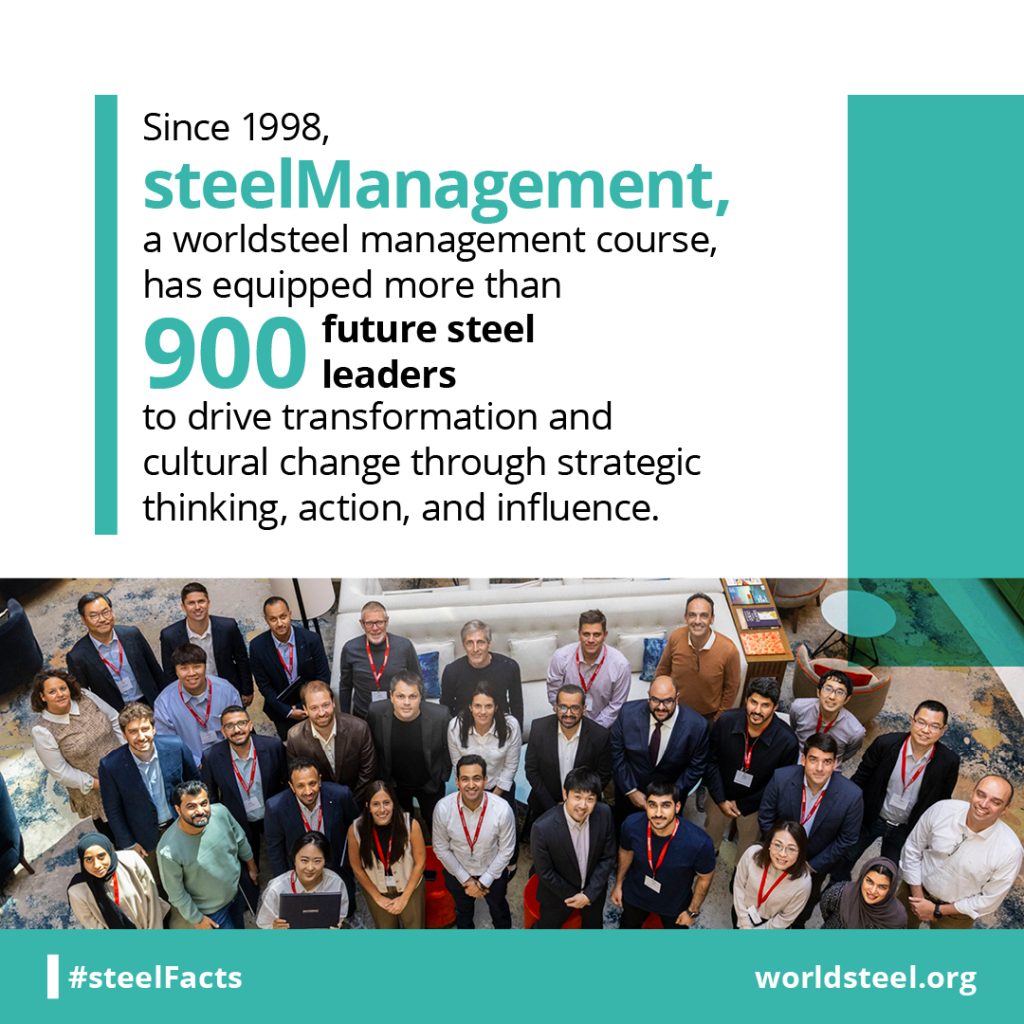
Since 1998, steelManagement, a worldsteel management course, has equipped more than 900 future steel leaders to drive transformation and cultural change through strategic thinking, action, and influence.
下载
复制该事实的链接
下载
复制该事实的链接
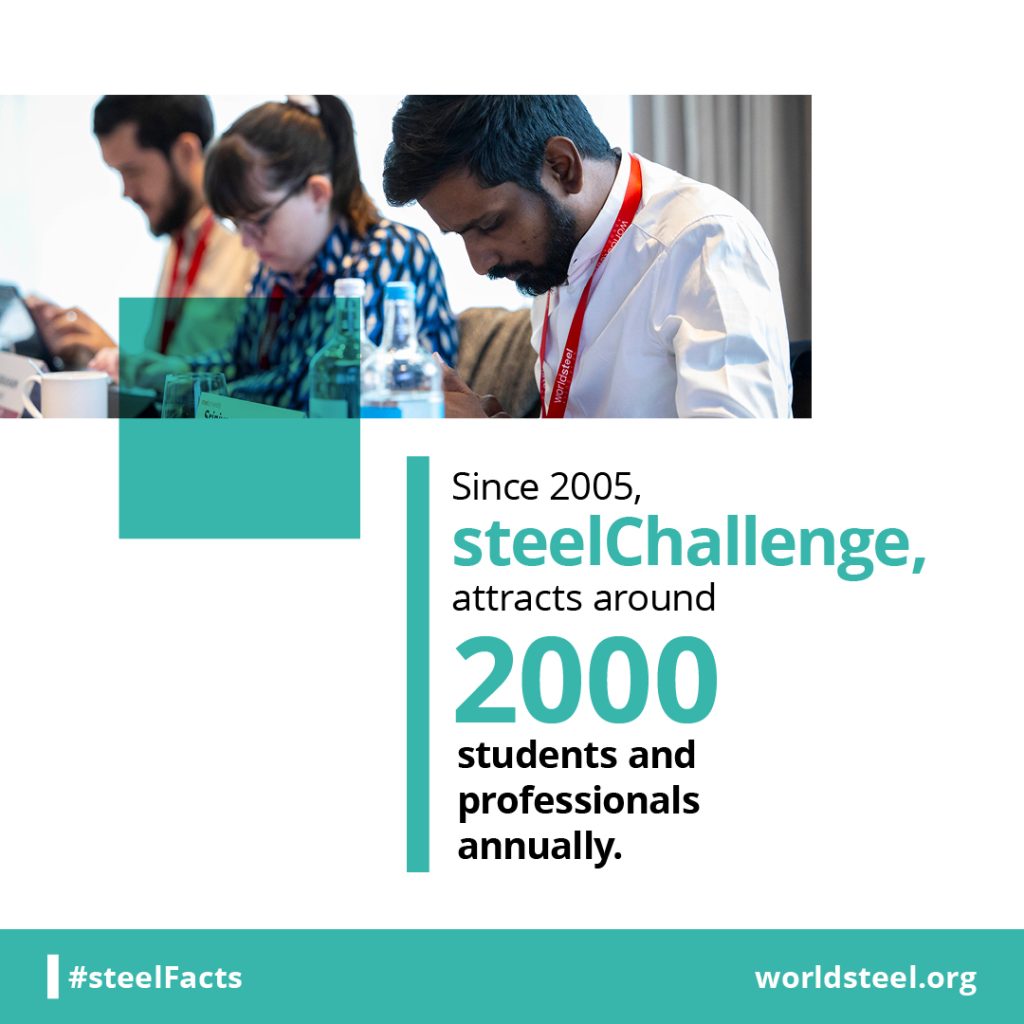
Since 2005, steelChallenge attracts around 2,000 students and professionals annually.
下载
复制该事实的链接
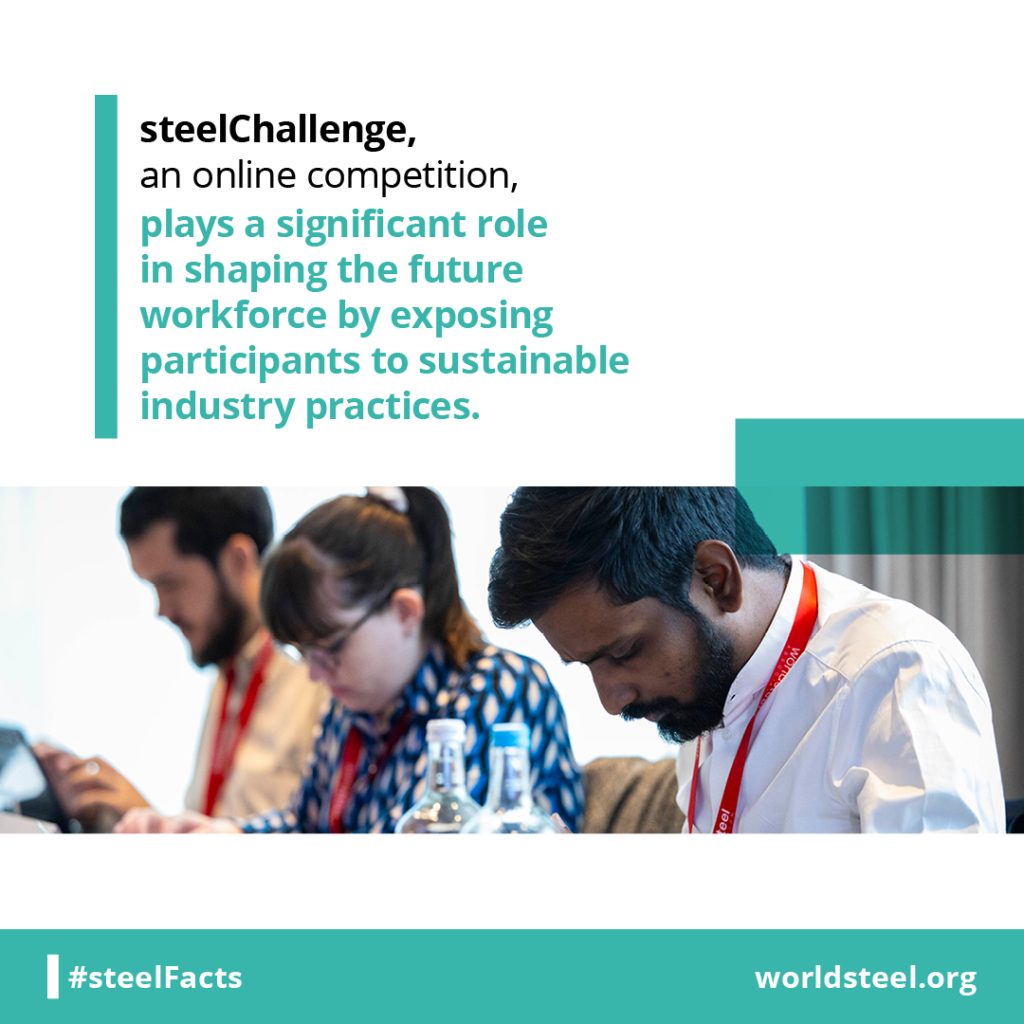
steelChallenge, an online competition, plays a significant role in shaping the future workforce by exposing participants to sustainable industry practices.
下载
复制该事实的链接
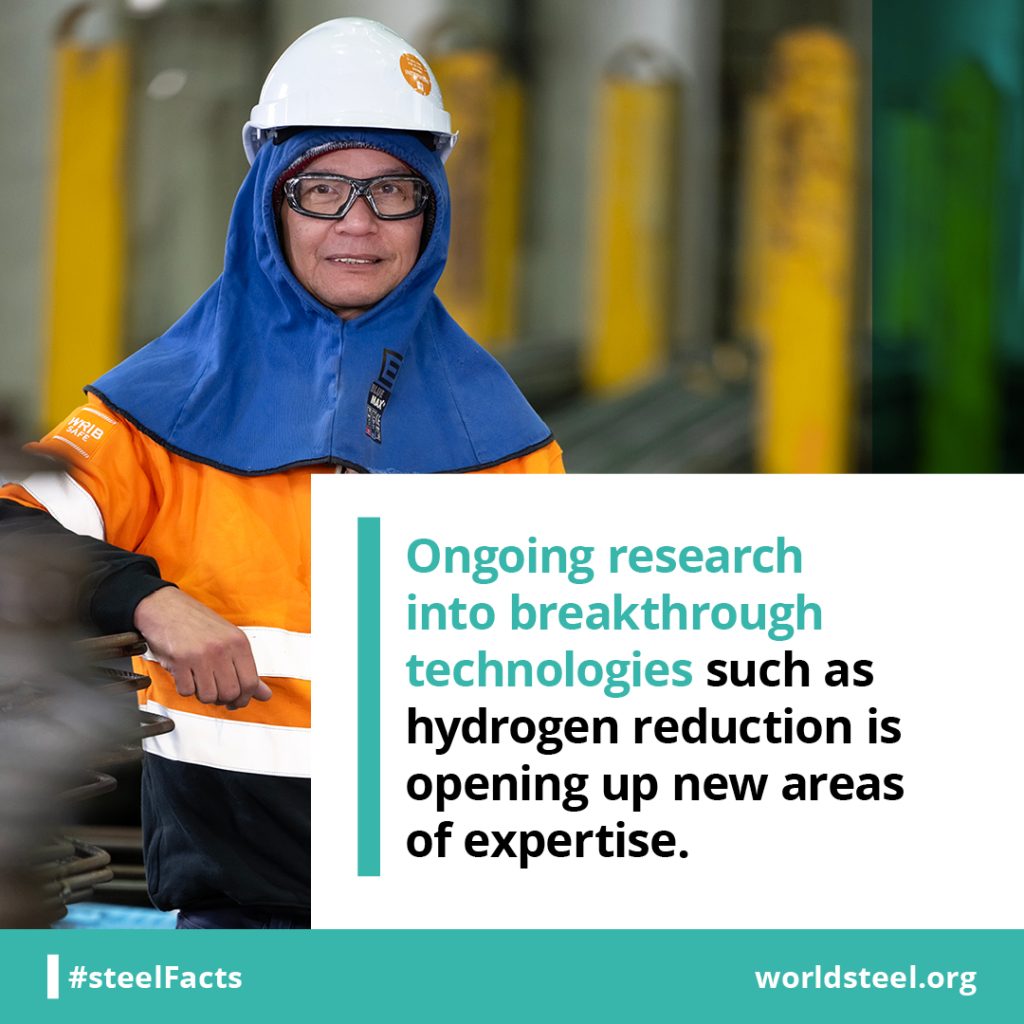
Ongoing research into breakthrough technologies such as hydrogen reduction is opening up new areas of expertise.
下载
复制该事实的链接
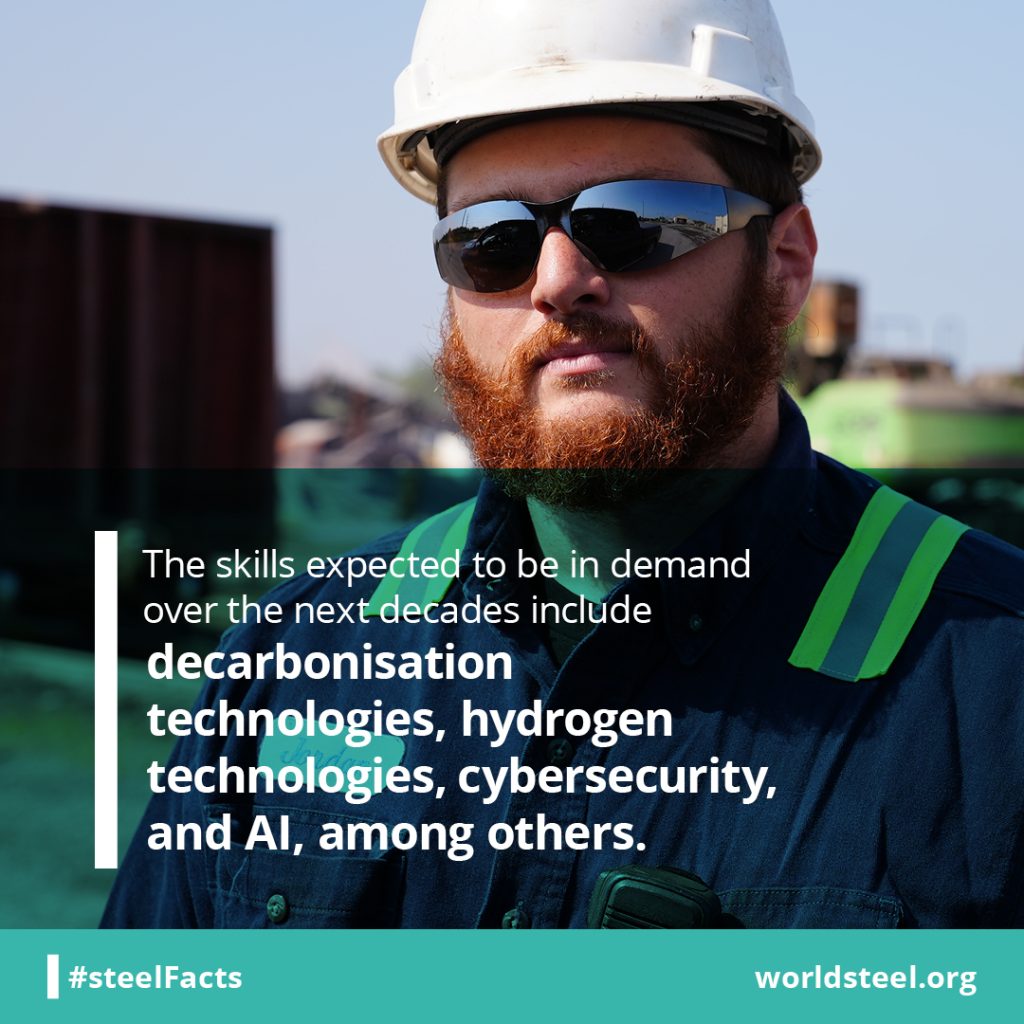
The skills expected to be in demand over the next decades include decarbonisation technologies, hydrogen technologies, cybersecurity, and AI, among others.
下载
复制该事实的链接
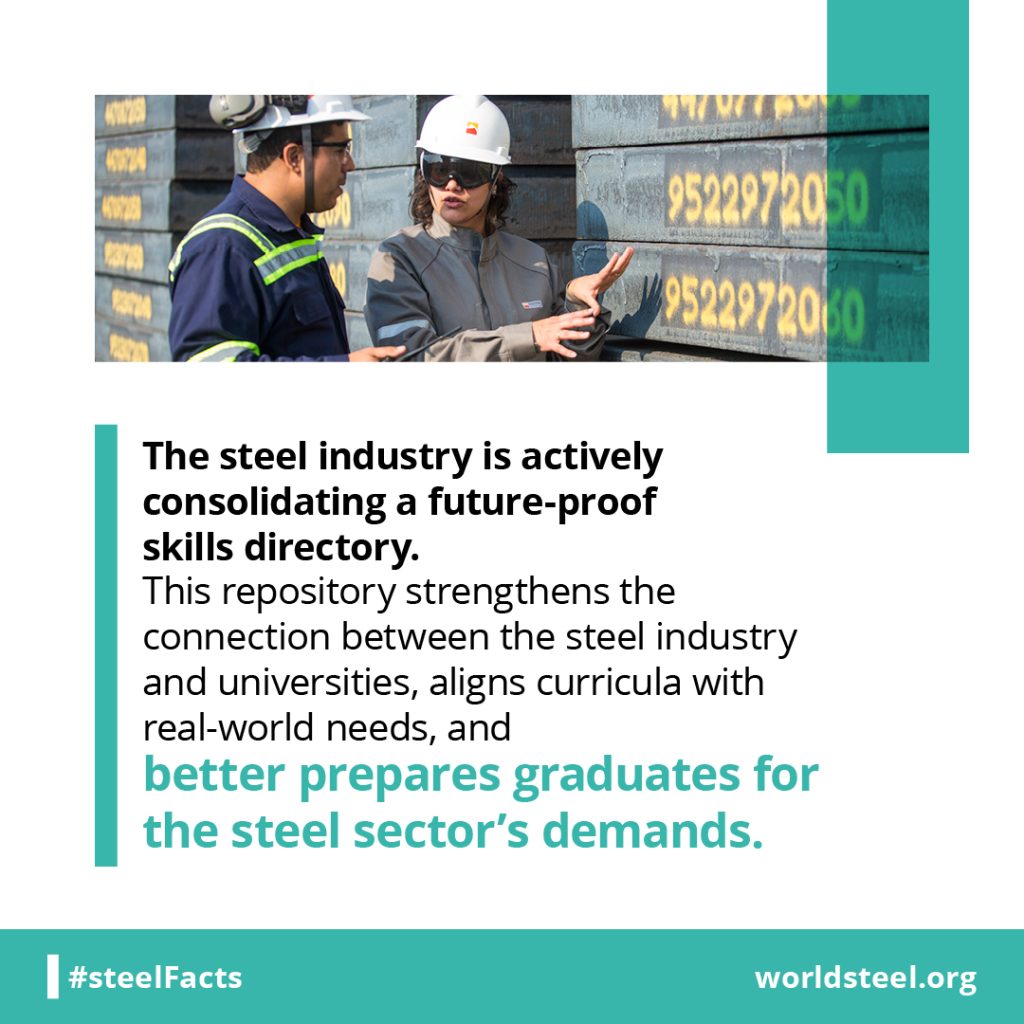
The steel industry is actively consolidating a future-proof skills directory. This repository strengthens the connection between the steel industry and universities, aligns curricula with real-world needs, and better prepares graduates for the steel…
下载
复制该事实的链接
下载
复制该事实的链接
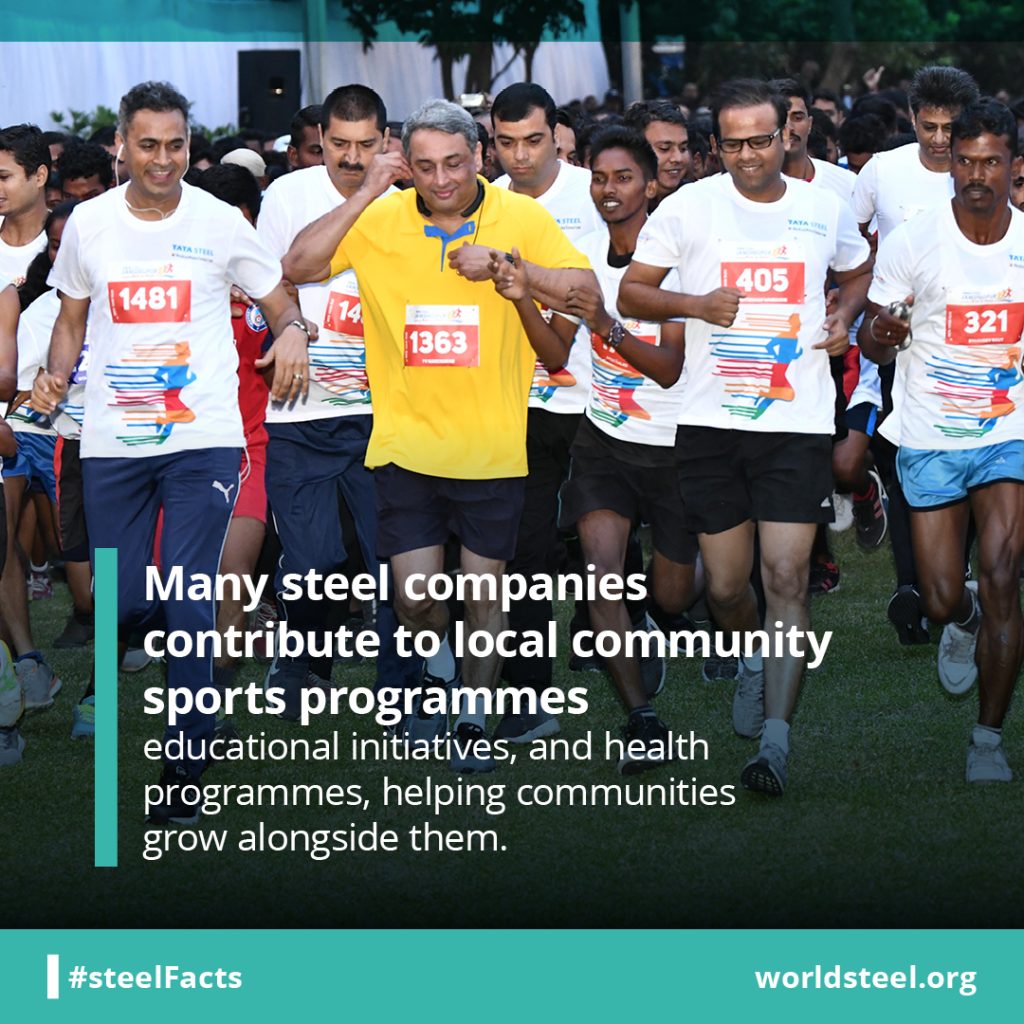
Many steel companies contribute to local community sports programmes, educational initiatives, and health programmes, helping communities grow alongside them.
下载
复制该事实的链接
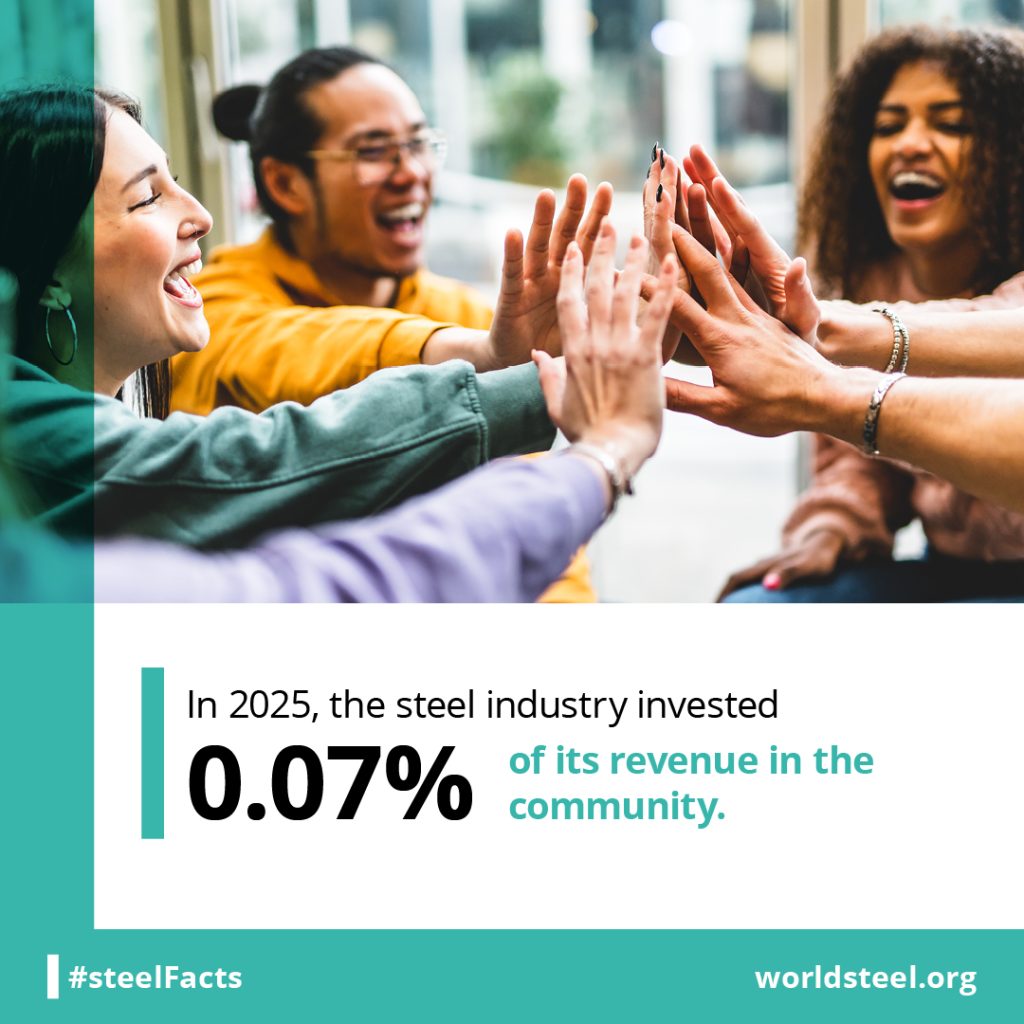
In 2025, the steel industry invested 0.07 per cent of its revenue in the community.
下载
复制该事实的链接
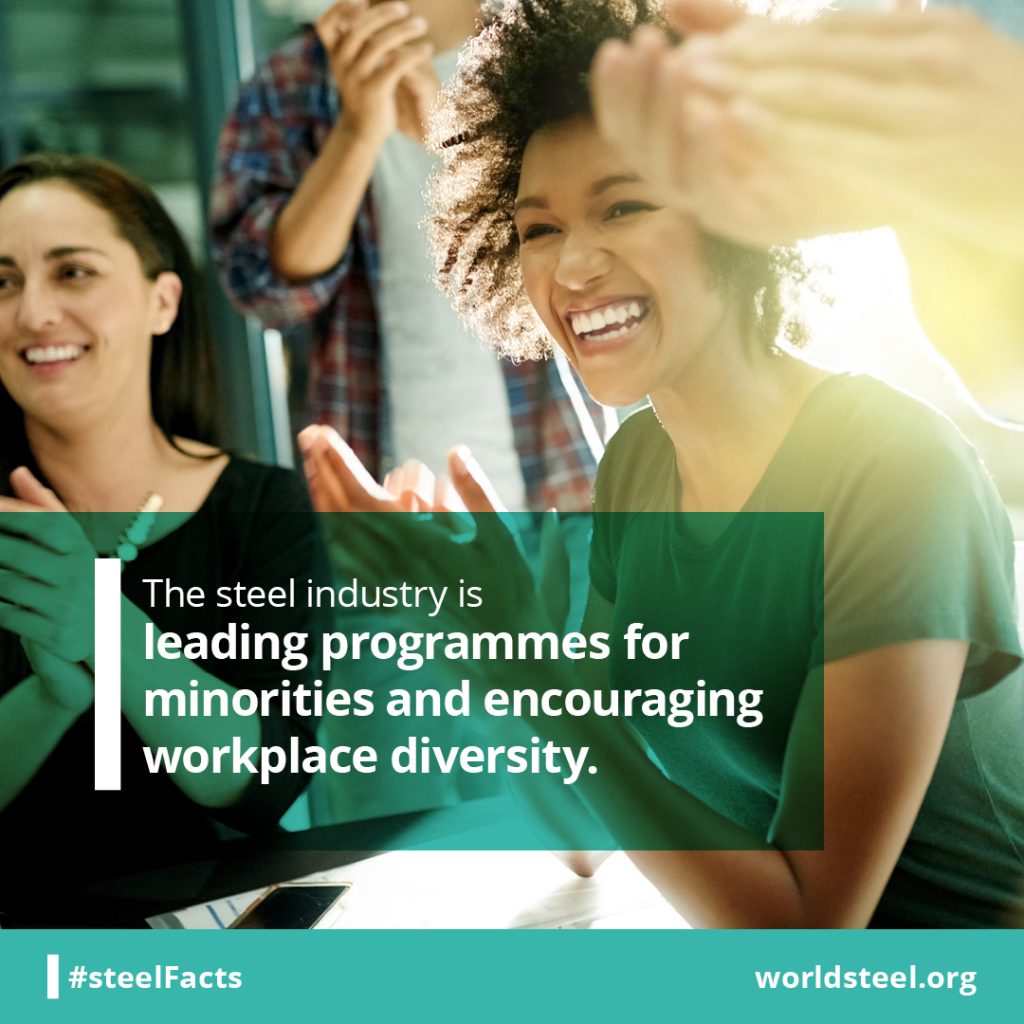
The steel industry is leading programmes for minorities and encouraging workplace diversity.
下载
复制该事实的链接
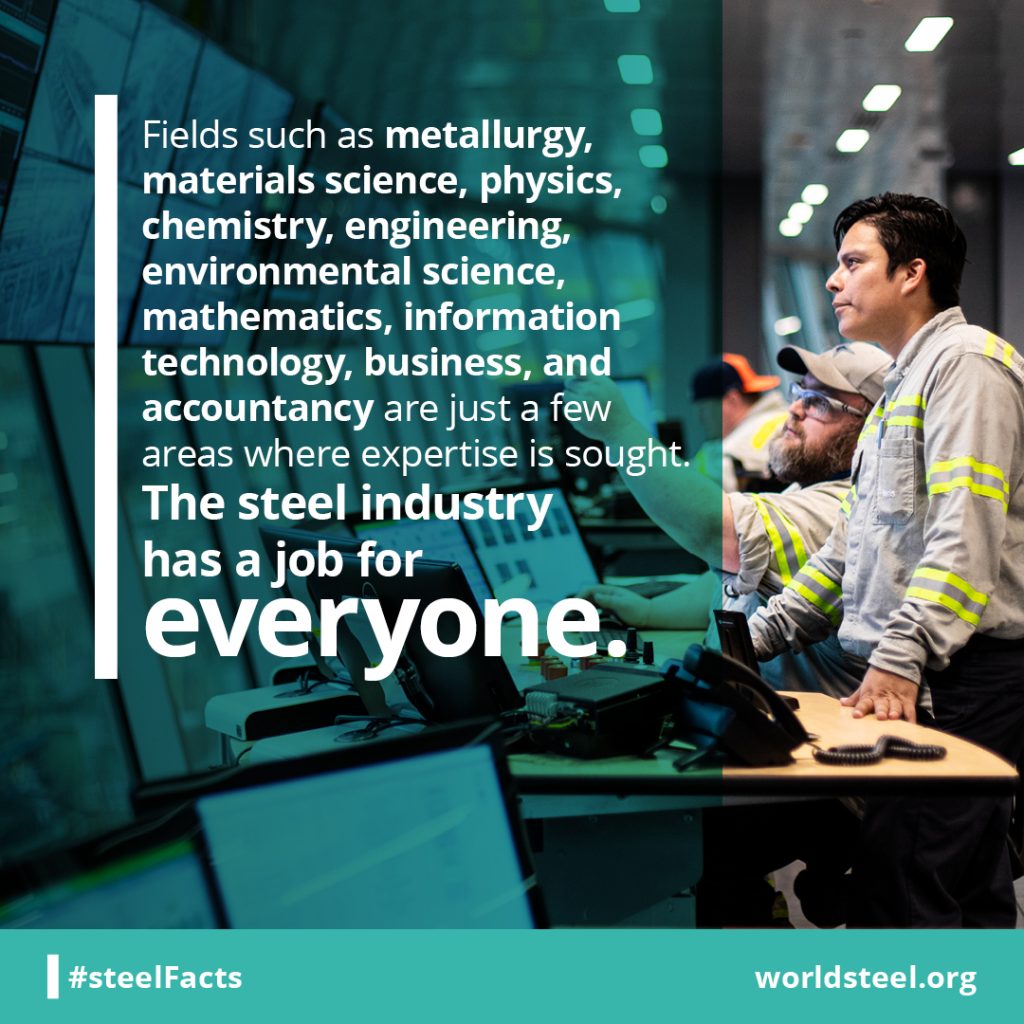
Fields such as metallurgy, materials science, physics, chemistry, engineering, environmental science, mathematics, information technology, business, and accountancy are just a few areas where expertise is sought. The steel industry has a job for ever…
下载
复制该事实的链接
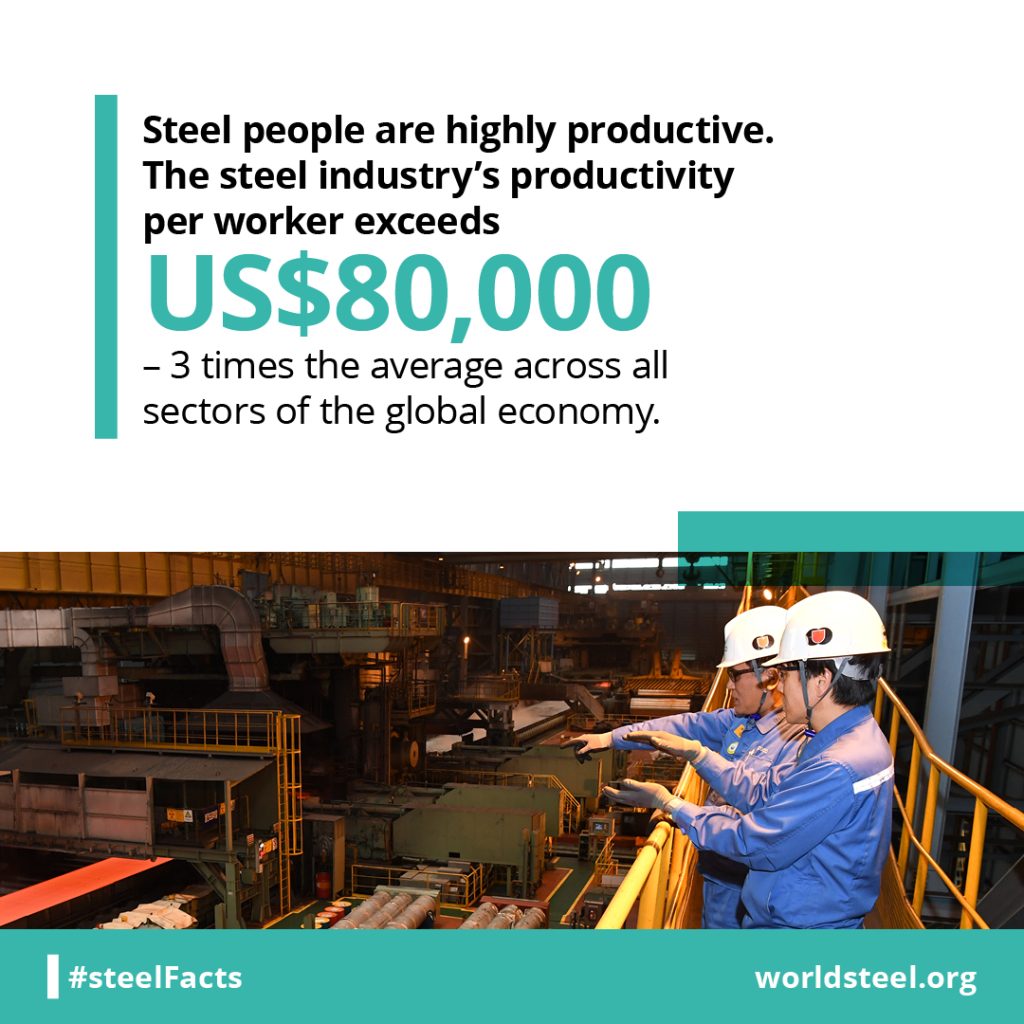
Steel people are highly productive - The steel industry's productivity per worker exceeds US$80,000 – 3 times the average across all sectors of the global economy.
下载
复制该事实的链接
Why people in the steel industry matter
下载
复制该事实的链接
Our people - Our priorities
Steel is everywhere 2026
下载
复制该事实的链接
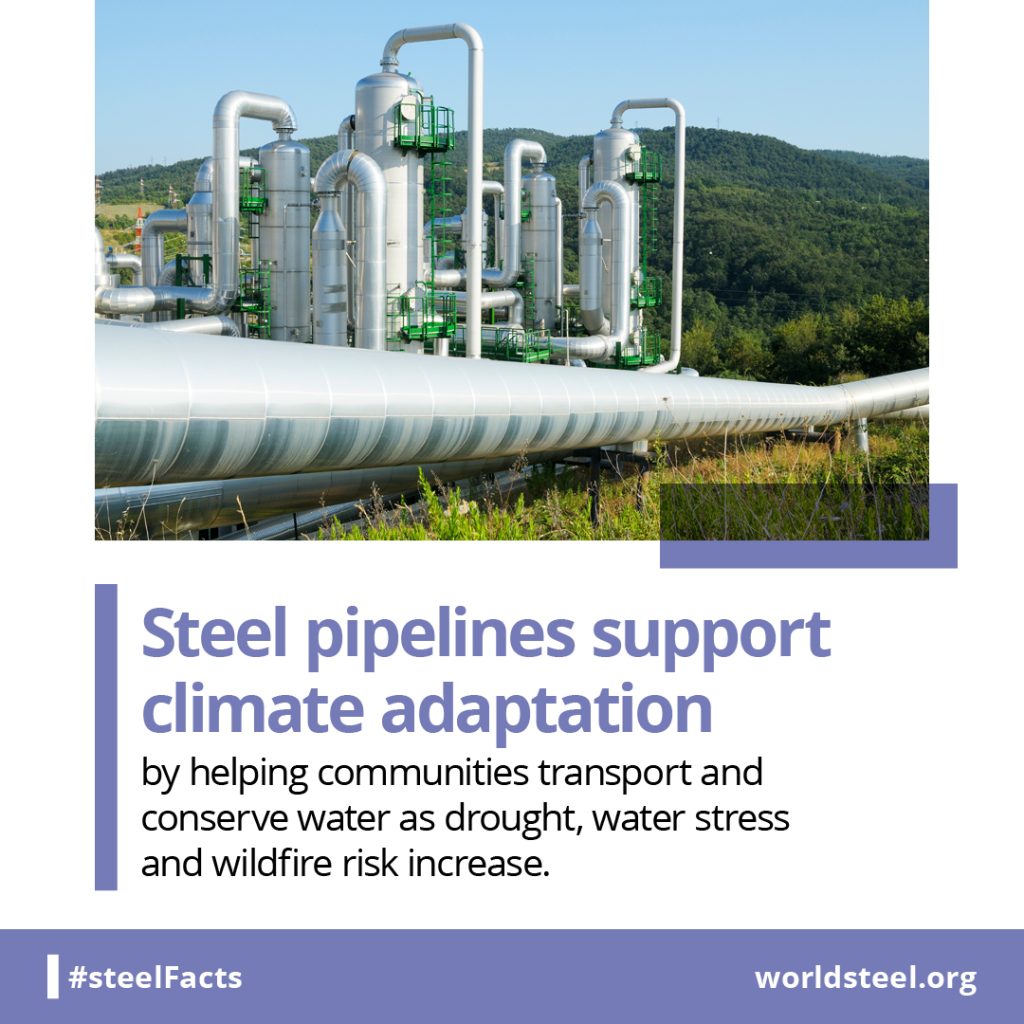
Steel pipelines support climate adaptation by helping communities transport and conserve water as drought, water stress and wildfire risk increase.
下载
复制该事实的链接
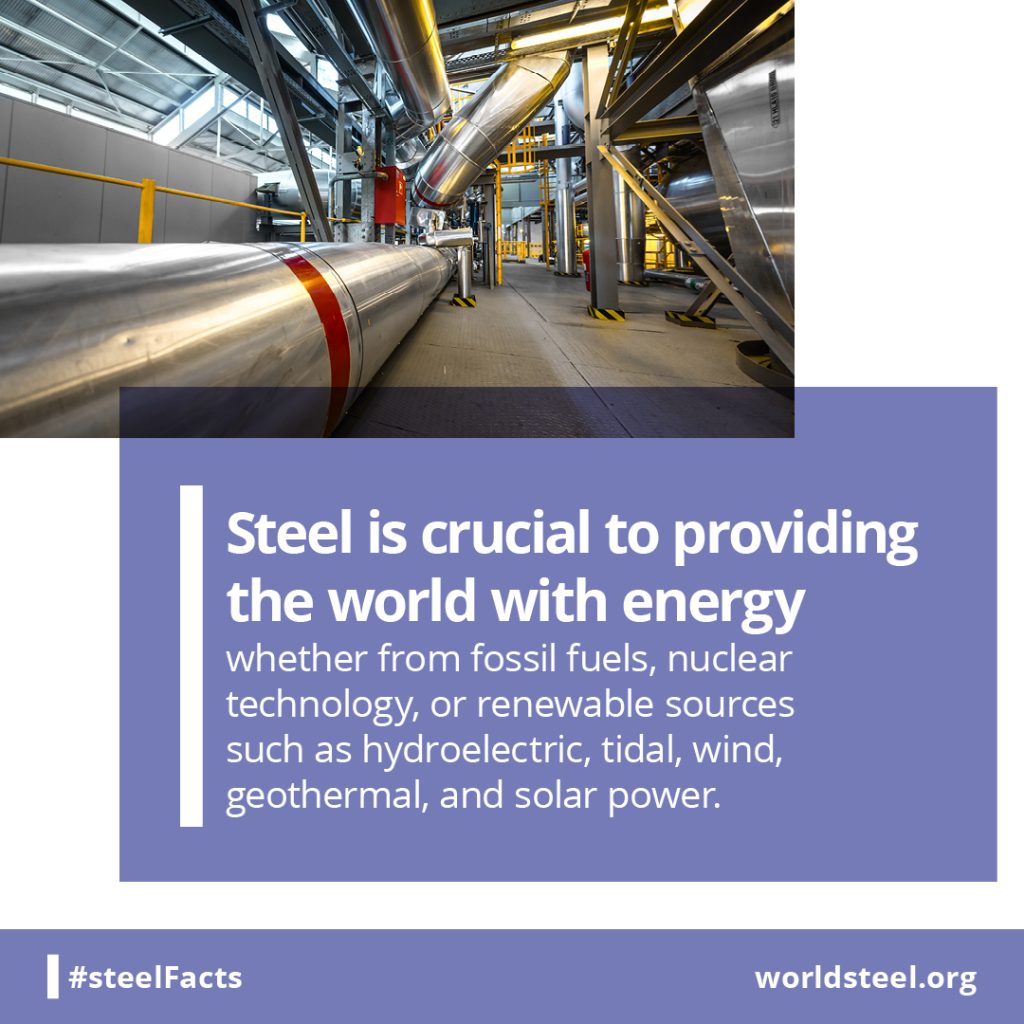
Steel is crucial to providing the world with energy, whether from fossil fuels, nuclear technology, or renewable sources such as hydroelectric, tidal, wind, geothermal, and solar power.
下载
复制该事实的链接
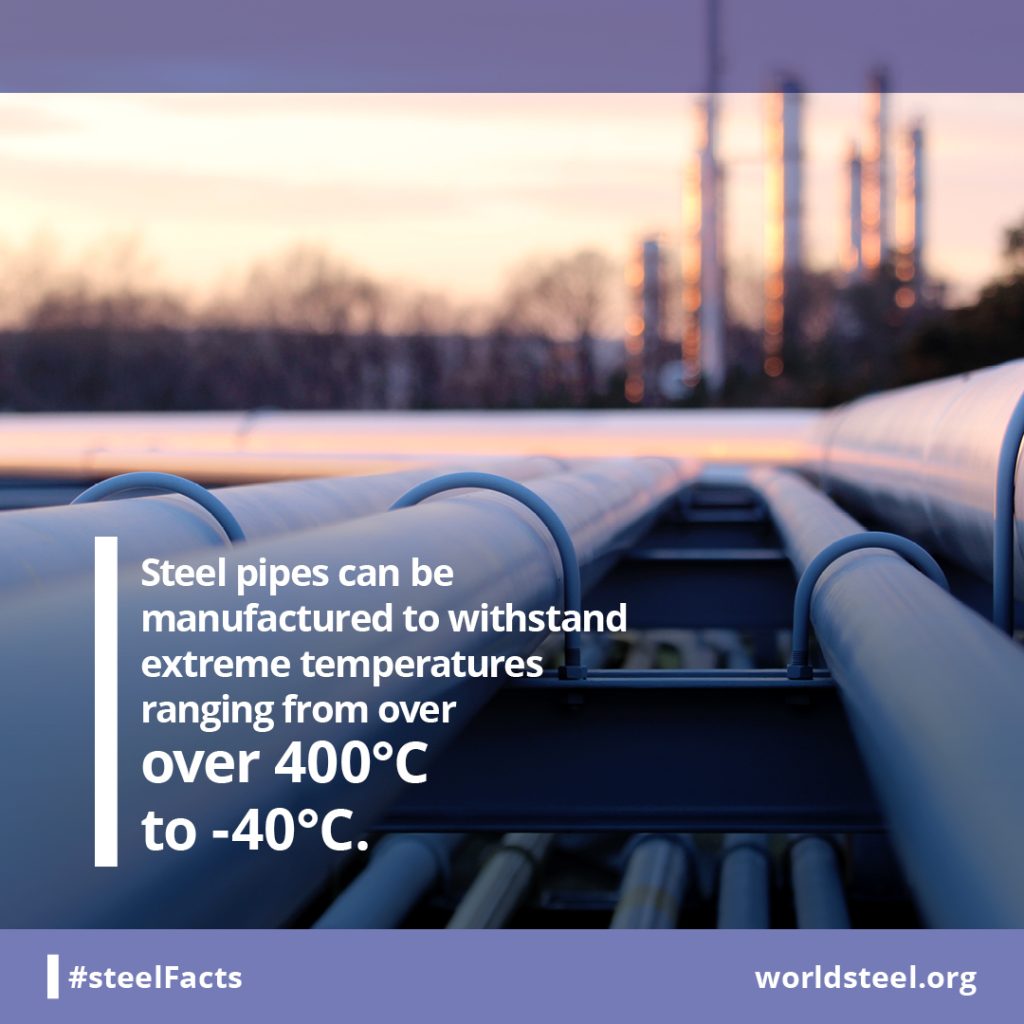
Steel pipes can be manufactured to withstand extreme temperatures ranging from over 400°C to -40°C.
下载
复制该事实的链接
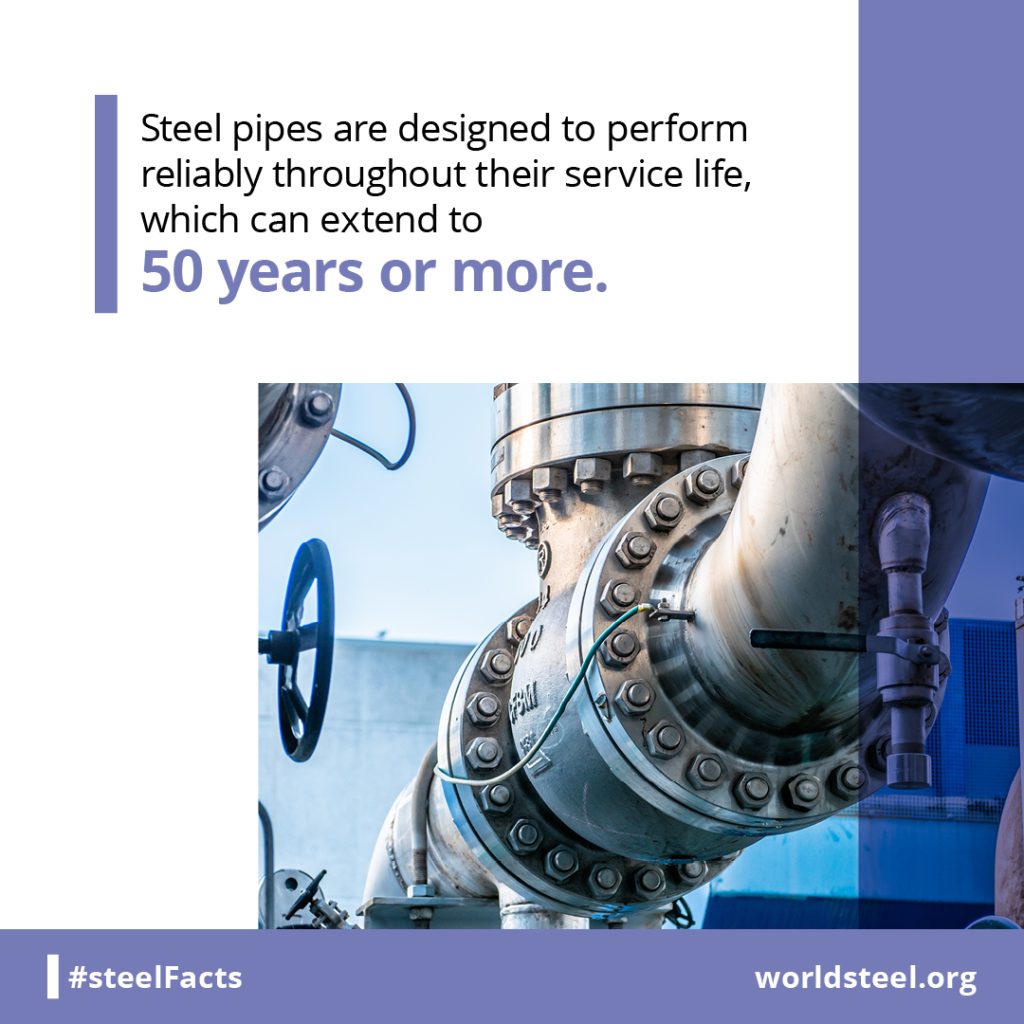
Pipes are designed to offer absolute reliability throughout their entire lifespan, which can extend up to 50 years.
下载
复制该事实的链接
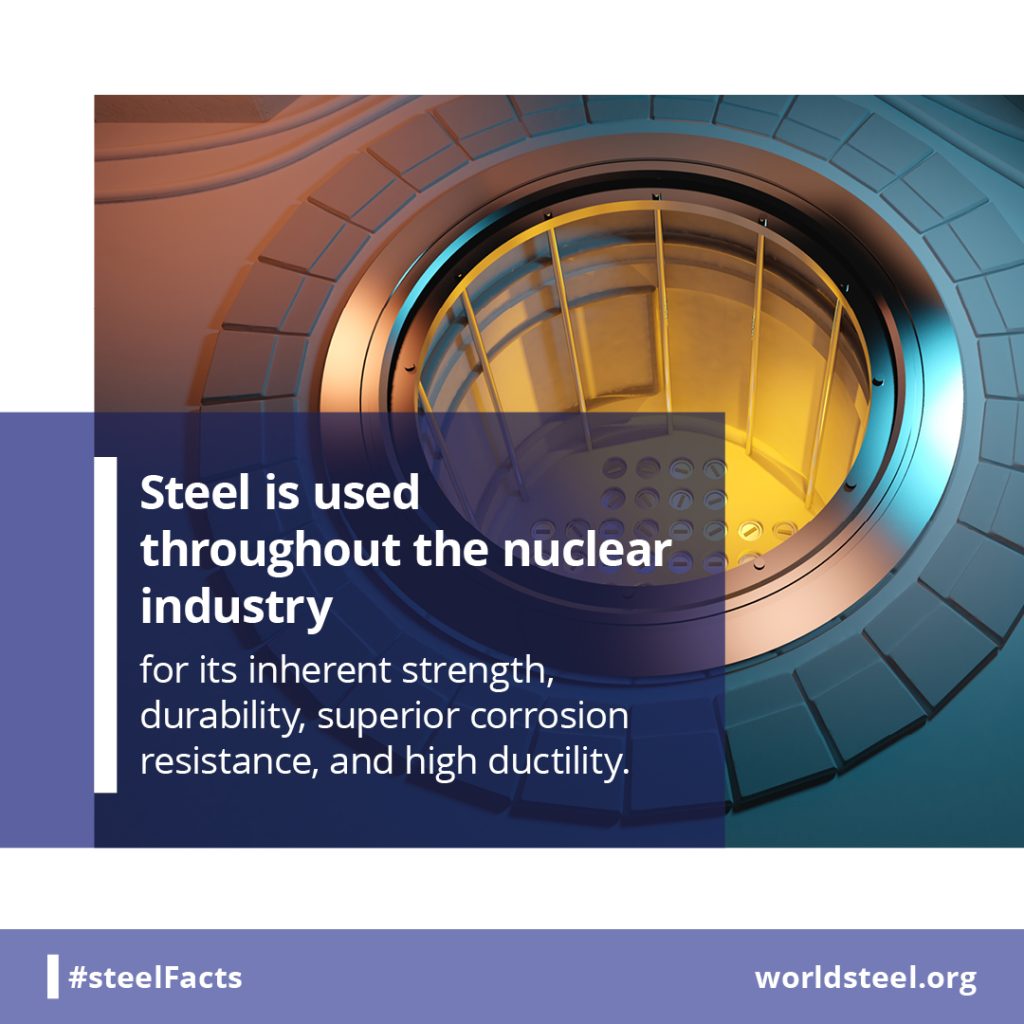
Steel is used throughout the nuclear industry for its inherent strength, durability, superior corrosion resistance, and high ductility.
下载
复制该事实的链接
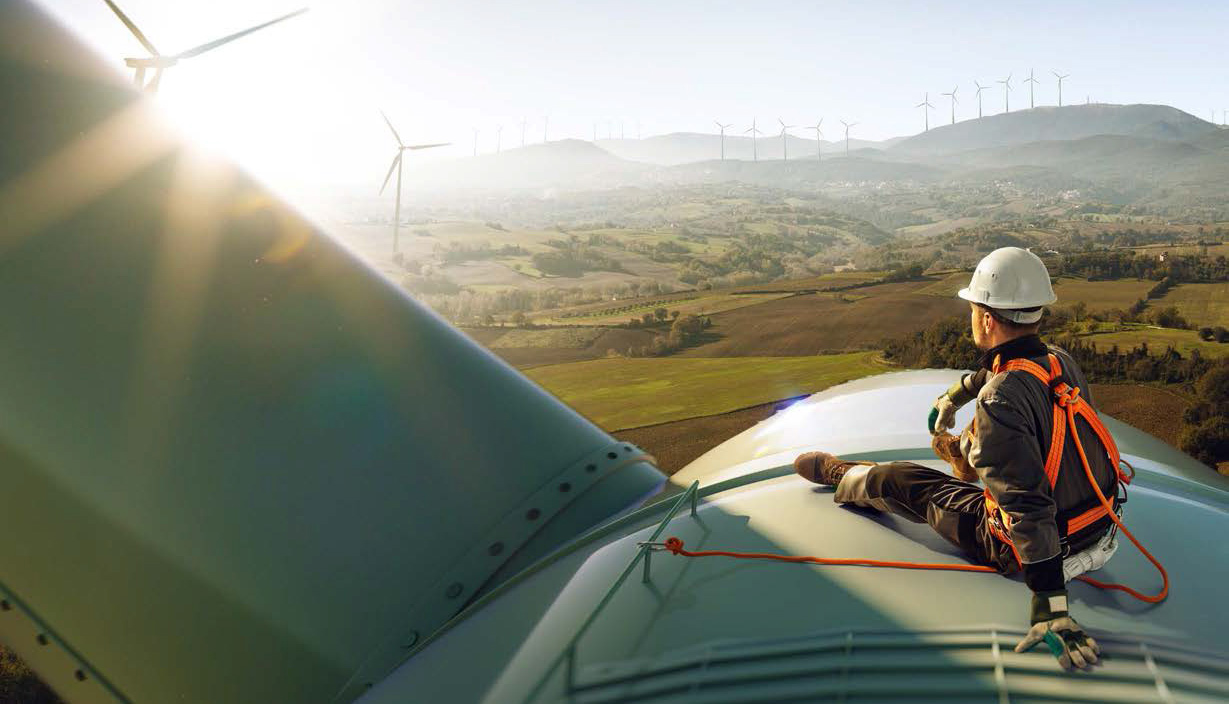
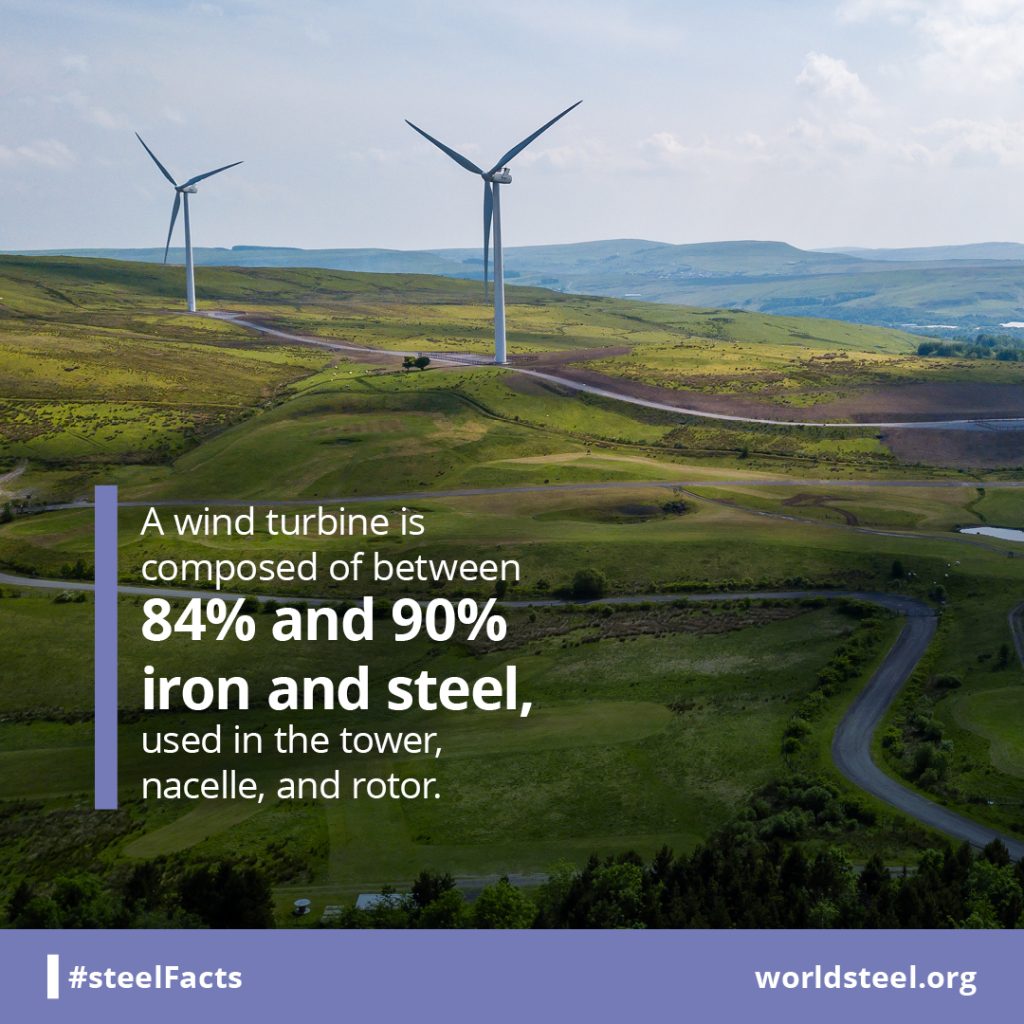
A wind turbine is composed of between 84% and 90% iron and steel, used in the tower, nacelle, and rotor.
下载
复制该事实的链接
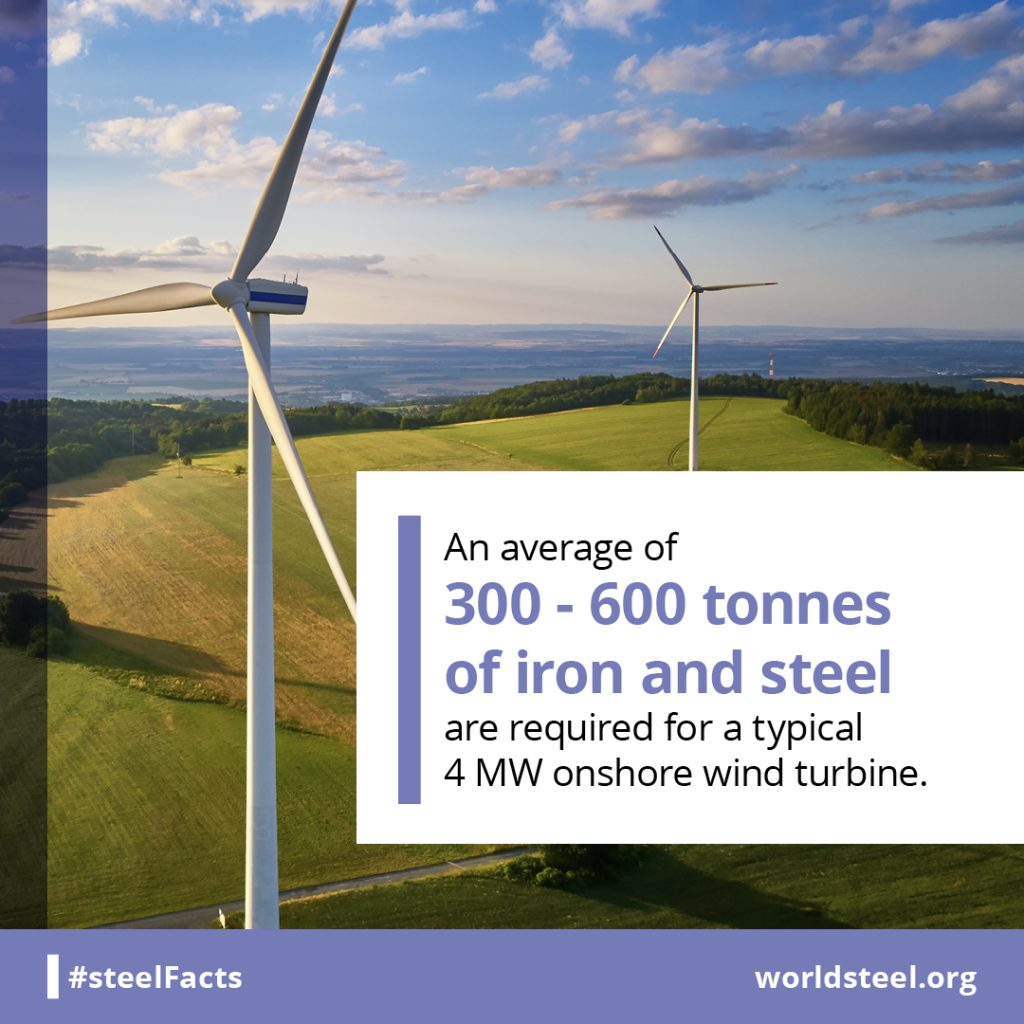
An average of 300-600 tonnes of iron and steel are required for a typical 4 MW onshore wind turbine.
下载
复制该事实的链接
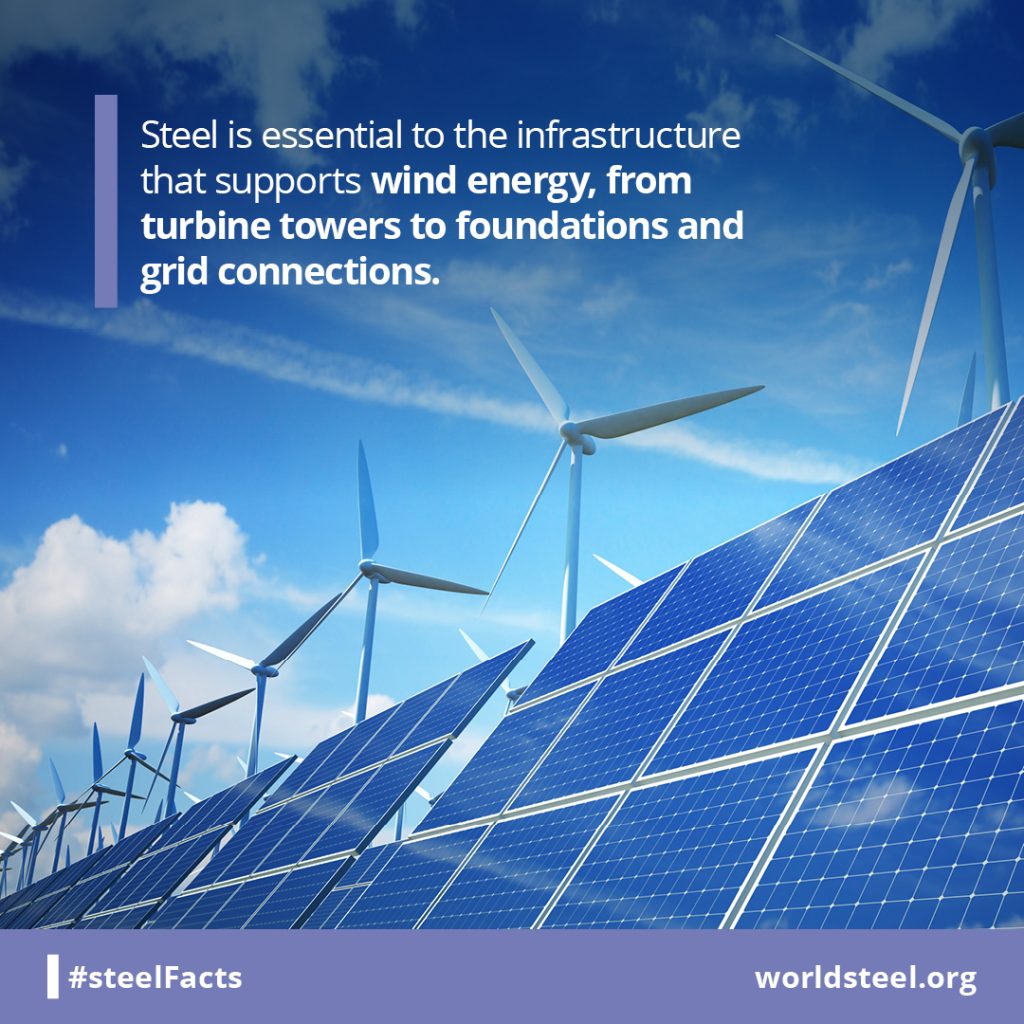
Steel is essential to the infrastructure that supports wind energy, from turbine towers to foundations and grid connections.
下载
复制该事实的链接
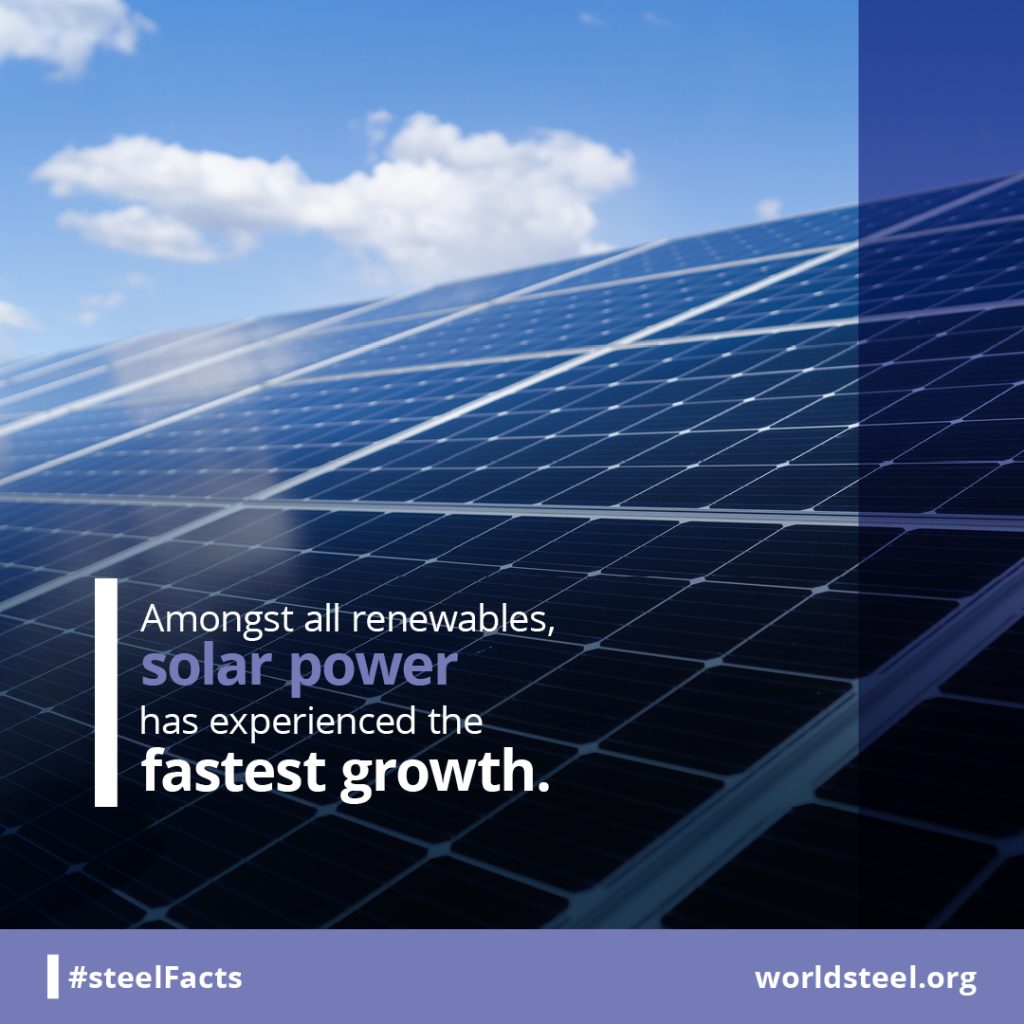
Amongst all renewables, solar power has experienced the fastest growth.
下载
复制该事实的链接
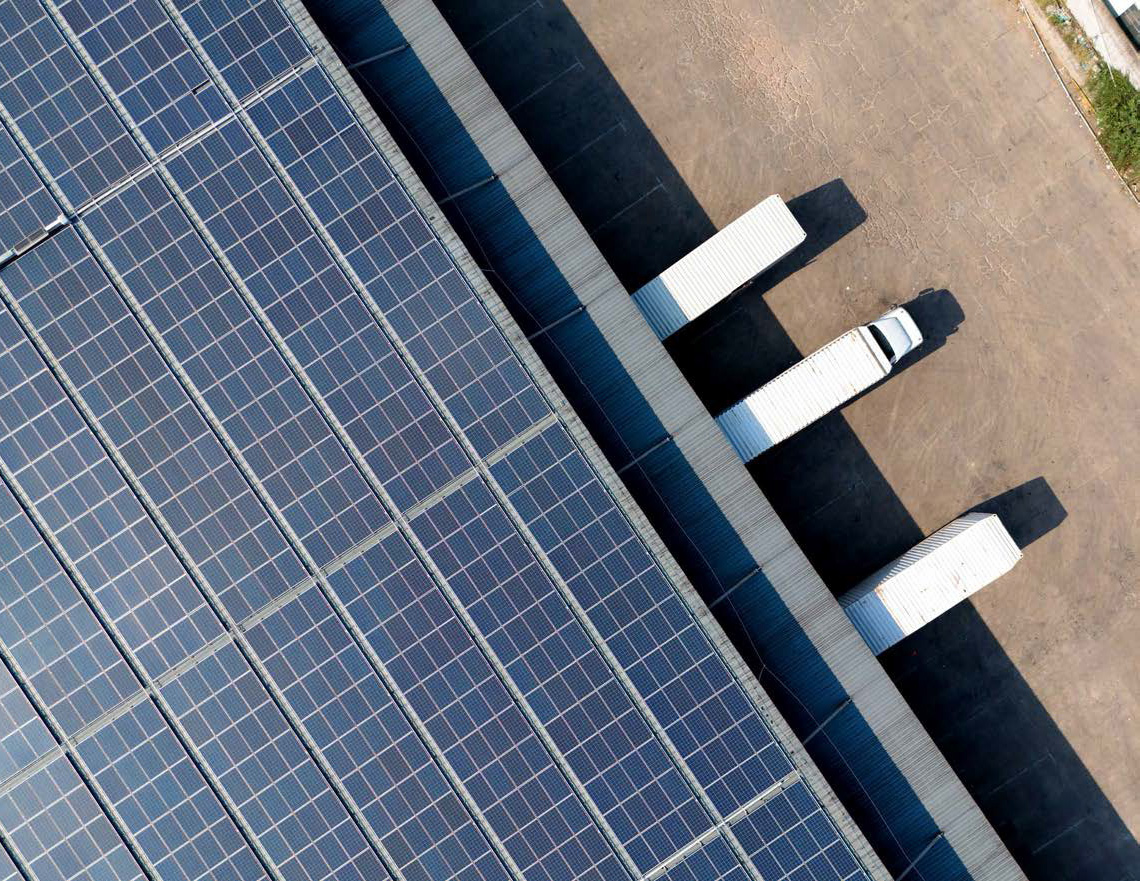
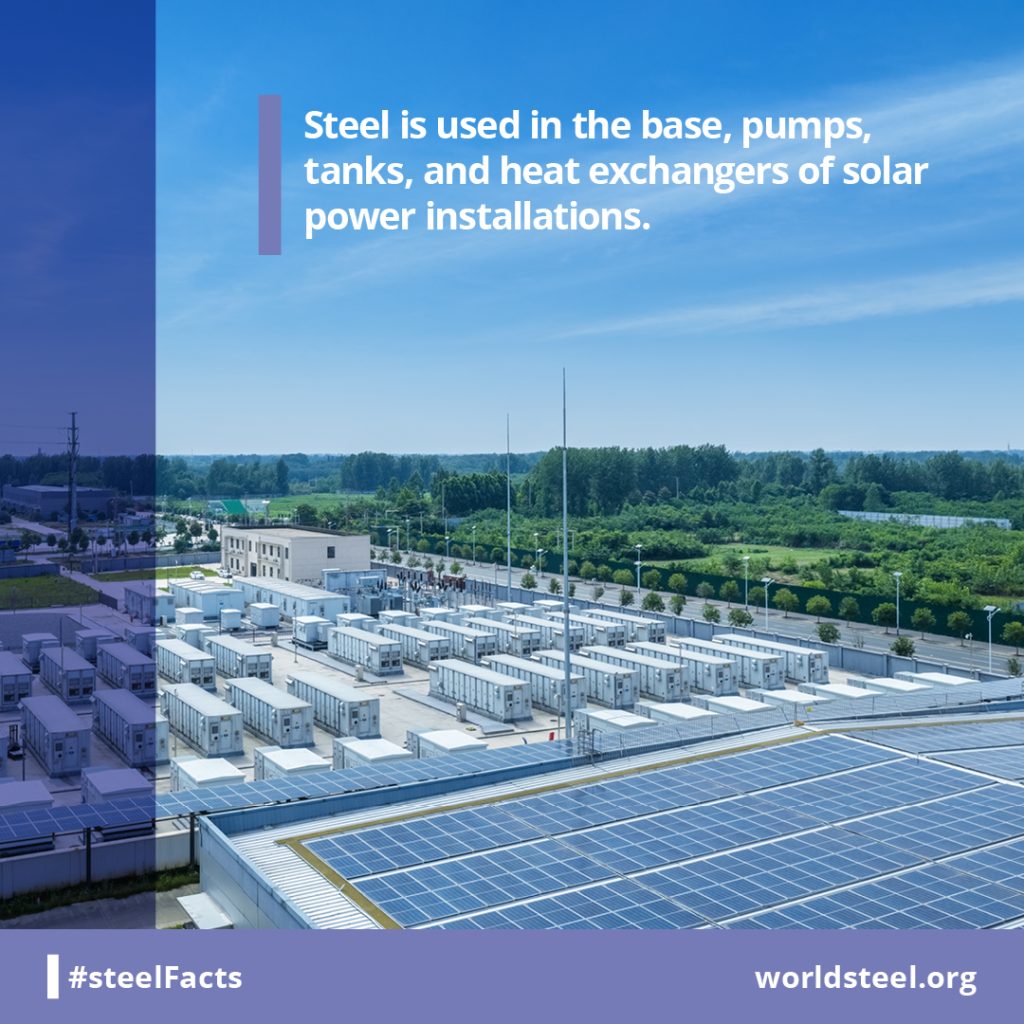
Steel is used in the base, pumps, tanks, and heat exchangers of solar power installations.
下载
复制该事实的链接
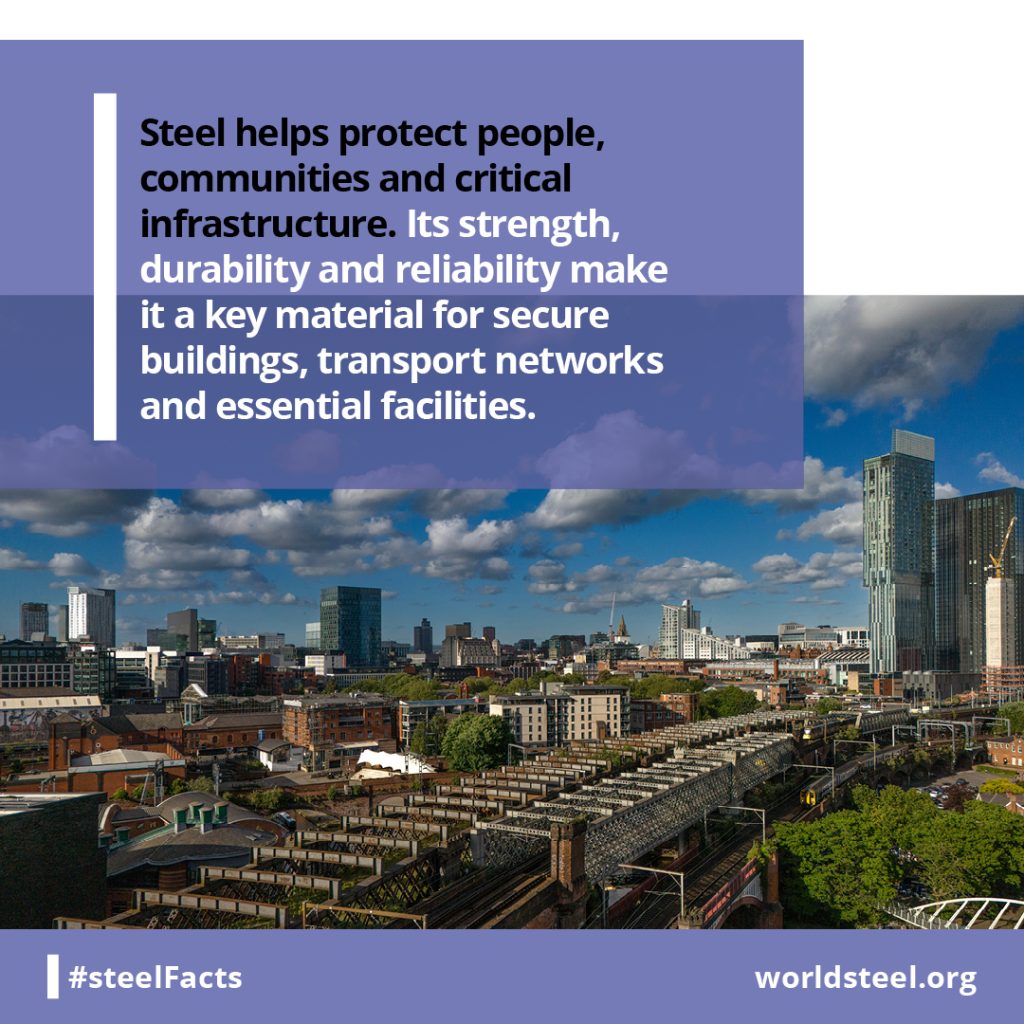
Steel helps protect people, communities and critical infrastructure. Its strength, durability and reliability make it a key material for secure buildings, transport networks and essential facilities.
下载
复制该事实的链接
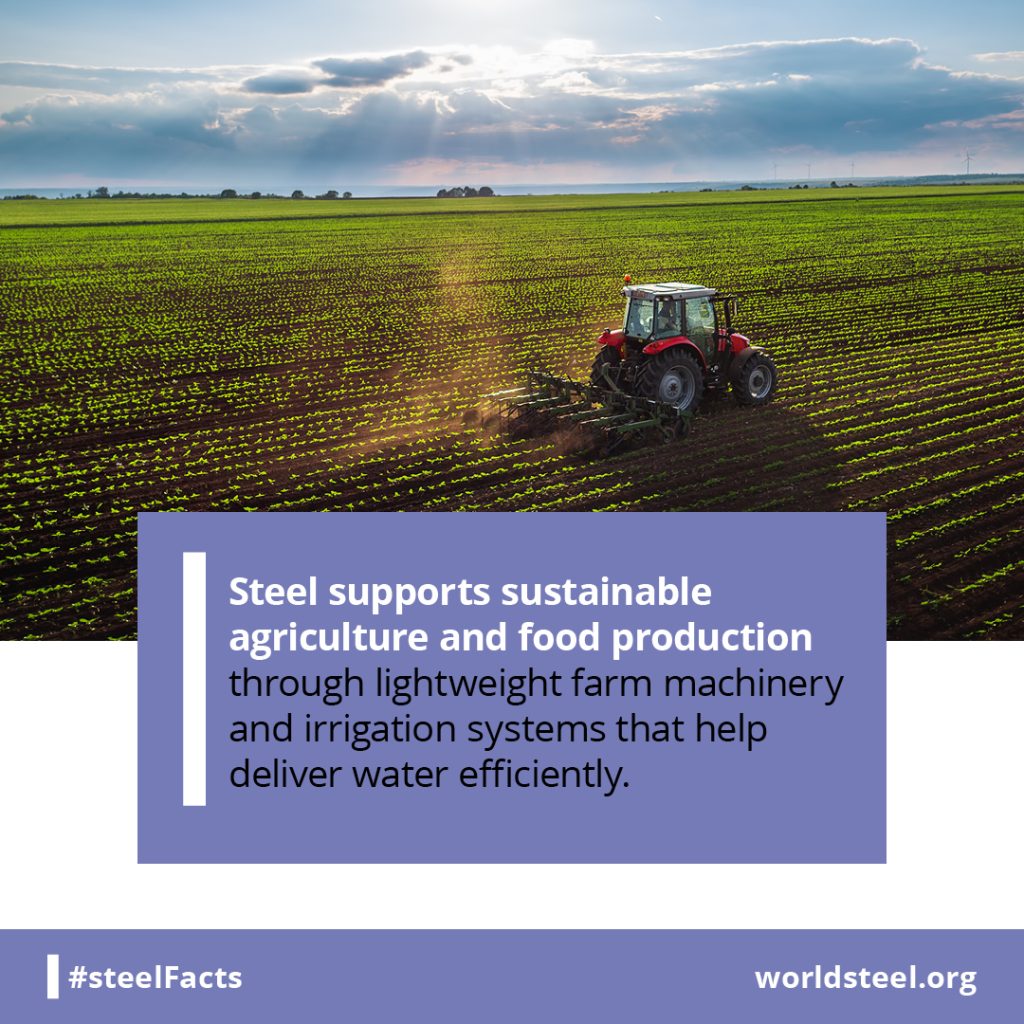
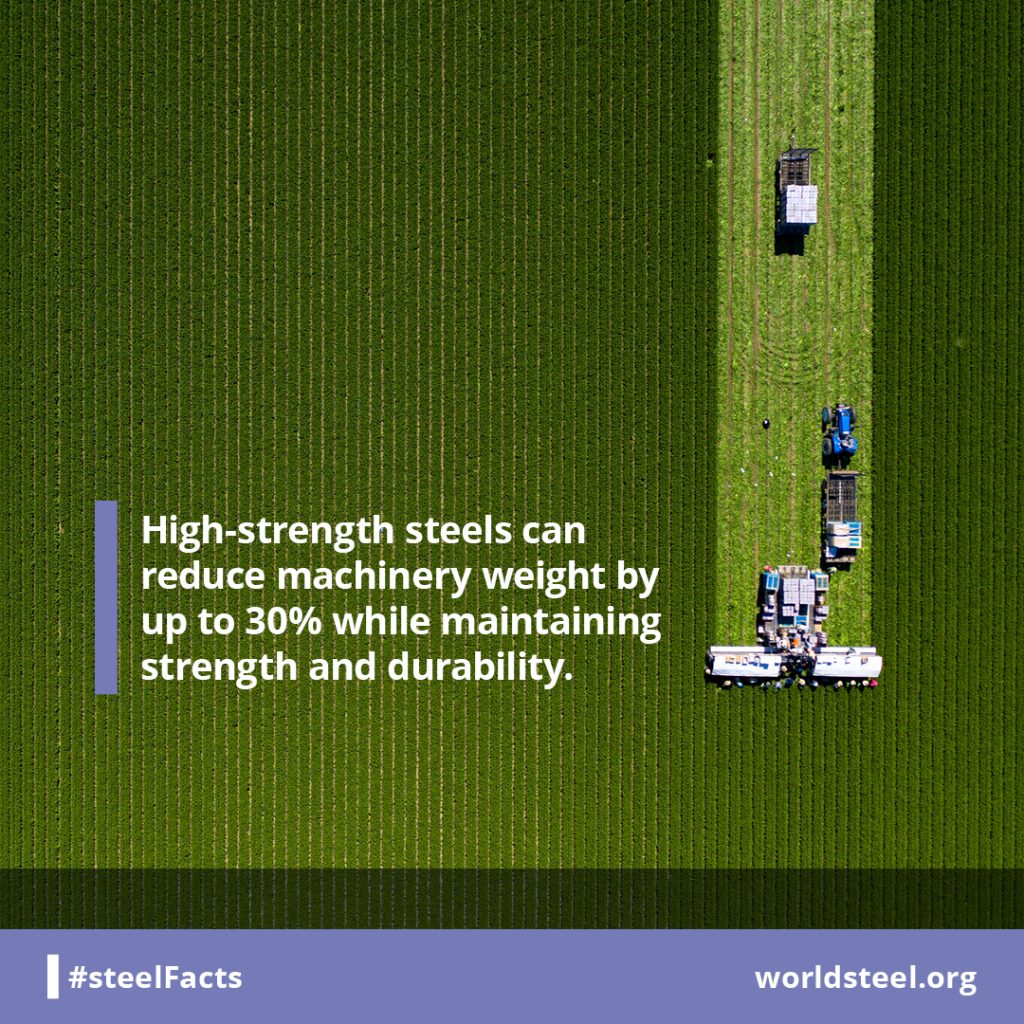
Steel supports sustainable agriculture and food production through lightweight farm machinery and irrigation systems that help deliver water efficiently.
下载
复制该事实的链接
High-strength steels can reduce machinery weight by up to 30% while maintaining strength and durability.
下载
复制该事实的链接
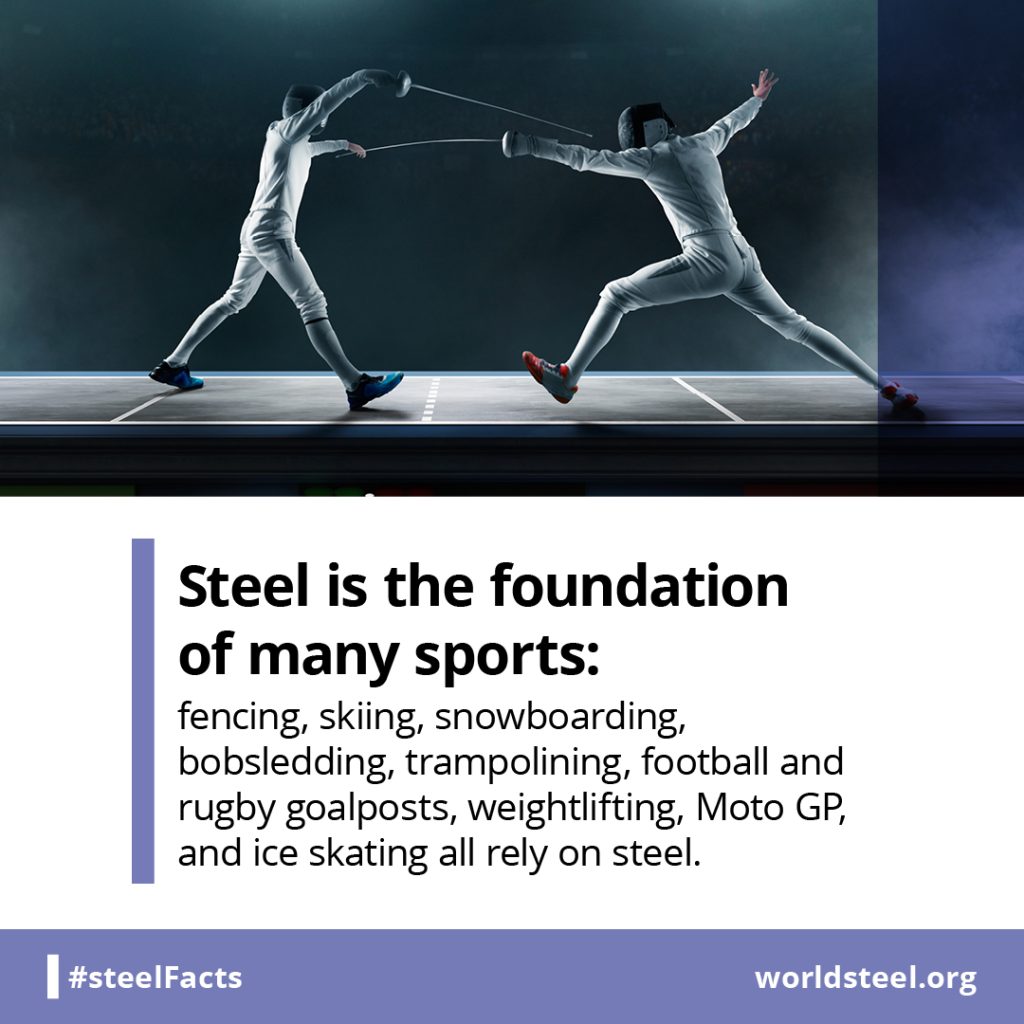
Steel is the foundation of many sports: fencing, skiing, snowboarding, bobsledding, trampolining, football and rugby goalposts, weightlifting, Moto GP, and ice skating all rely on steel.
下载
复制该事实的链接
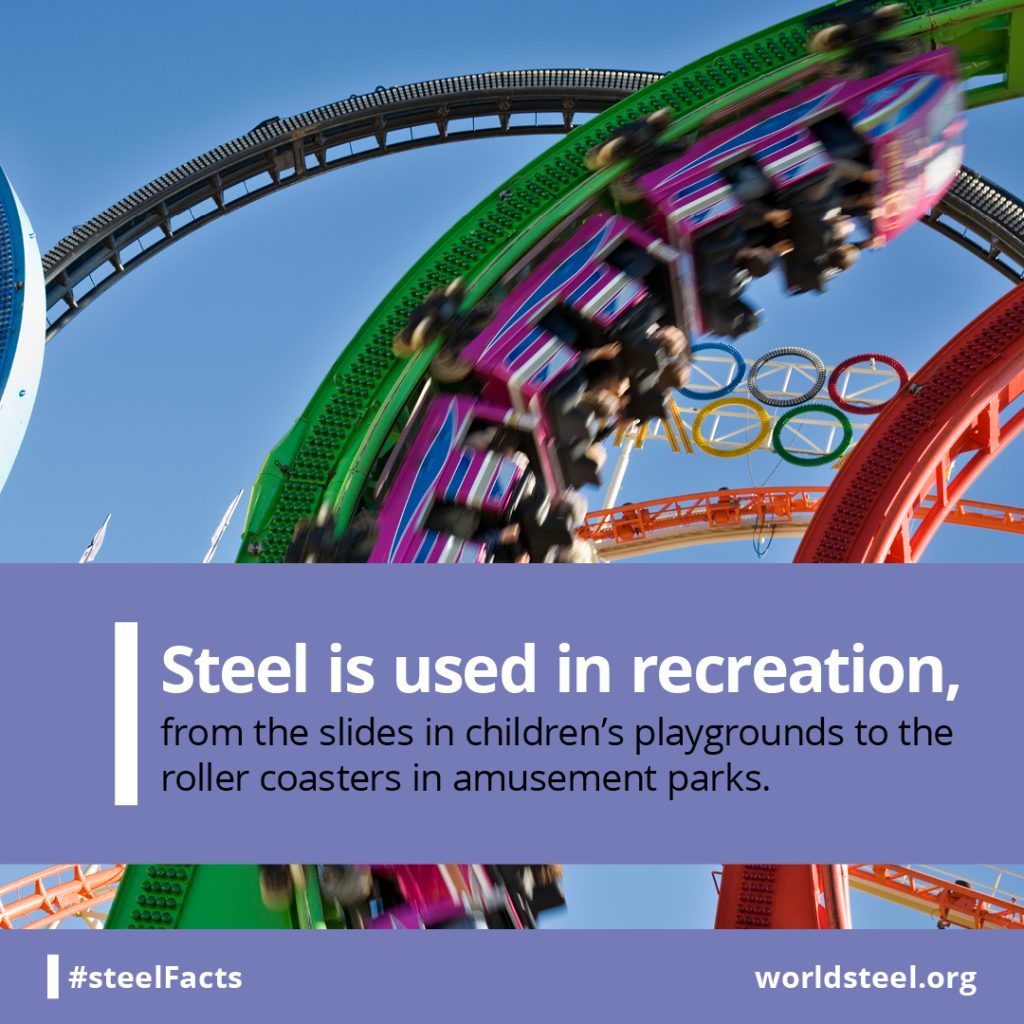
Steel is used in recreation, from the slides in children’s playgrounds to the roller coasters in amusement parks.
下载
复制该事实的链接
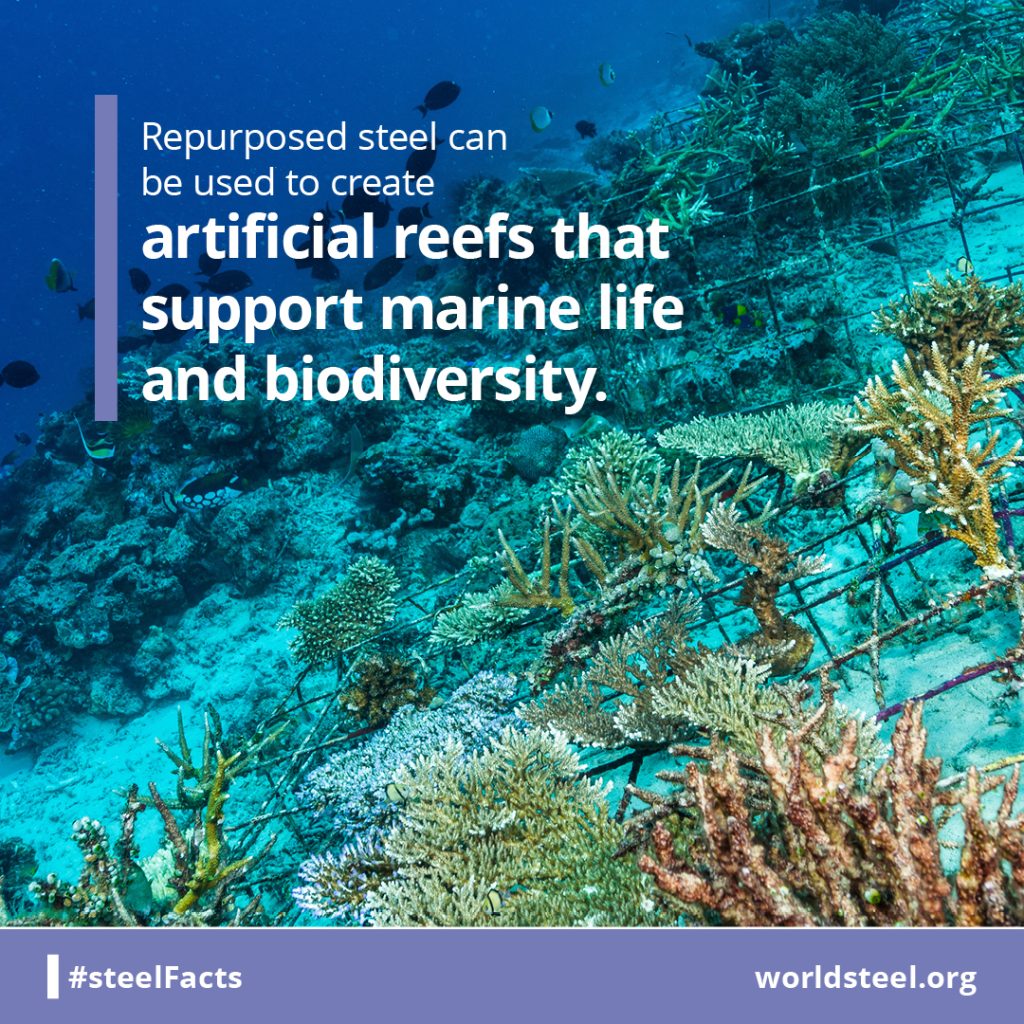
Repurposed steel can be used to create artificial reefs that support marine life and biodiversity.
下载
复制该事实的链接
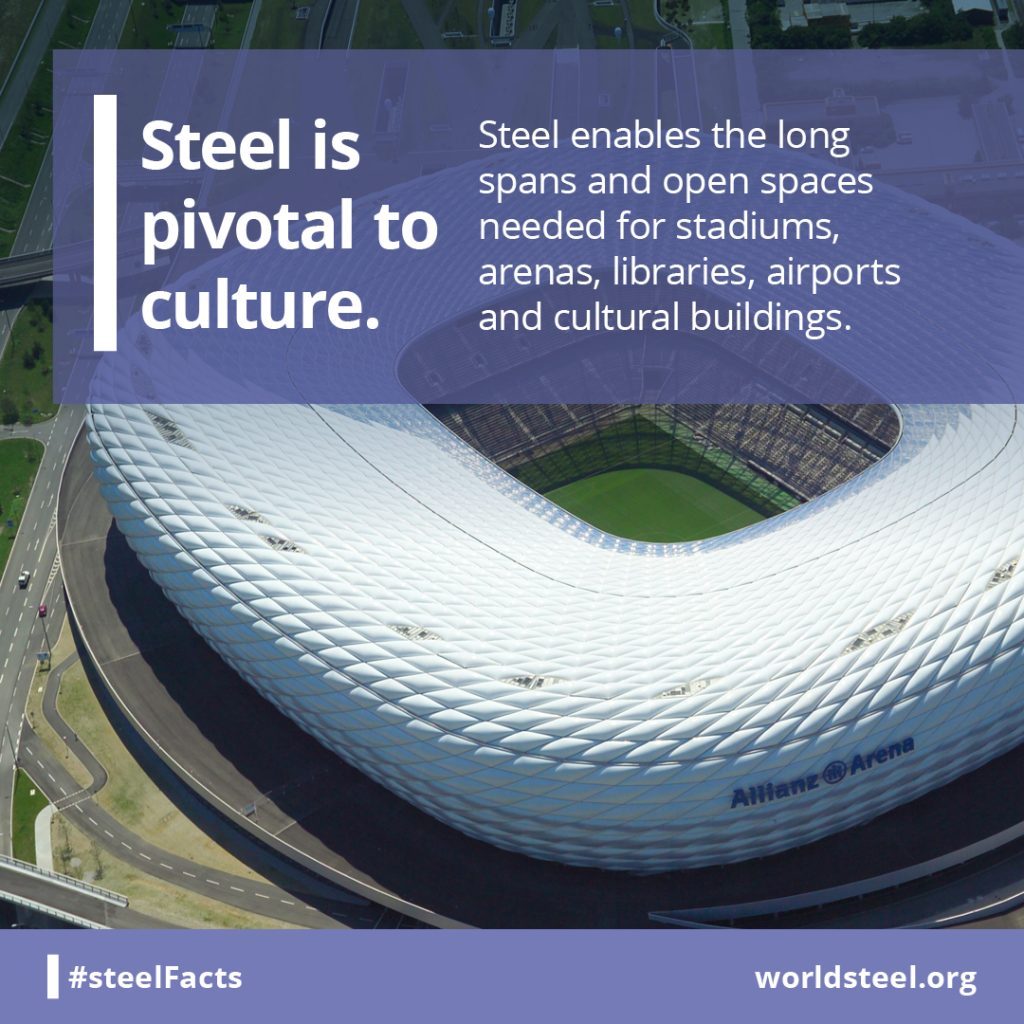
Steel is pivotal to culture. Steel enables the long spans and open spaces needed for stadiums, arenas, libraries, airports and cultural buildings.
下载
复制该事实的链接
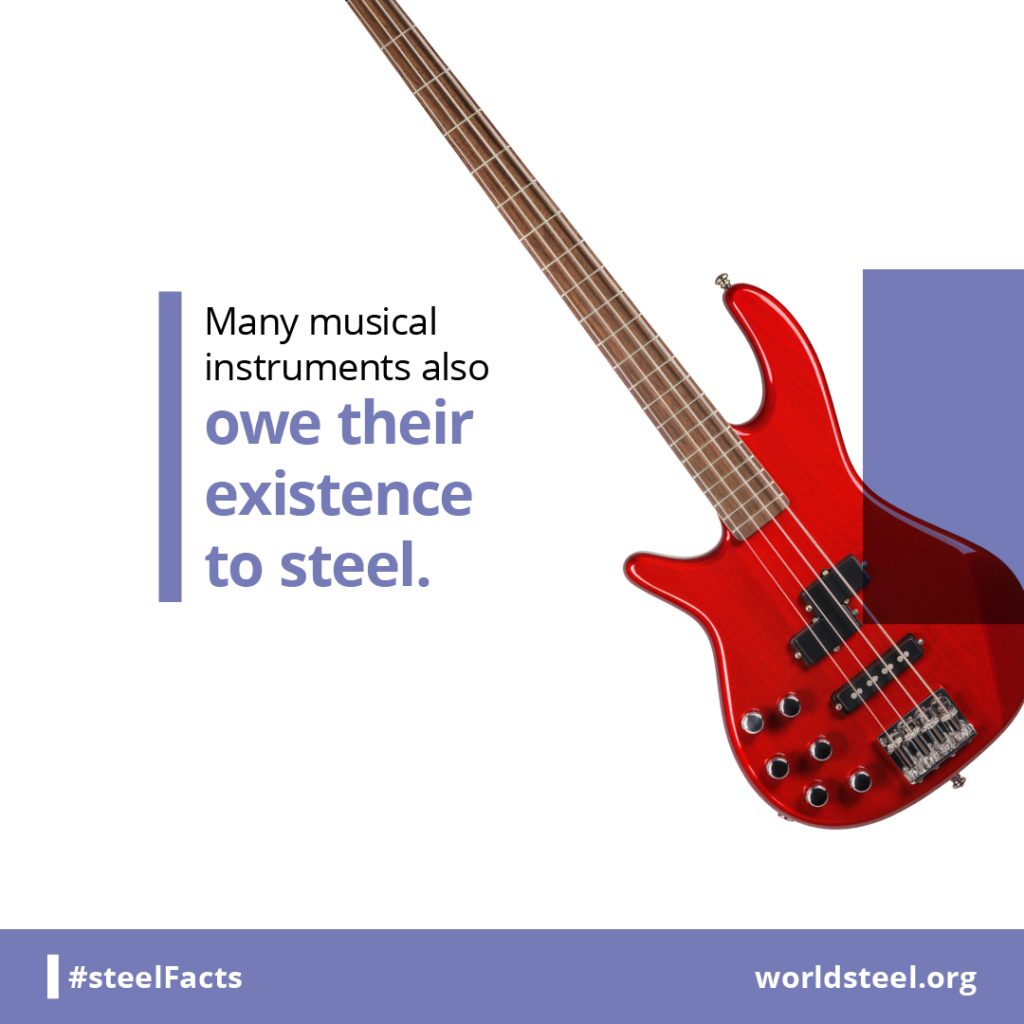
Many musical instruments also owe their existence to steel.
下载
复制该事实的链接
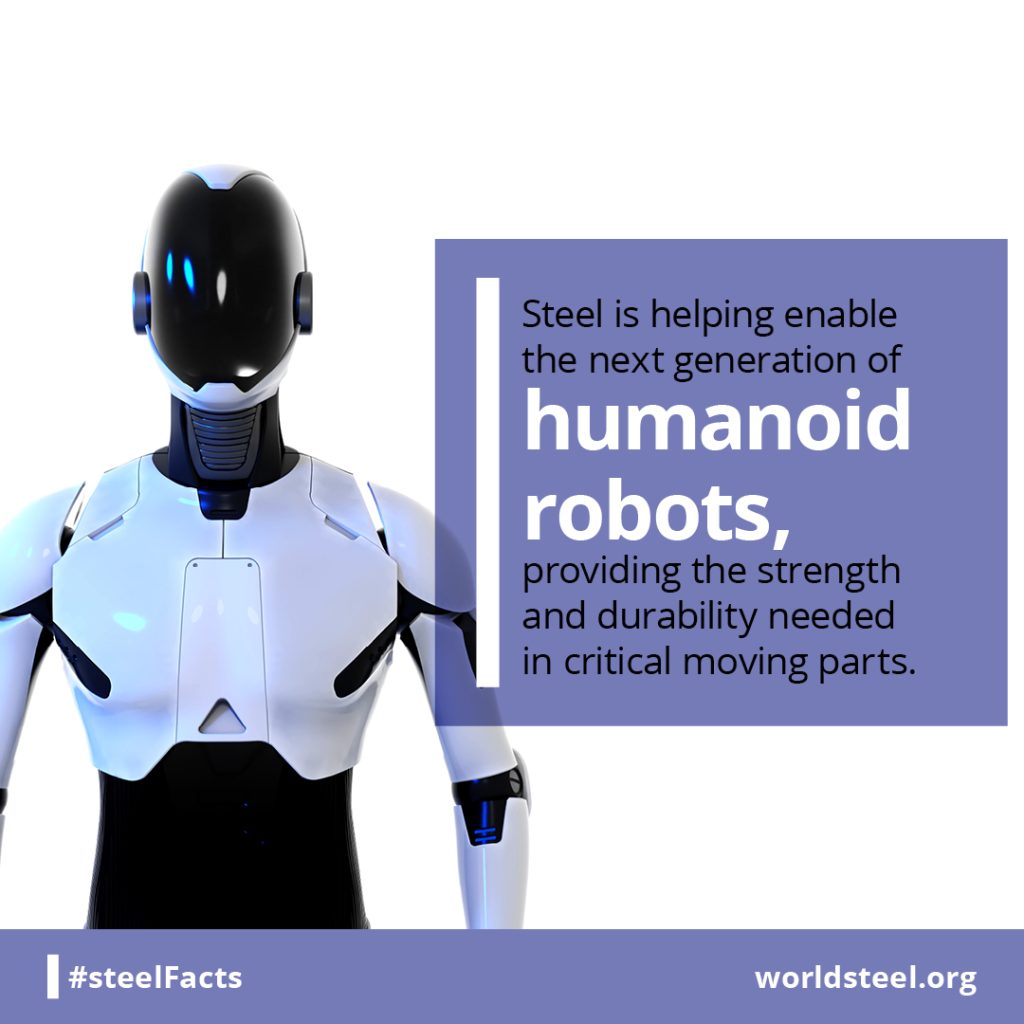
Steel is helping enable the next generation of humanoid robots, providing the strength and durability needed in critical moving parts.
下载
复制该事实的链接
Steel provides the physical infrastructure that powers the digital economy, from data centres to communications networks.
下载
复制该事实的链接
Steel is embedded in everyday life and global development. It supports buildings, transport, energy, food systems, healthcare, water infrastructure, recreation and culture.
下载
复制该事实的链接
Our priority is to show how steel enables modern life and future progress, while helping other sectors improve safety, resilience, affordability, circularity and environmental performance.