All facts

Climate action 2026
下载
复制该事实的链接
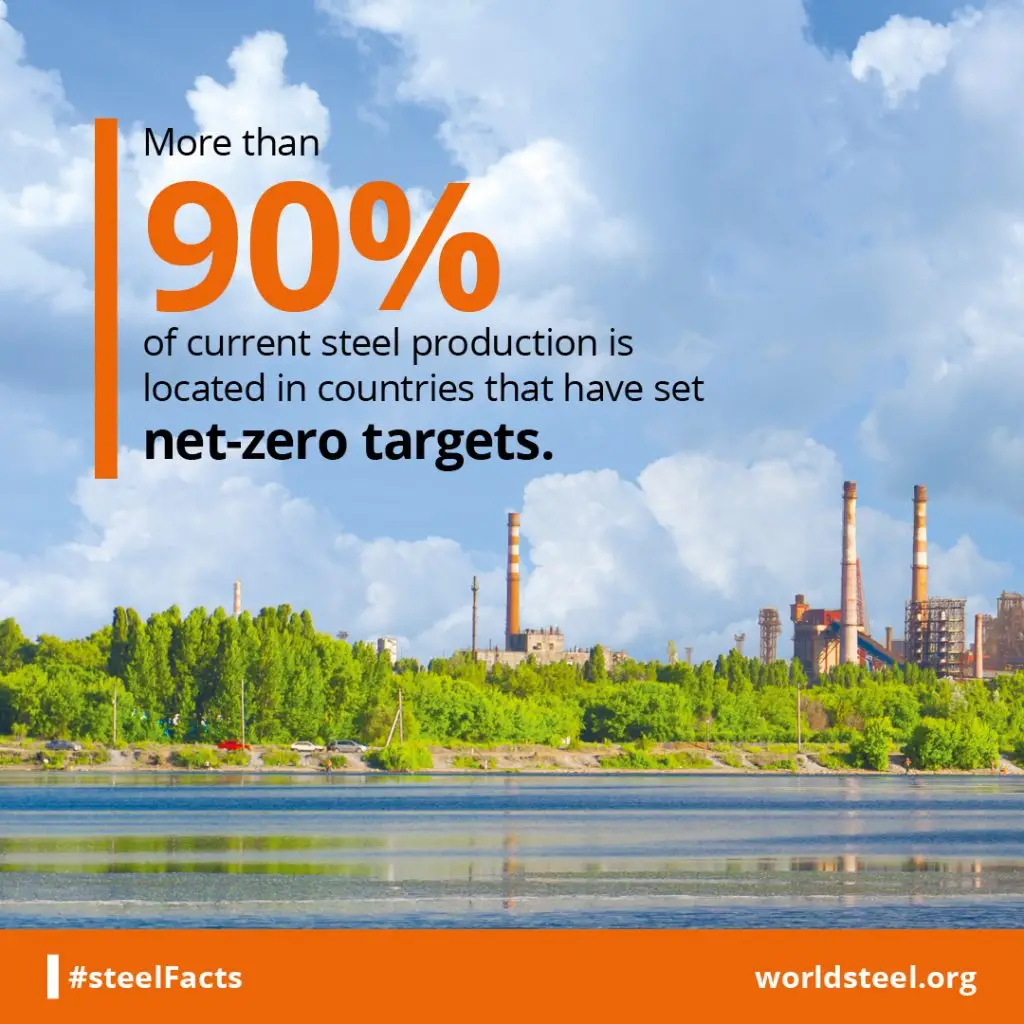
Over 90% of current steel production is located in countries that have set net-zero targets.
下载
复制该事实的链接
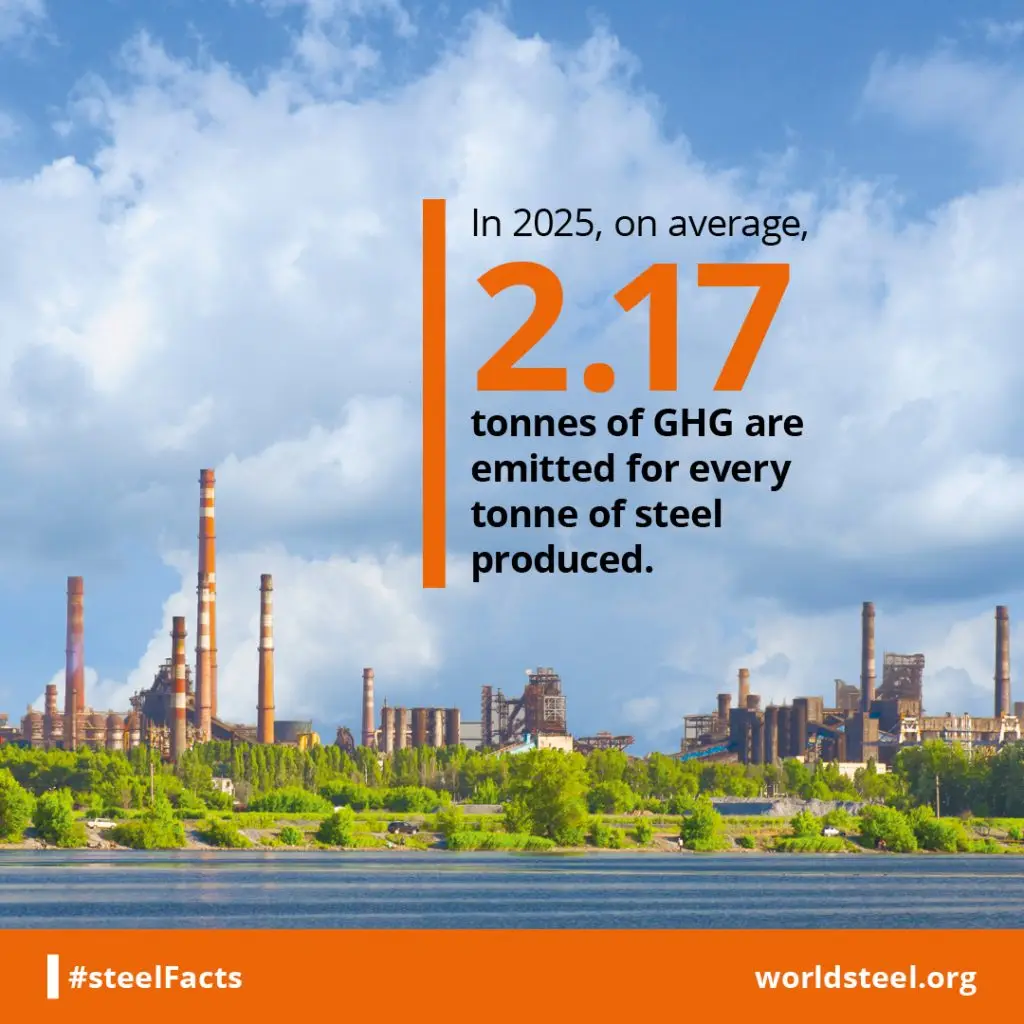
In 2025, on average, 2.17 tonnes of GHG are emitted for every tonne of steel produced.
下载
复制该事实的链接
下载
复制该事实的链接
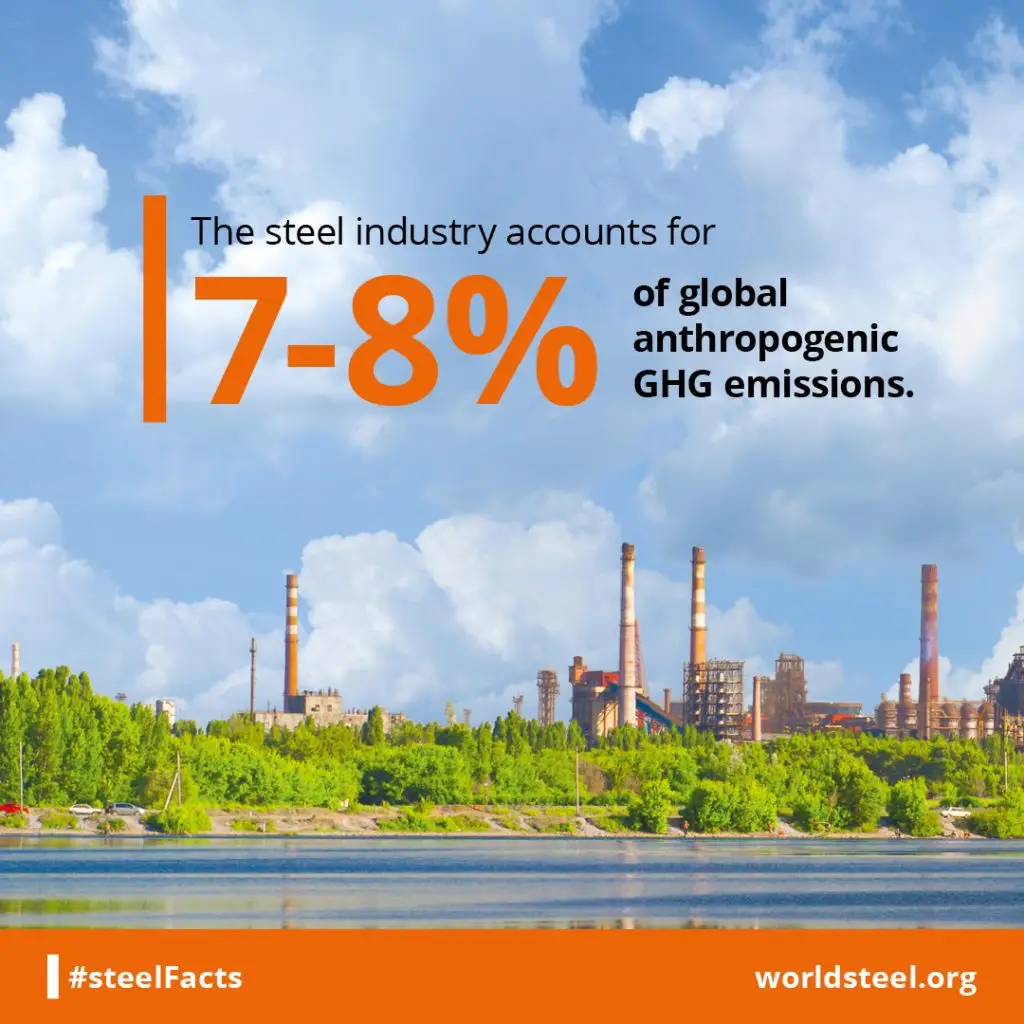
The steel industry accounts for 7-8% of global anthropogenic GHG emissions.
下载
复制该事实的链接
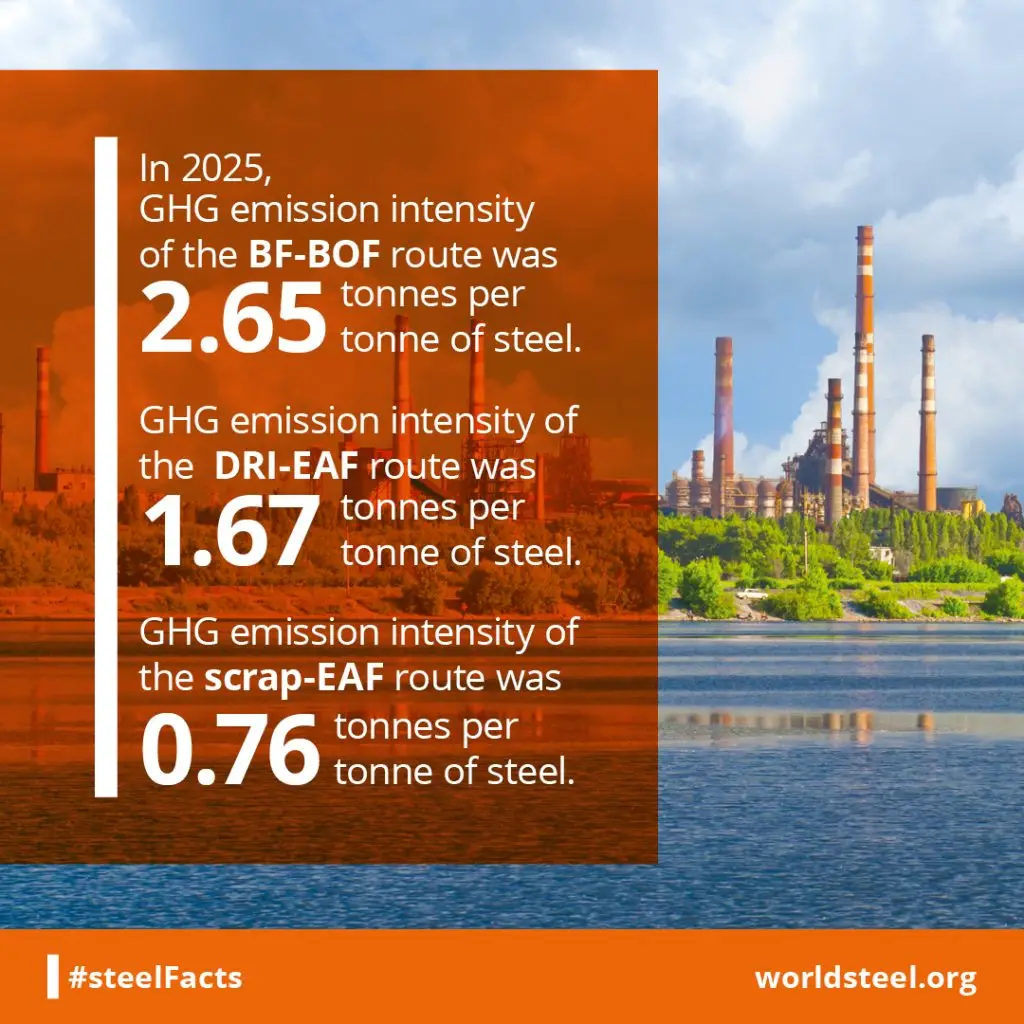
In 2025, the average GHG emission intensity of the BF-BOF route was 2.65 tonnes per tonne of steel.
下载
复制该事实的链接
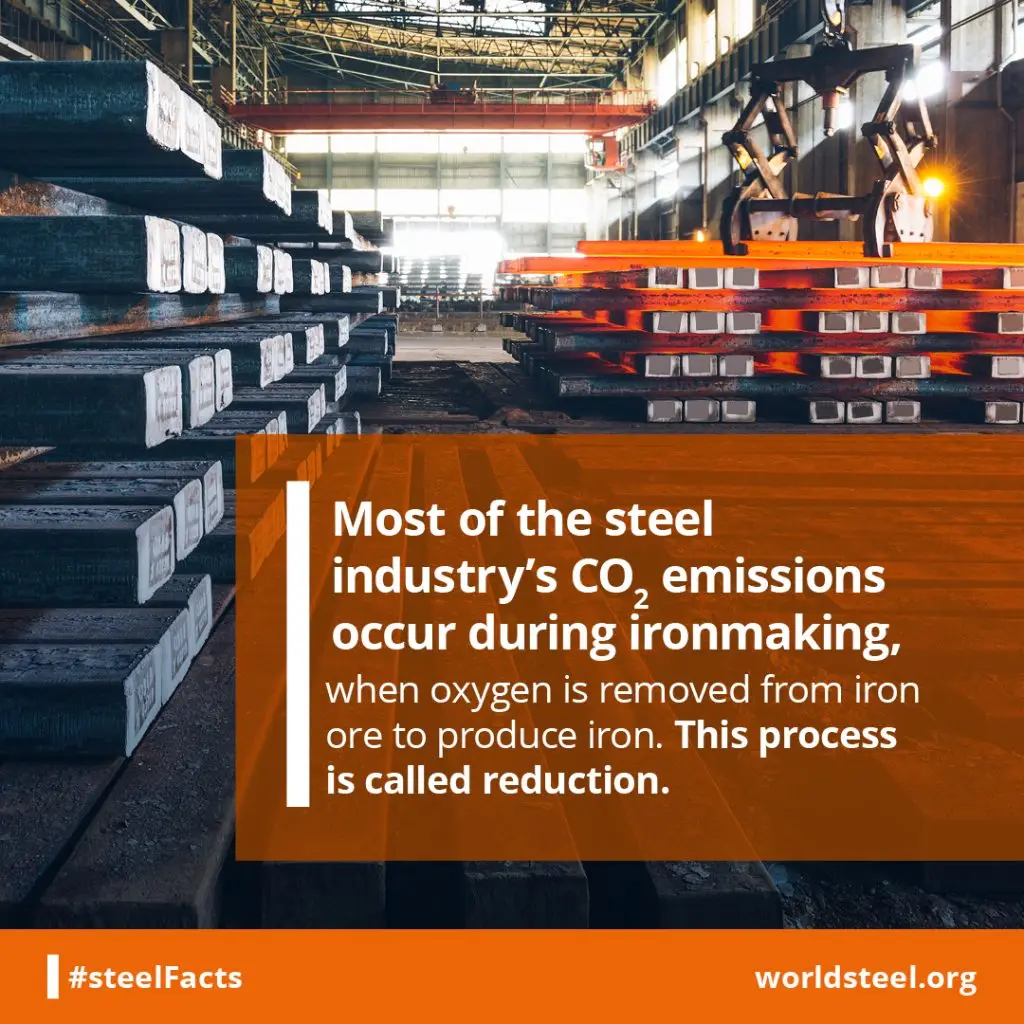
Most of the steel industry's CO₂ emissions occur during ironmaking, when oxygen is removed from iron ore to produce iron. This process is called reduction.
下载
复制该事实的链接
There is no single solution to low-carbon steelmaking, and a broad portfolio of technological options will need to be deployed, alone or in combination, as local circumstances permit.
下载
复制该事实的链接
One medium-term solution is to prevent CO₂ emissions by using carbon capture, utilisation, and storage (CCUS).
下载
复制该事实的链接
下载
复制该事实的链接
Expanding production with already available technologies such as natural gas-based DRI (direct reduced iron) and EAF (electric arc furnace) routes can significantly reduce carbon emissions.
下载
复制该事实的链接
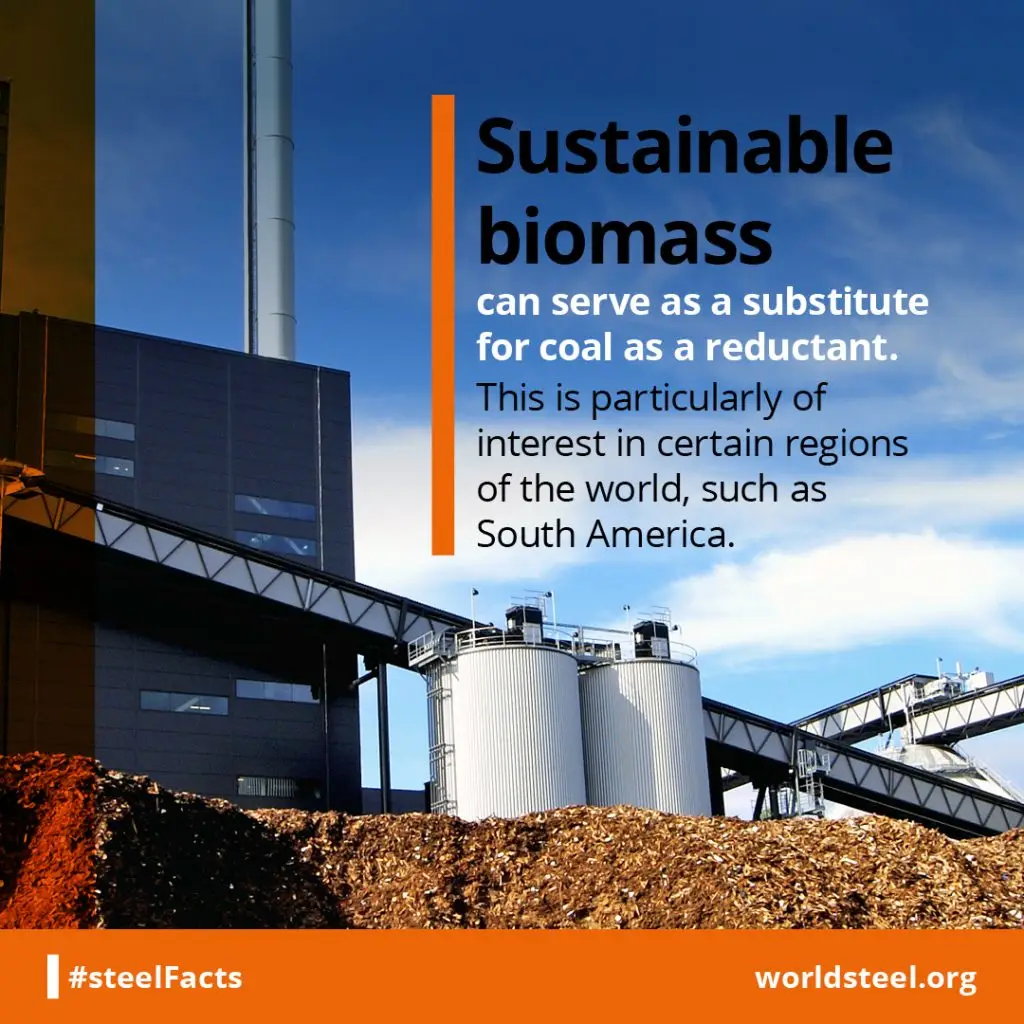
Sustainable biomass can serve as a substitute for coal as a reductant. This is particularly of interest in certain regions of the world, such as South America.
下载
复制该事实的链接
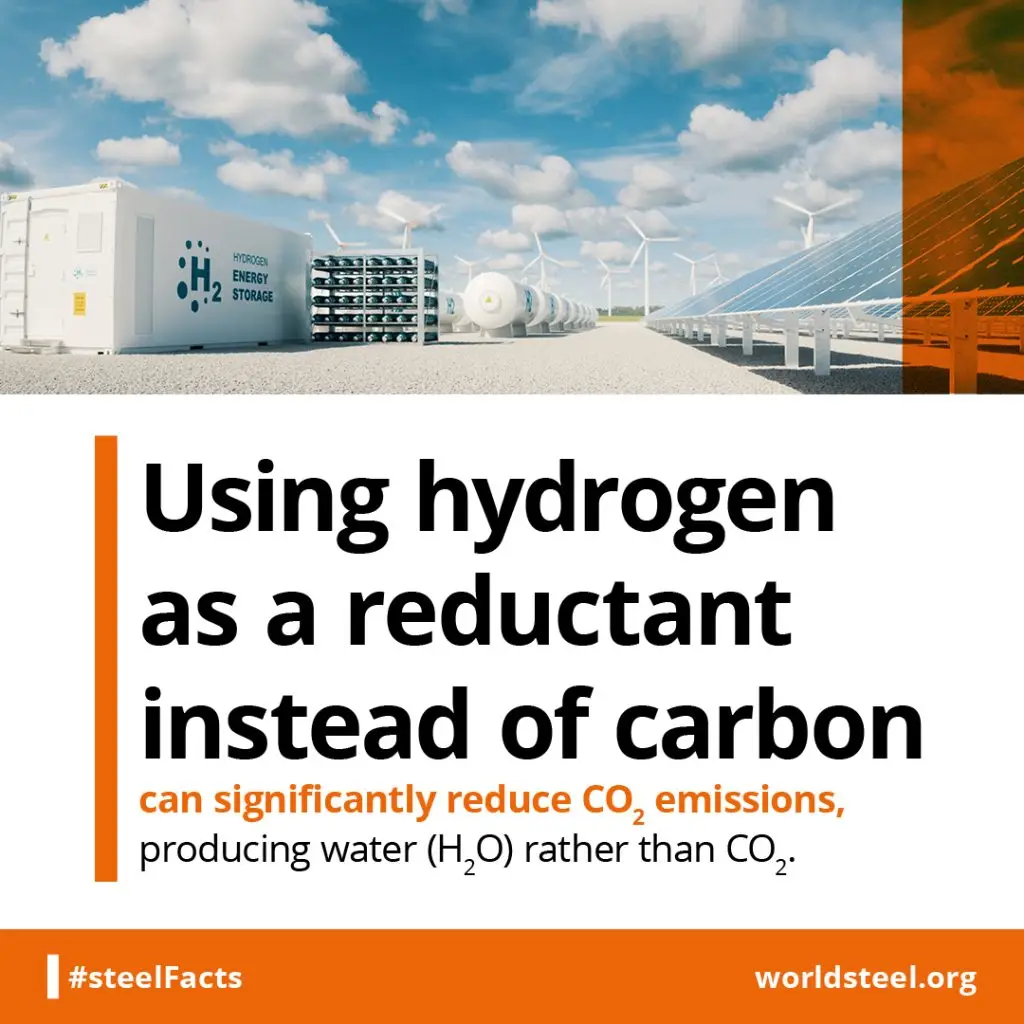
Using hydrogen as a reductant instead of carbon can significantly reduce CO₂ emissions, producing water (H₂O) rather than CO₂.
下载
复制该事实的链接
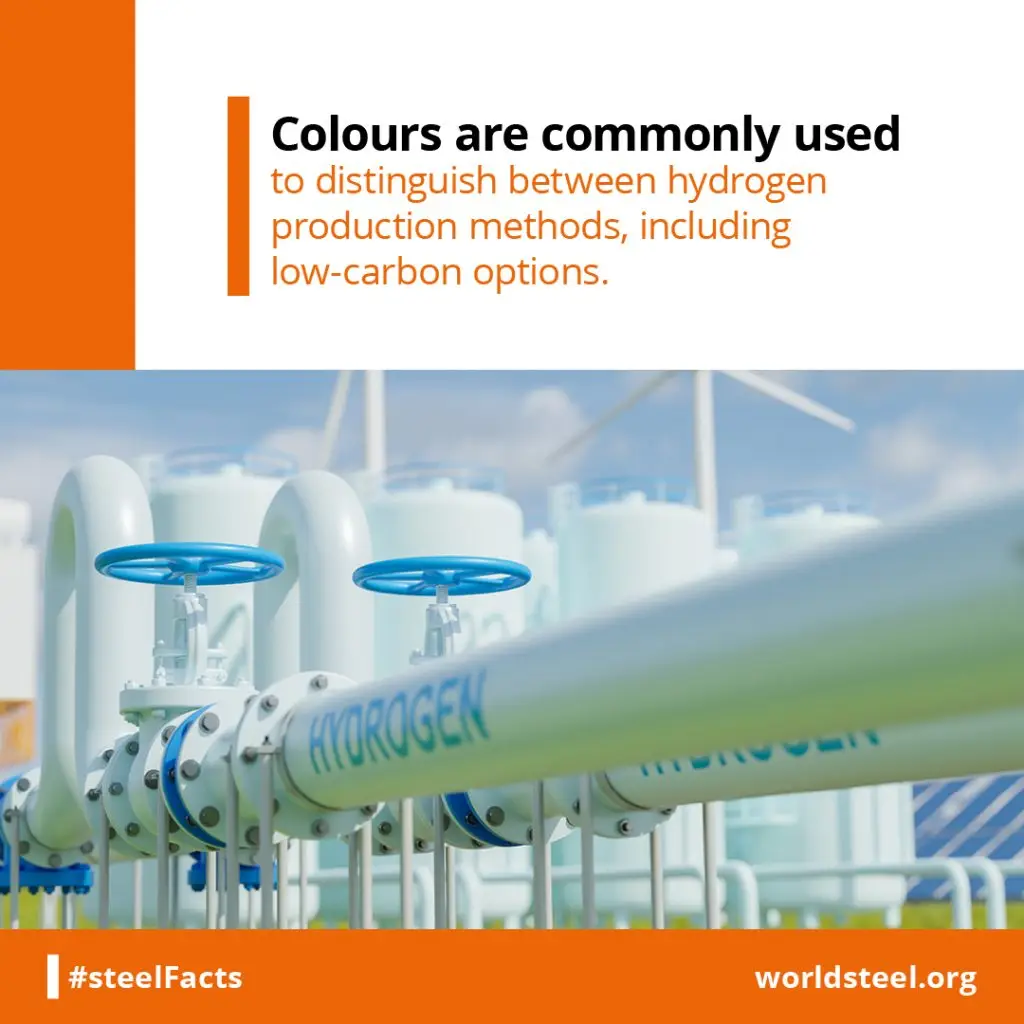
Colours are commonly used to distinguish between hydrogen production methods, including low-carbon options.
下载
复制该事实的链接
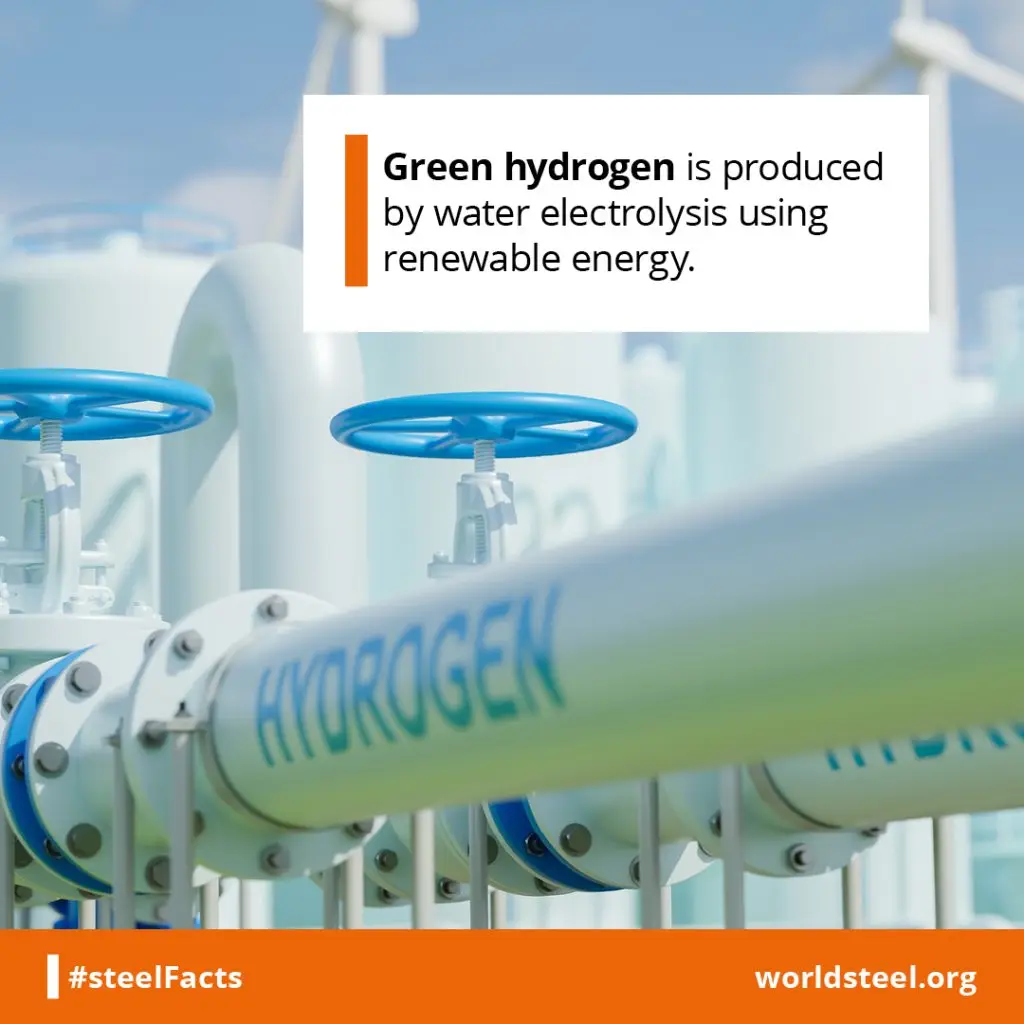
Green hydrogen is produced by water electrolysis using renewable energy.
下载
复制该事实的链接
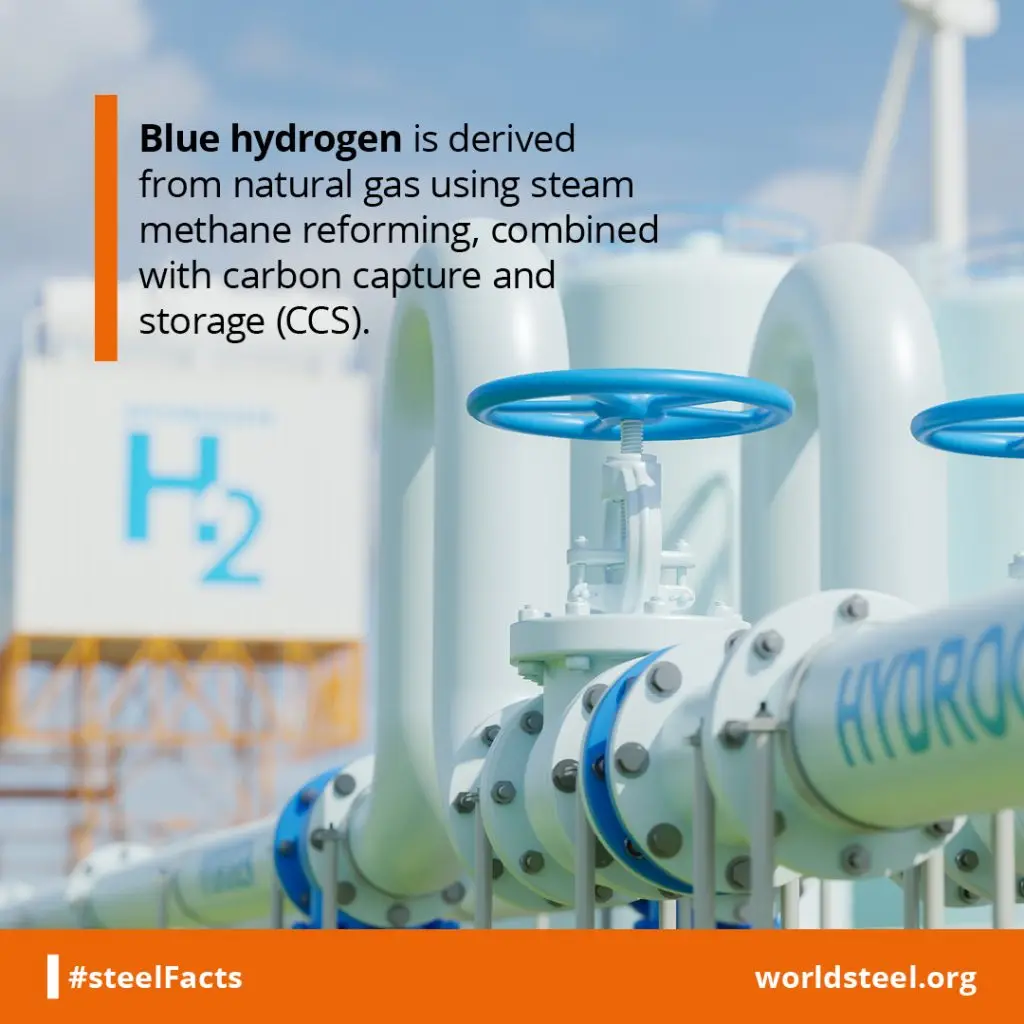
Blue hydrogen is derived from natural gas using steam methane reforming, combined with carbon capture and storage (CCS).
下载
复制该事实的链接
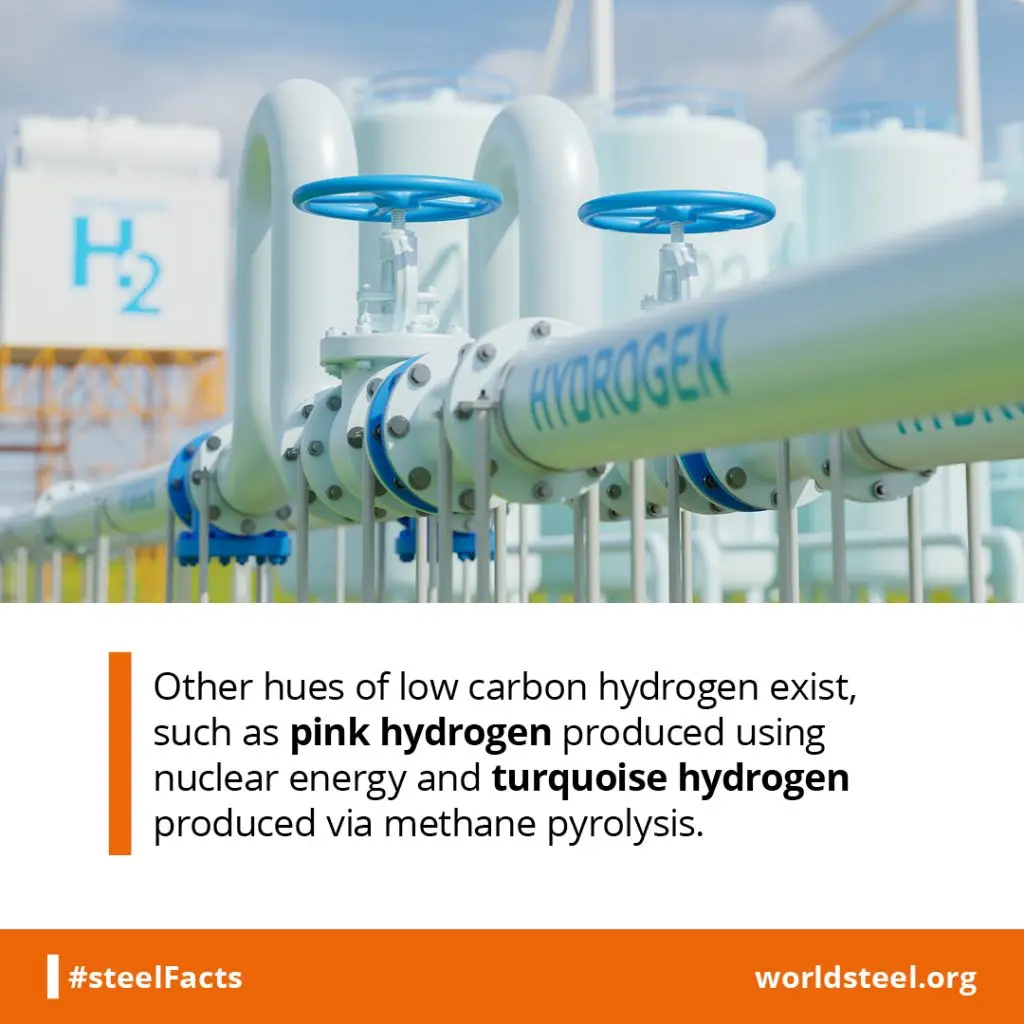
Other hues of low-carbon hydrogen exist, such as pink hydrogen produced using nuclear energy and turquoise hydrogen produced via methane pyrolysis.
下载
复制该事实的链接
下载
复制该事实的链接
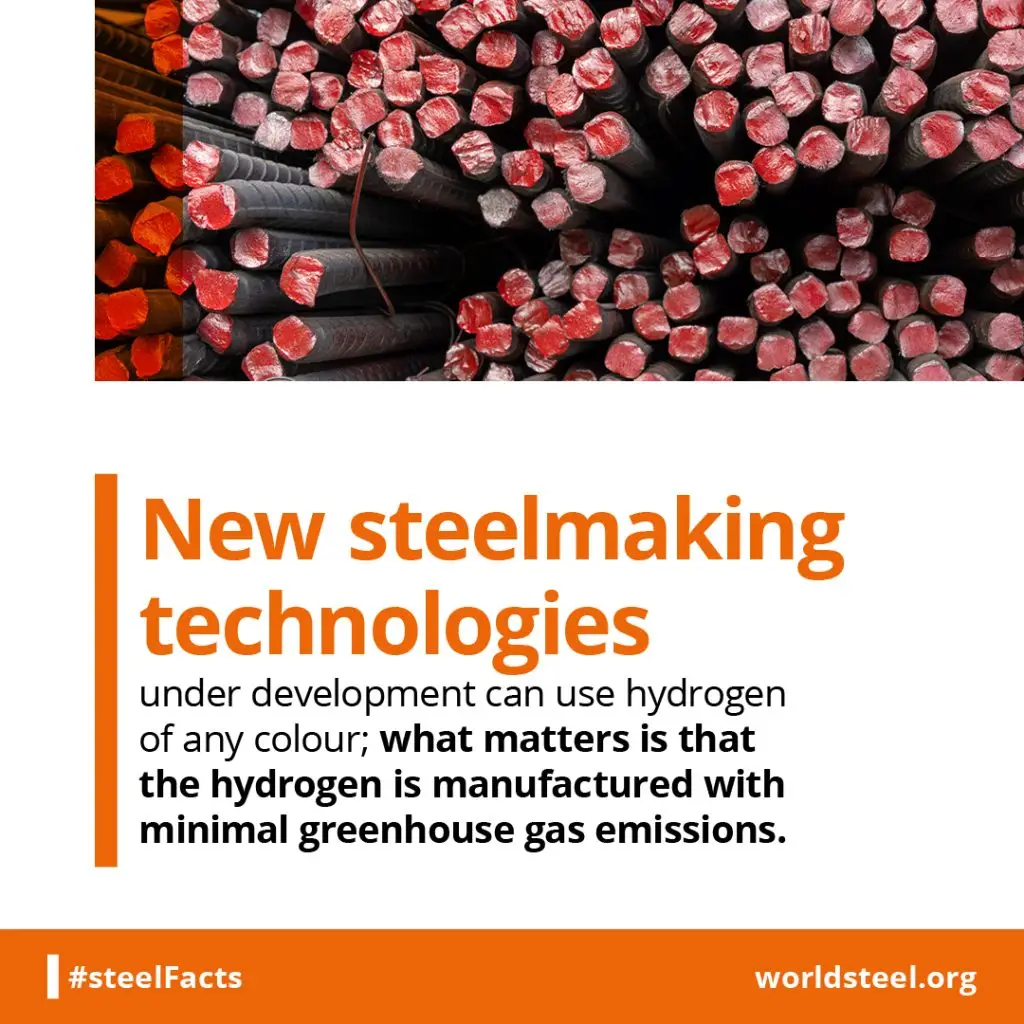
New steelmaking technologies under development can use hydrogen of any colour; what matters is that the hydrogen is manufactured with minimal greenhouse gas emissions.
下载
复制该事实的链接
Technologies are also under development that reduce iron ore directly using electricity in an electrolysis-based process, though these are less mature and will likely take longer to develop and deploy.
下载
复制该事实的链接
End-of-life plastics and other waste materials can also replace coal and coke as reducing agents in ironmaking, a circular economy practice that reduces emissions.
下载
复制该事实的链接
Steel is the world's most recycled metal.
下载
复制该事实的链接
下载
复制该事实的链接
The availability of scrap steel is increasing, helping reduce the GHG emissions intensity of steel production.
下载
复制该事实的链接
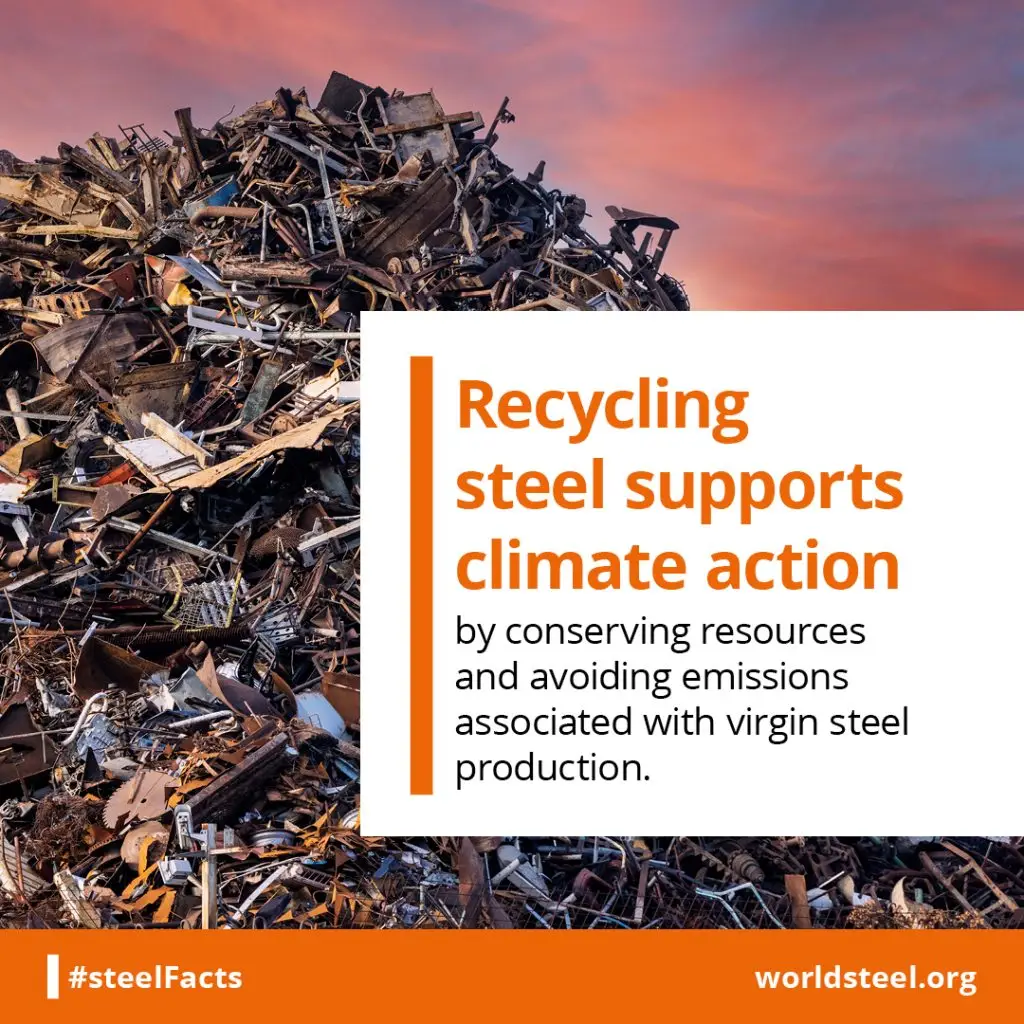
Recycling steel supports climate action by conserving resources and avoiding emissions associated with virgin steel production.
下载
复制该事实的链接
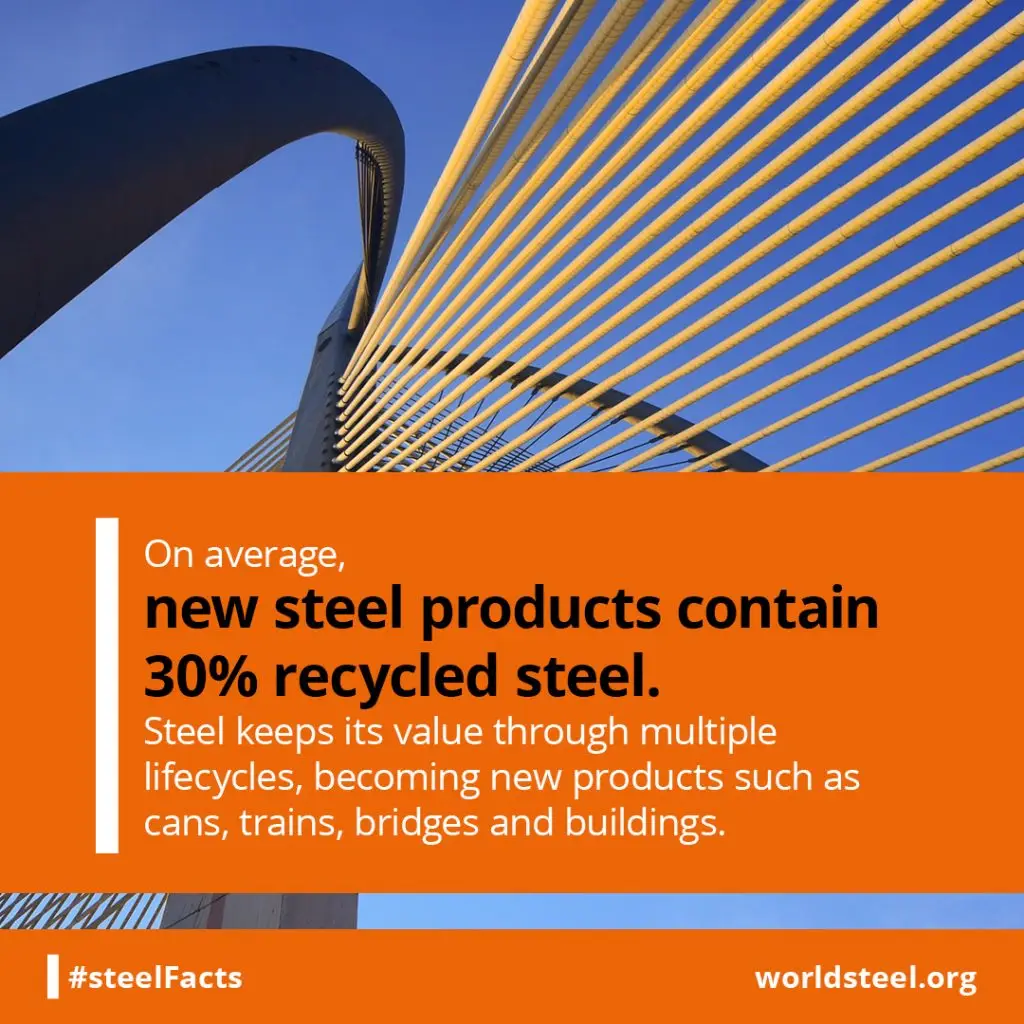
On average, new steel products contain 30% recycled steel. Steel keeps its value through multiple lifecycles, becoming new products such as cans, trains, bridges and buildings.
下载
复制该事实的链接
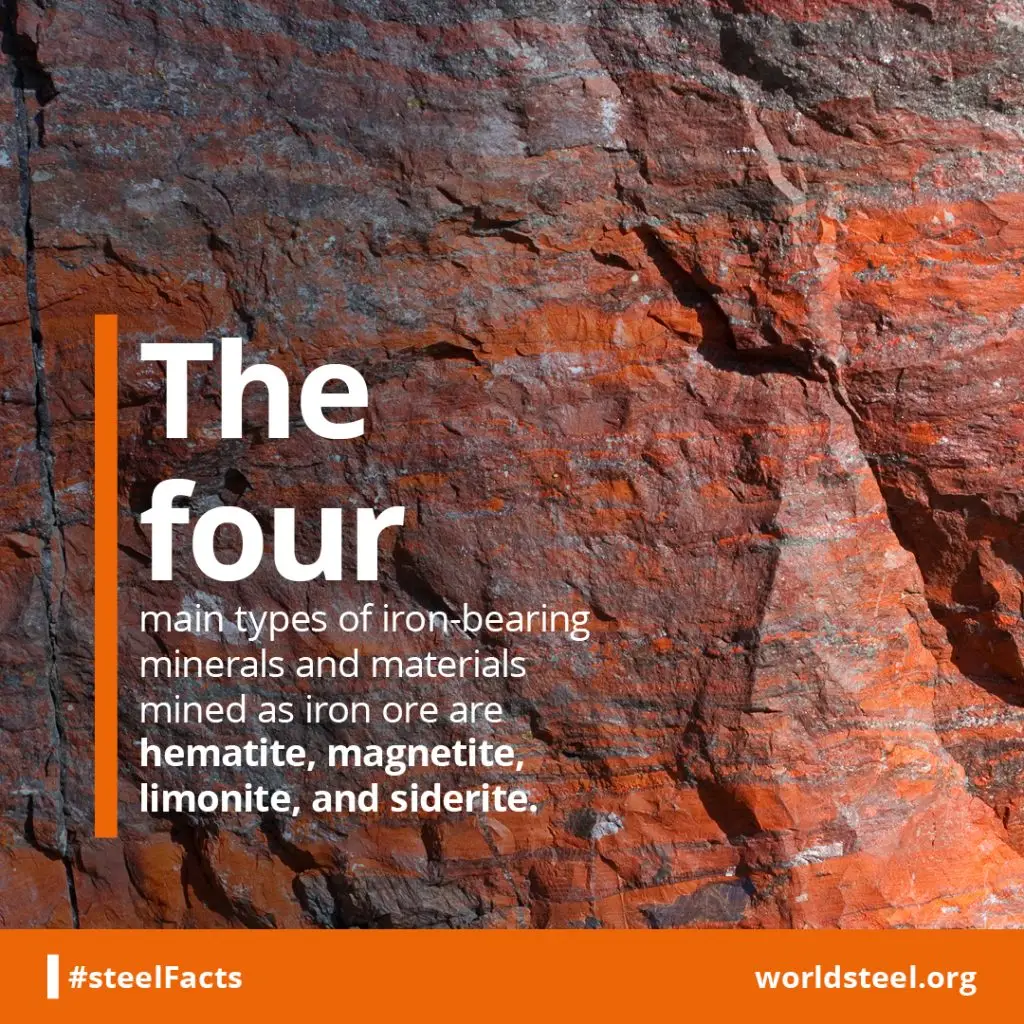
The four main types of iron-bearing minerals and materials mined as iron ore are hematite, magnetite, limonite, and siderite.
下载
复制该事实的链接
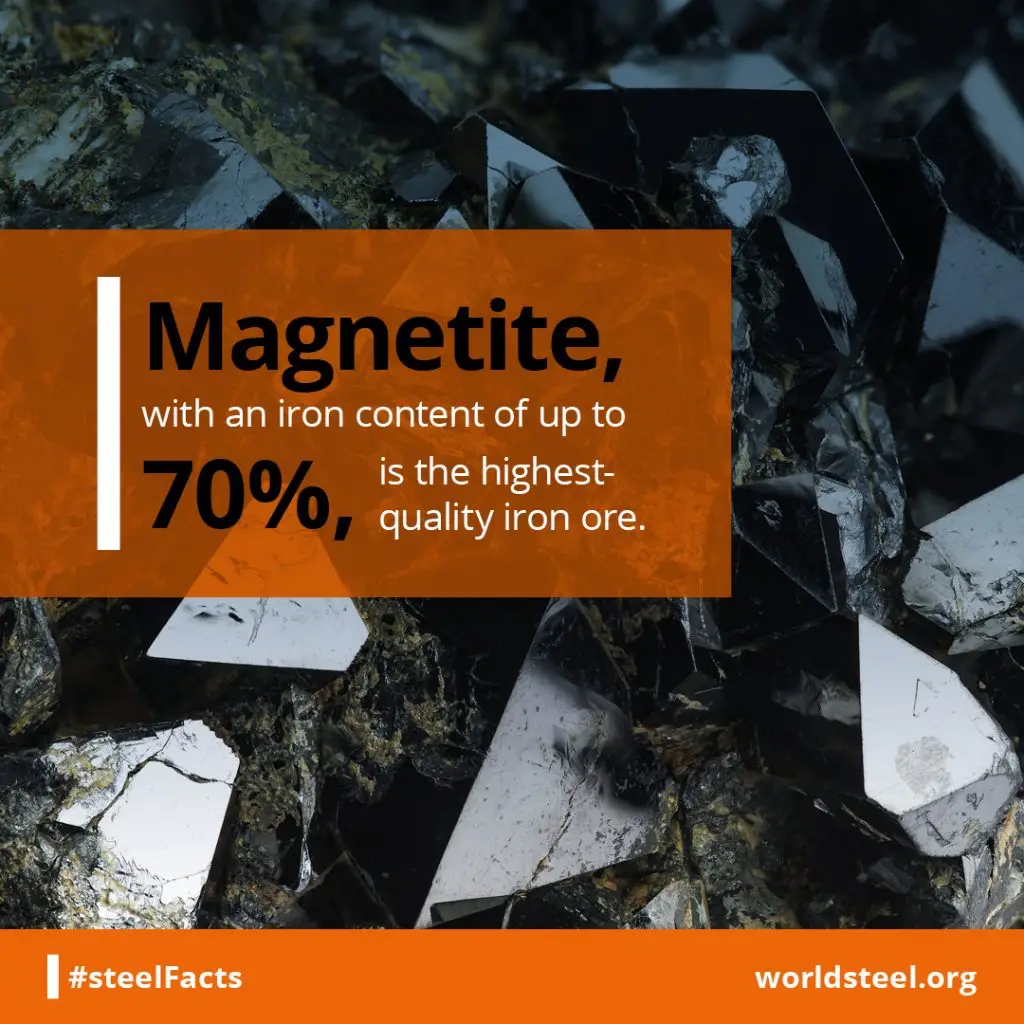
Magnetite, with an iron content of up to 70%, is the highest-quality iron ore.
下载
复制该事实的链接
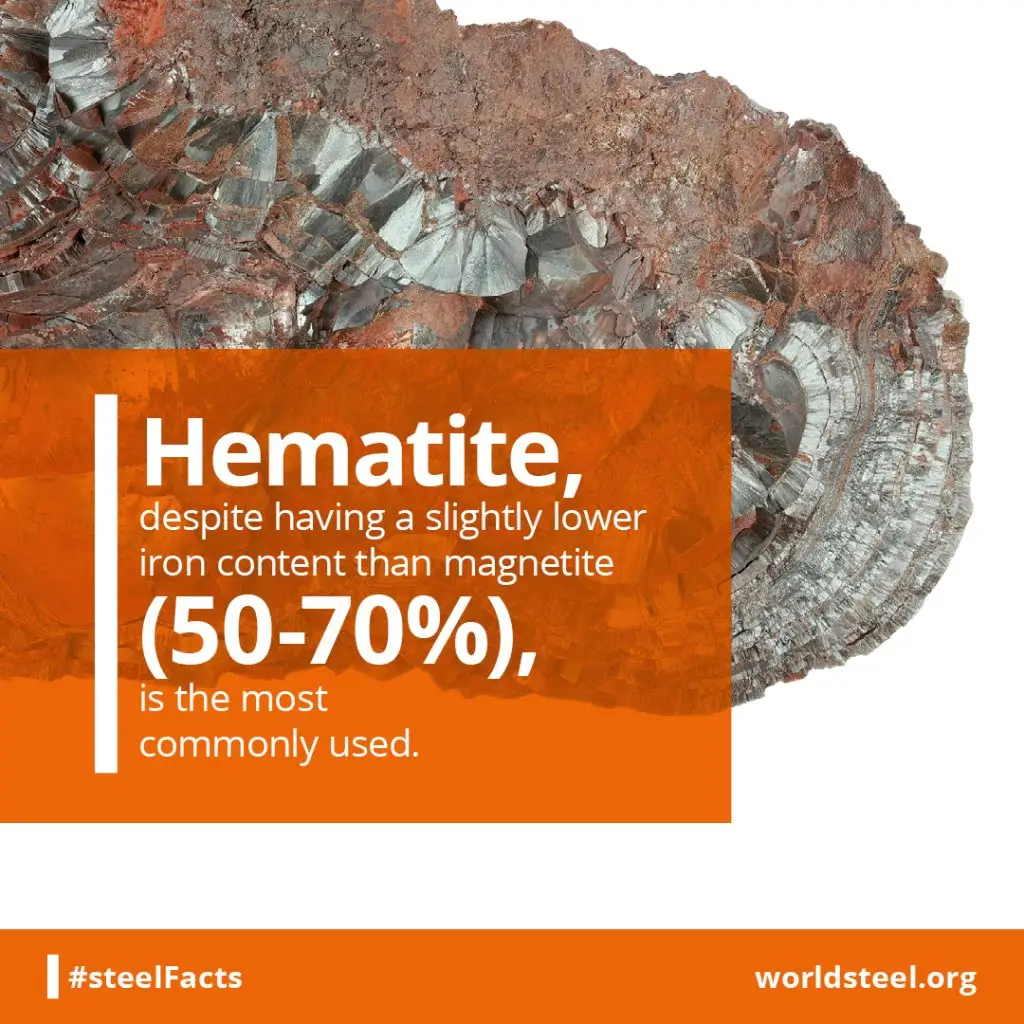
Hematite, despite having a slightly lower iron content than magnetite (50-70%), is the most commonly used.
下载
复制该事实的链接
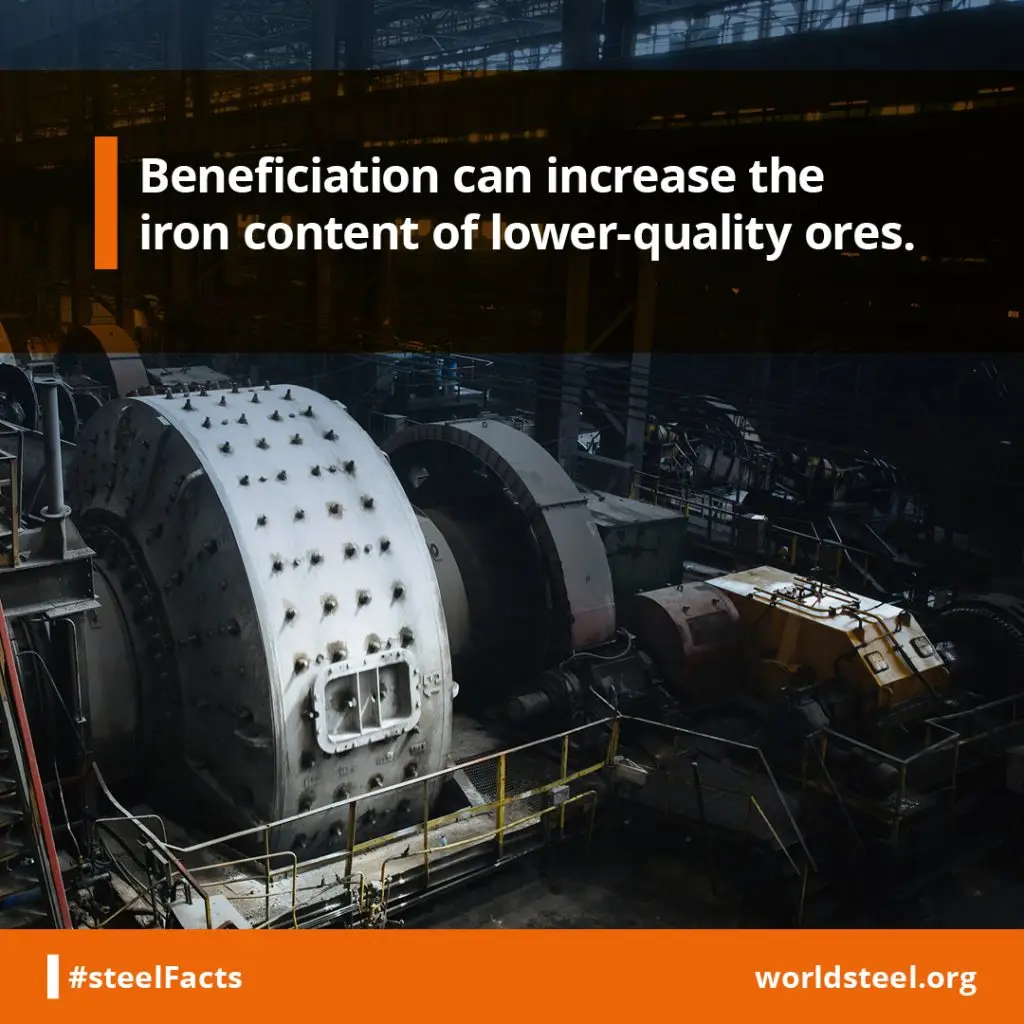
Beneficiation can increase the iron content of lower-quality ores.
下载
复制该事实的链接
下载
复制该事实的链接
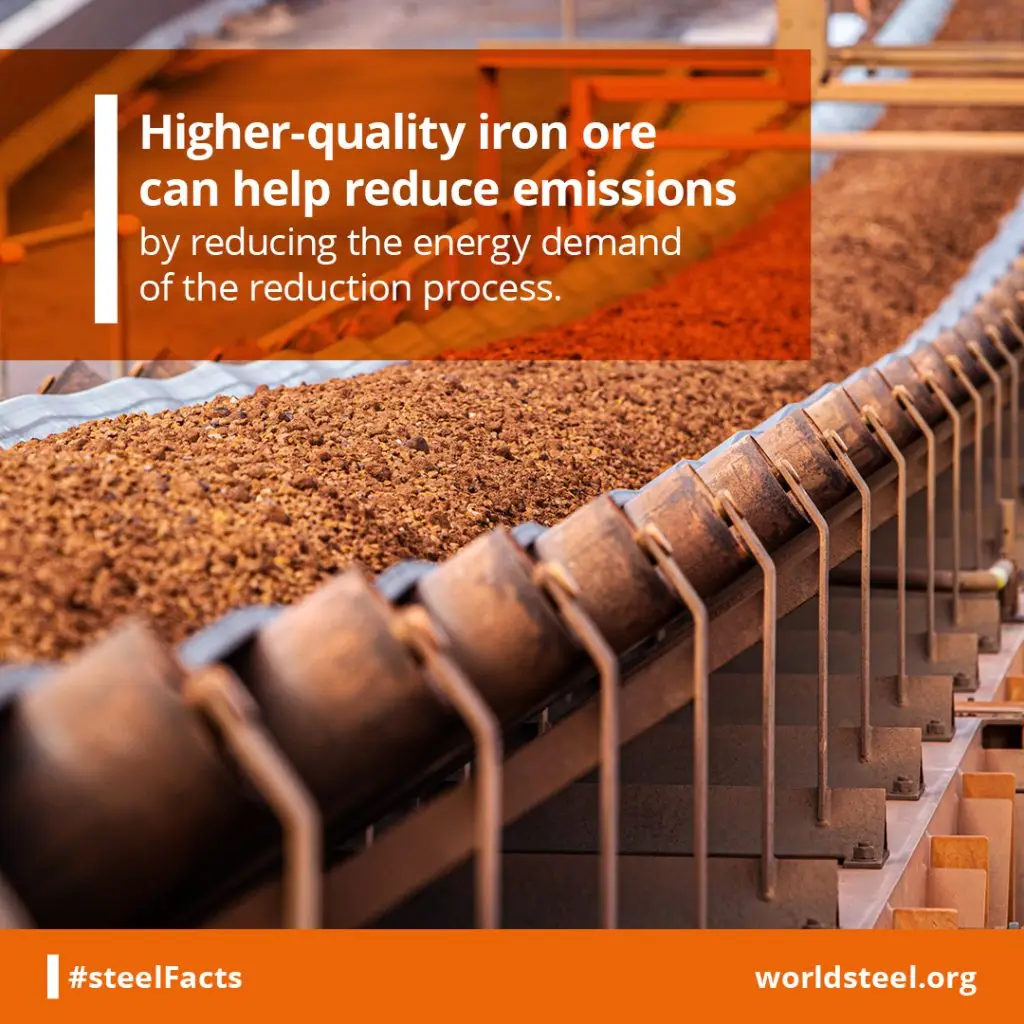
Higher-quality iron ore can help reduce emissions from iron production by reducing the energy demand of the reduction process.
下载
复制该事实的链接
Steel enables society’s overall decarbonisation — almost every greenhouse gas mitigation technology relies on steel, including thermal and renewable energy generation, electrification, mass transport, and the hydrogen economy.
下载
复制该事实的链接
Without steel, the goals of the Paris Agreement will not be achieved.
下载
复制该事实的链接
The steel industry is dedicated to collaborating with partners across its ecosystem, including suppliers, customers, governments, and other industries, to find solutions.
下载
复制该事实的链接
下载
复制该事实的链接
The transition is expected to cost between $3.5 and $5.5 trillion, with about $1.2 trillion attributable to steel production and the remainder to the upstream and downstream value chains.
下载
复制该事实的链接
Why steel matters for the climate transition
下载
复制该事实的链接
Climate action - Our priorities