All facts

Sustainable steel 2026
下载
复制该事实的链接
下载
复制该事实的链接
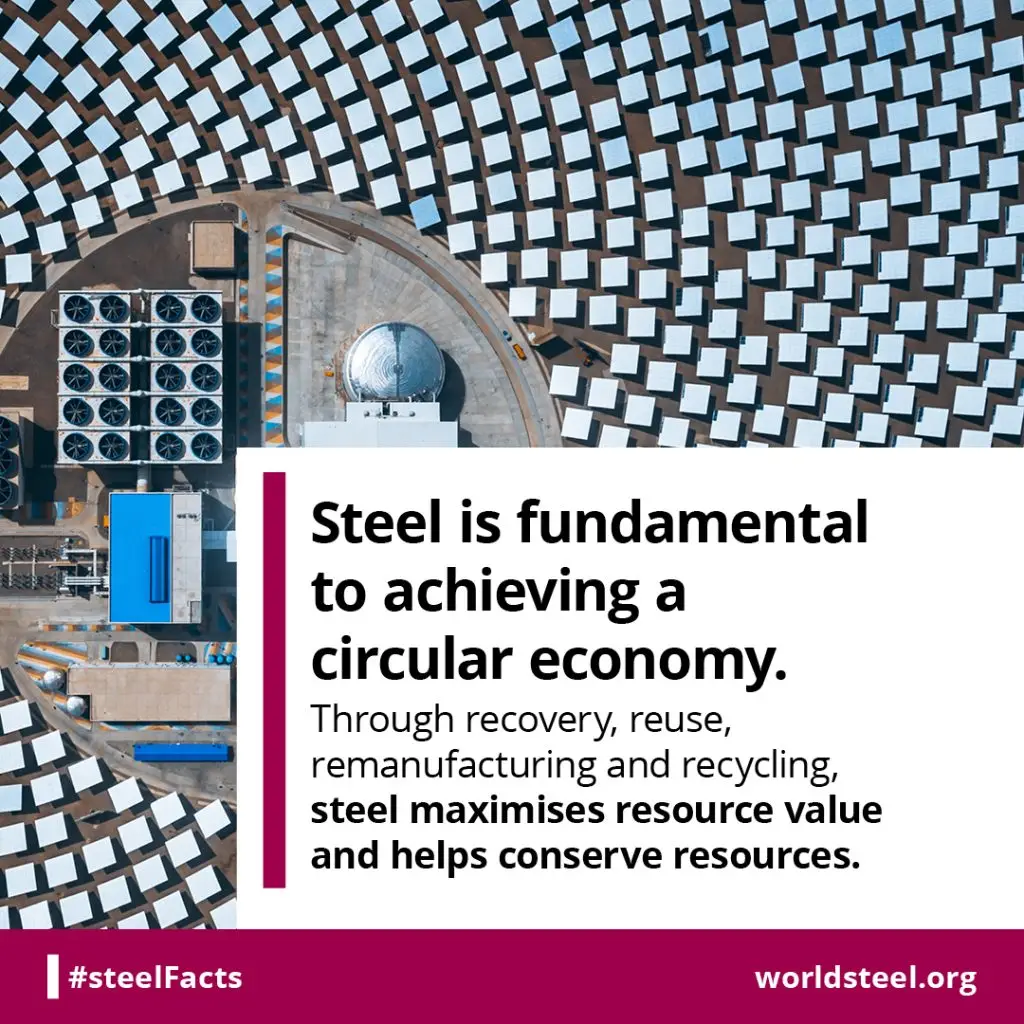
Steel is fundamental to achieving a circular economy.
下载
复制该事实的链接
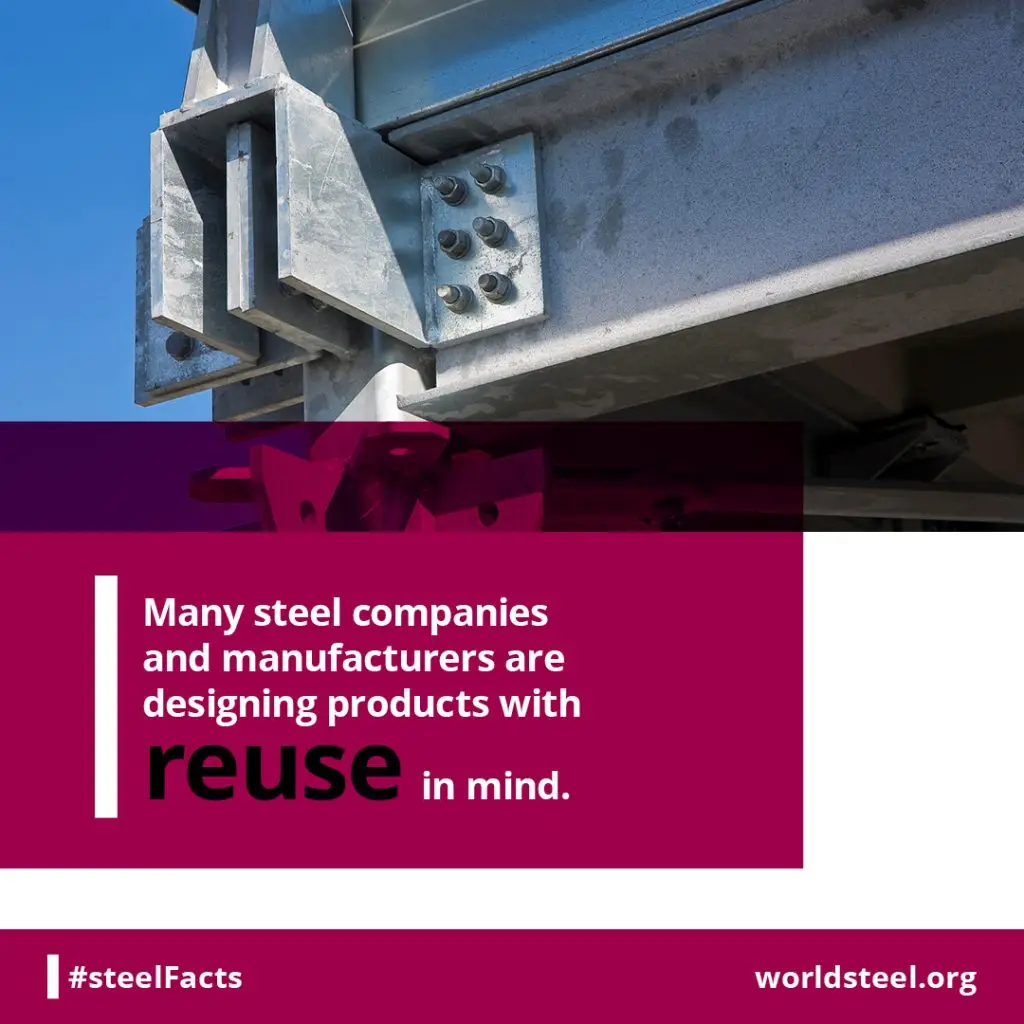
Many steel companies and manufacturers are designing products with reuse in mind.
下载
复制该事实的链接
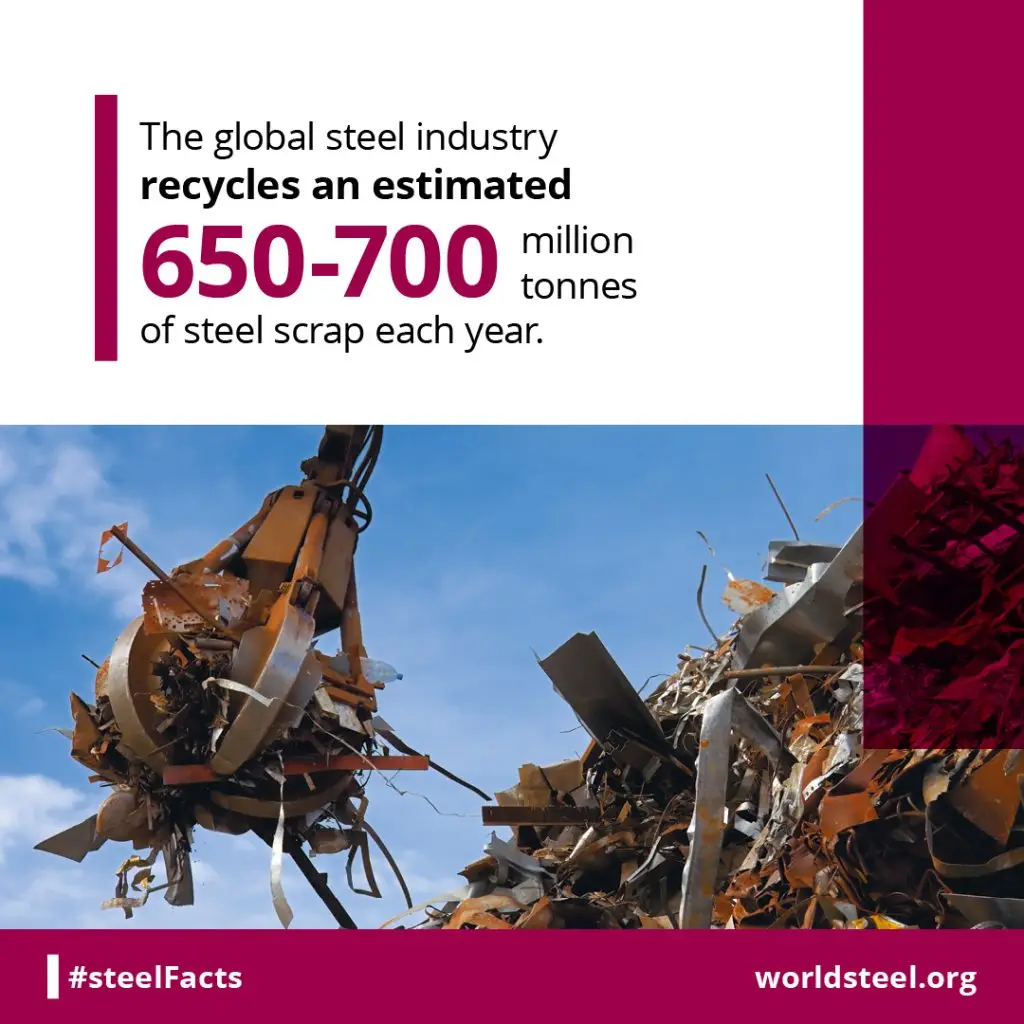
The global steel industry recycles an estimated 650-700 million tonnes of steel scrap each year.
下载
复制该事实的链接
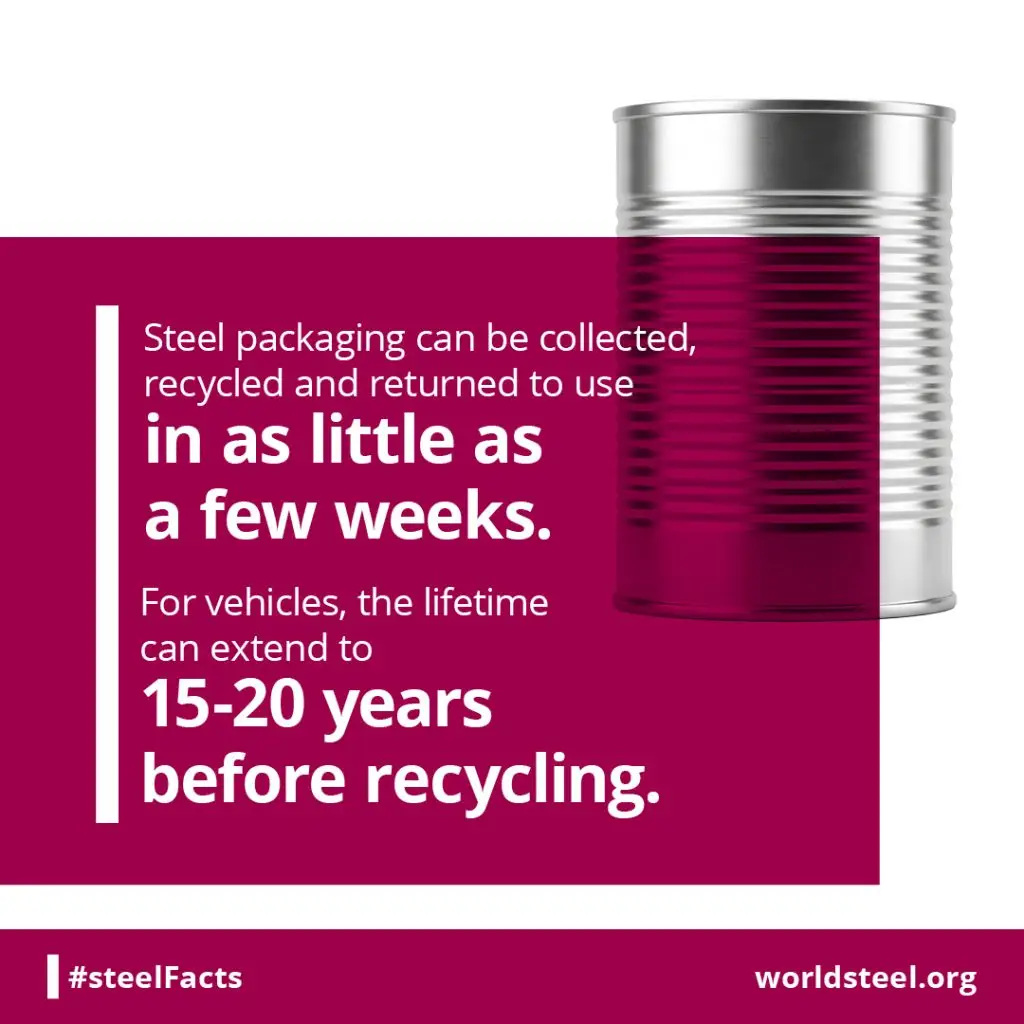
Steel packaging can be collected, recycled and returned to use in as little as a few weeks. For vehicles, the lifetime can extend to 15-20 years before recycling.
下载
复制该事实的链接
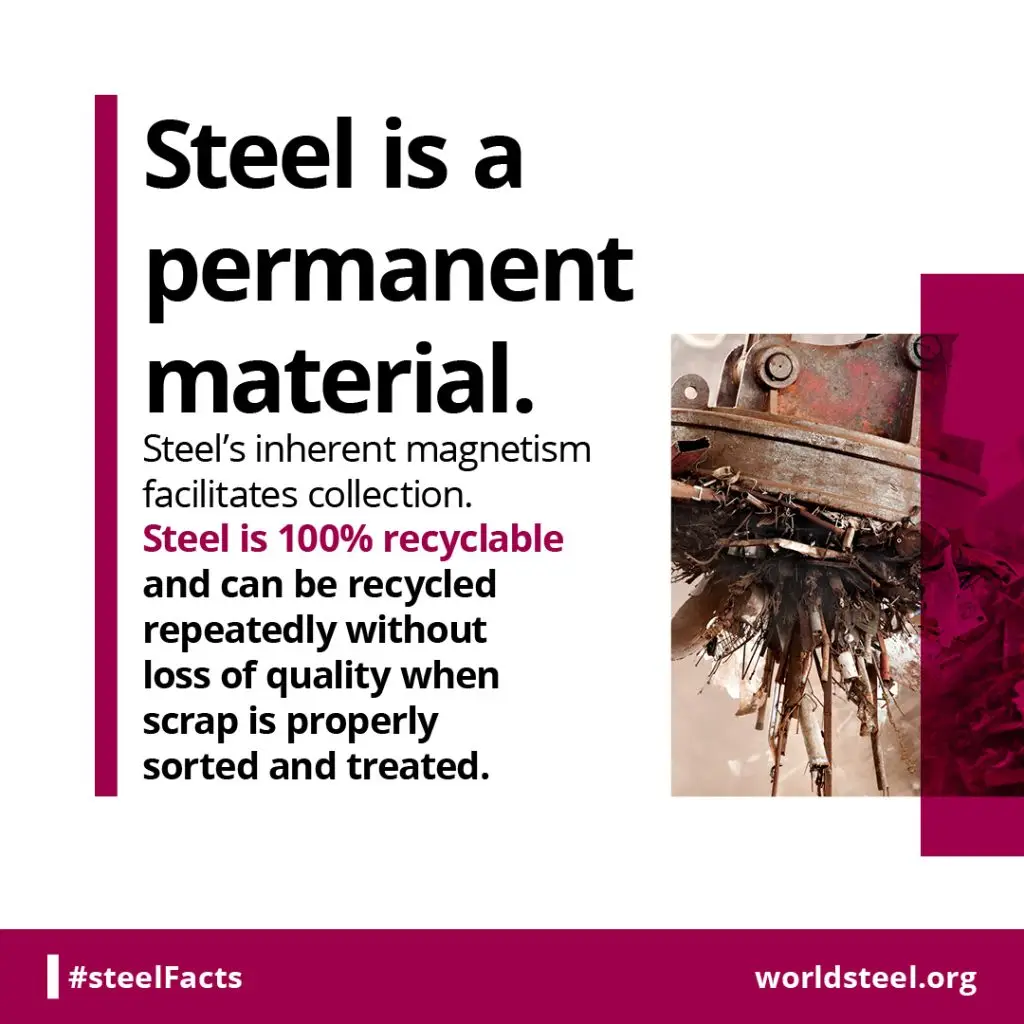
Steel is a permanent material. Steel’s inherent magnetism facilitates collection. Steel is 100% recyclable and can be recycled repeatedly without loss of quality when scrap is properly sorted and treated.
下载
复制该事实的链接
下载
复制该事实的链接
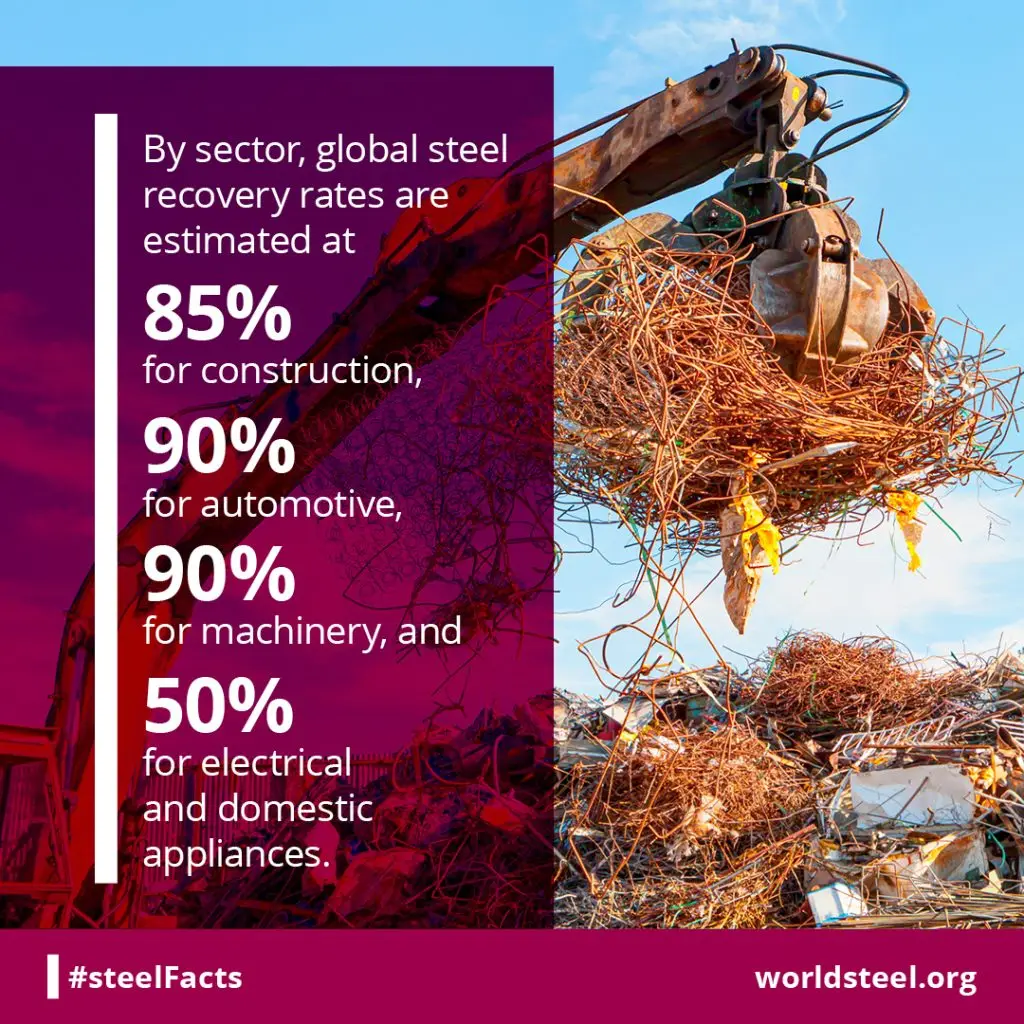
By sector, global steel recovery rates are estimated at 85% for construction, 90% for automotive, 90% for machinery, and 50% for electrical and domestic appliances.
下载
复制该事实的链接
New technologies are emerging to convert steelmaking gases into methanol and ethanol, reducing CO₂ emissions, conserving energy, and lessening fossil fuel reliance in sectors like transportation.
下载
复制该事实的链接
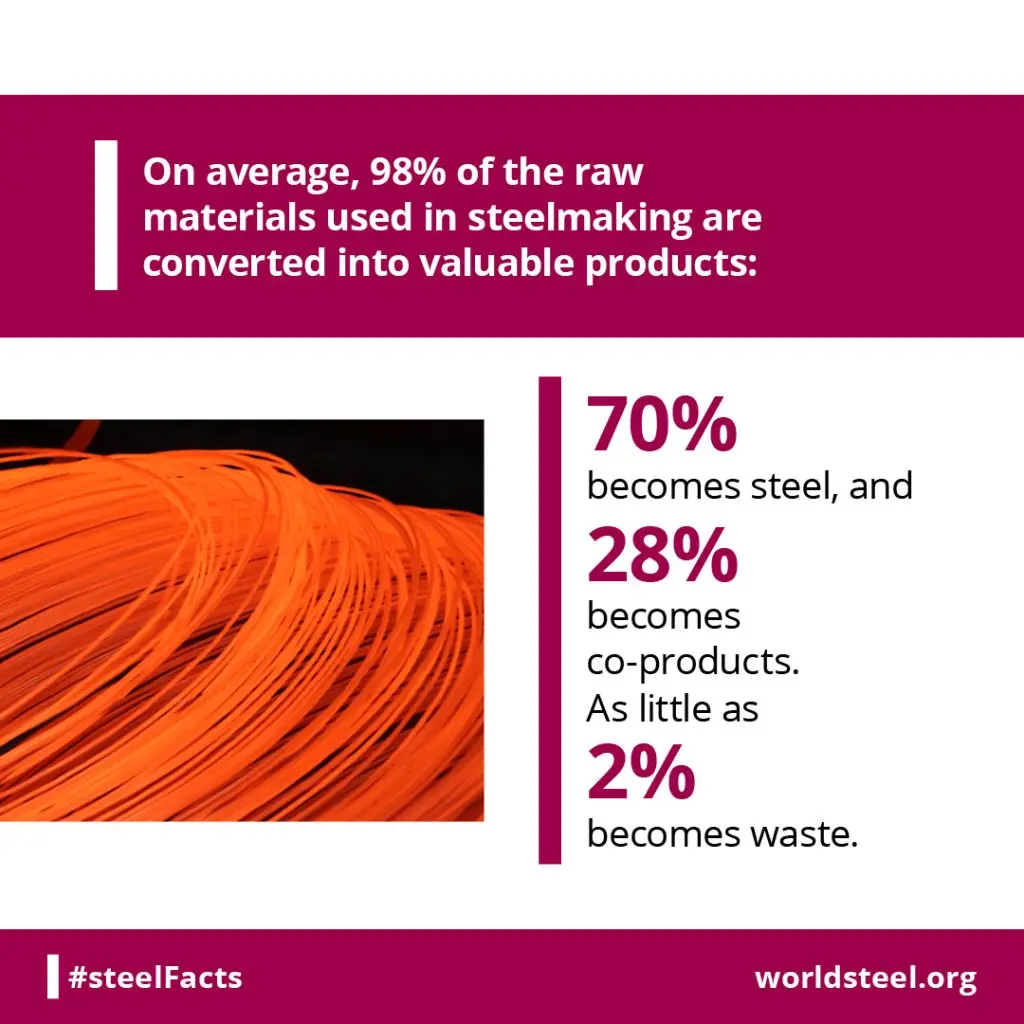
On average, 98% of the raw materials used in steelmaking are converted into valuable products: 70% becomes steel, and 28% becomes co-products. As little as 2% becomes waste.
下载
复制该事实的链接
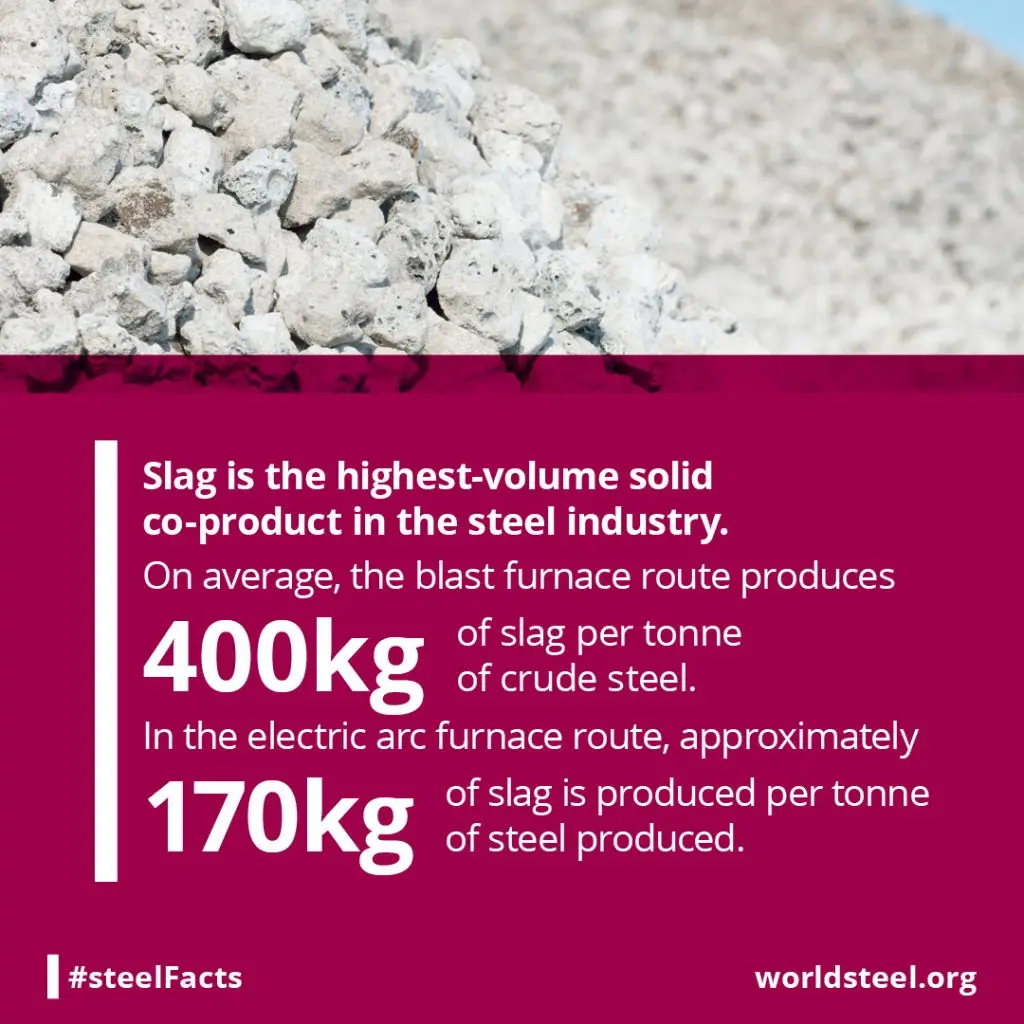
Slag is the highest-volume solid co-product in the steel industry. On average, the blast furnace route produces 400 kg of slag per tonne of crude steel. In the electric arc furnace route, approximately 170 kg of slag is produced per tonne of steel pr…
下载
复制该事实的链接
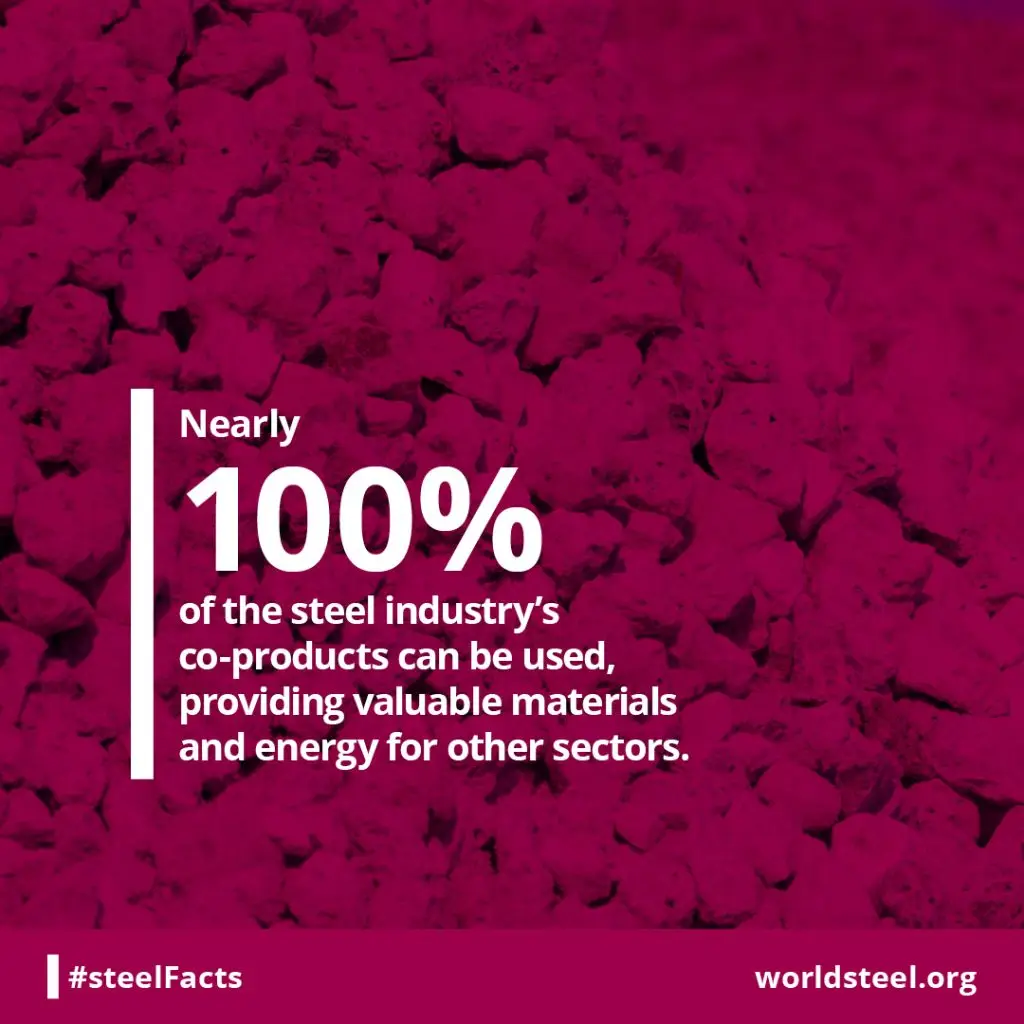
Nearly 100% of the steel industry’s co-products can be used, providing valuable materials and energy for other sectors.
下载
复制该事实的链接
下载
复制该事实的链接
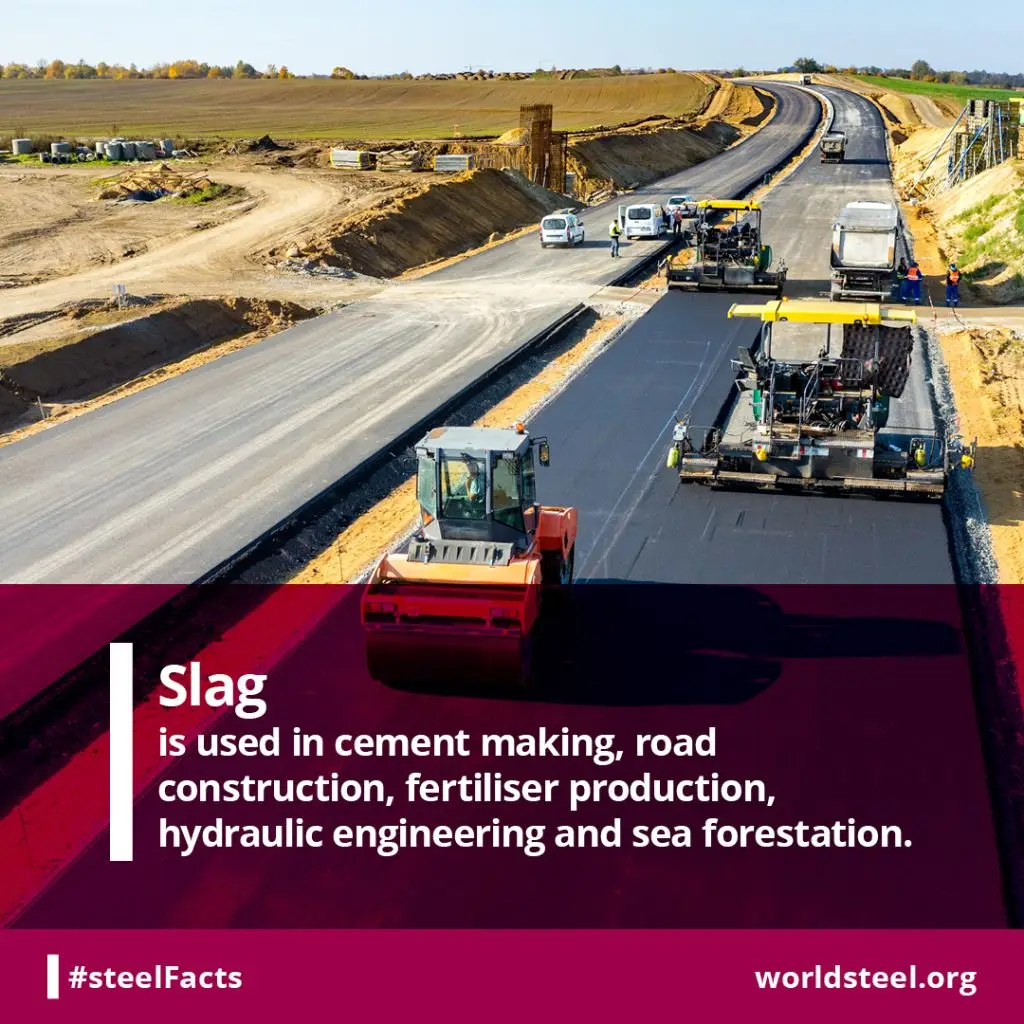
Slag is used in cement making, road construction, fertiliser production, hydraulic engineering and sea forestation.
下载
复制该事实的链接
Steelmaking process gases are used to produce heat and/or electricity.
下载
复制该事实的链接
When process gases are fully reused, they can meet 60% to 100% of the plant’s electricity demand.
下载
复制该事实的链接
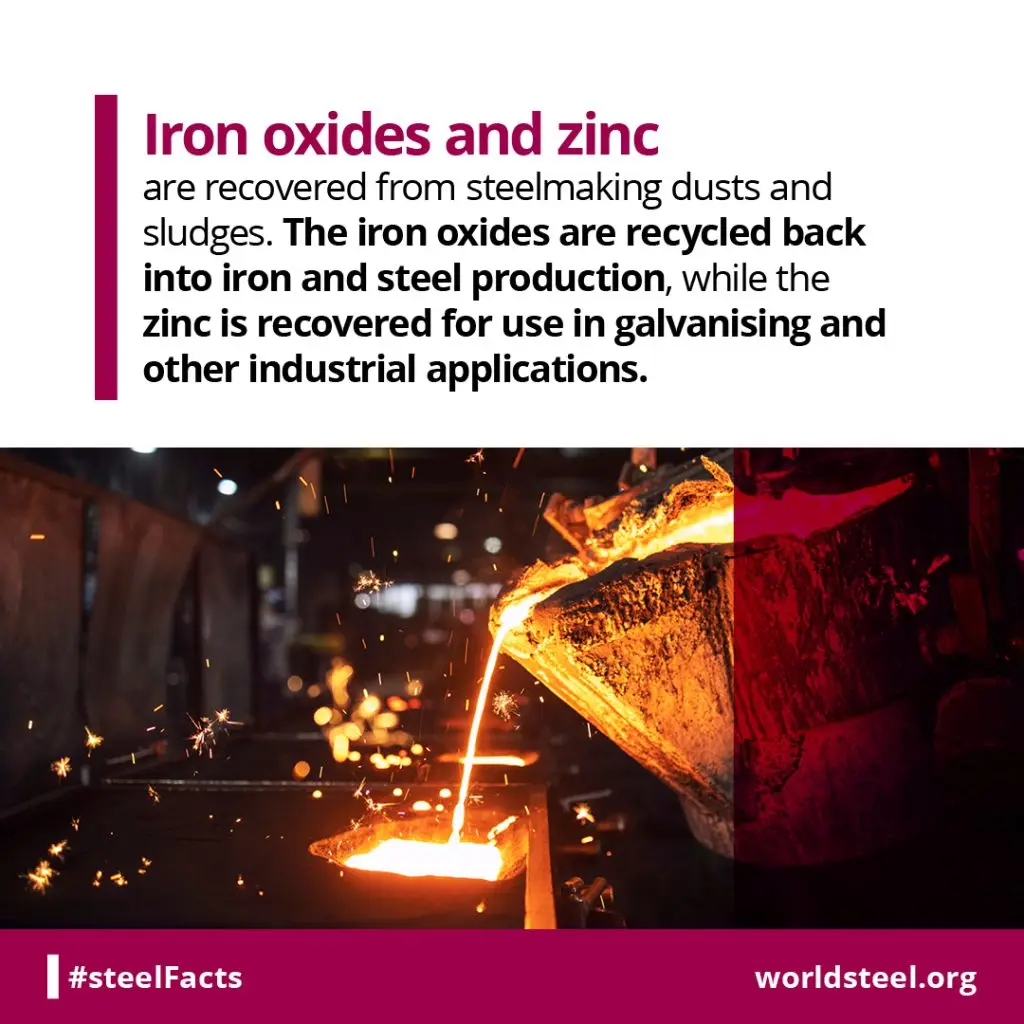
Iron oxides and zinc are recovered from steelmaking dusts and sludges. The iron oxides are recycled back into iron and steel production, while the zinc is recovered for use in galvanising and other industrial applications.
下载
复制该事实的链接
Captured CO2 from ironmaking is being used to put the fizz in carbonated drinks
下载
复制该事实的链接
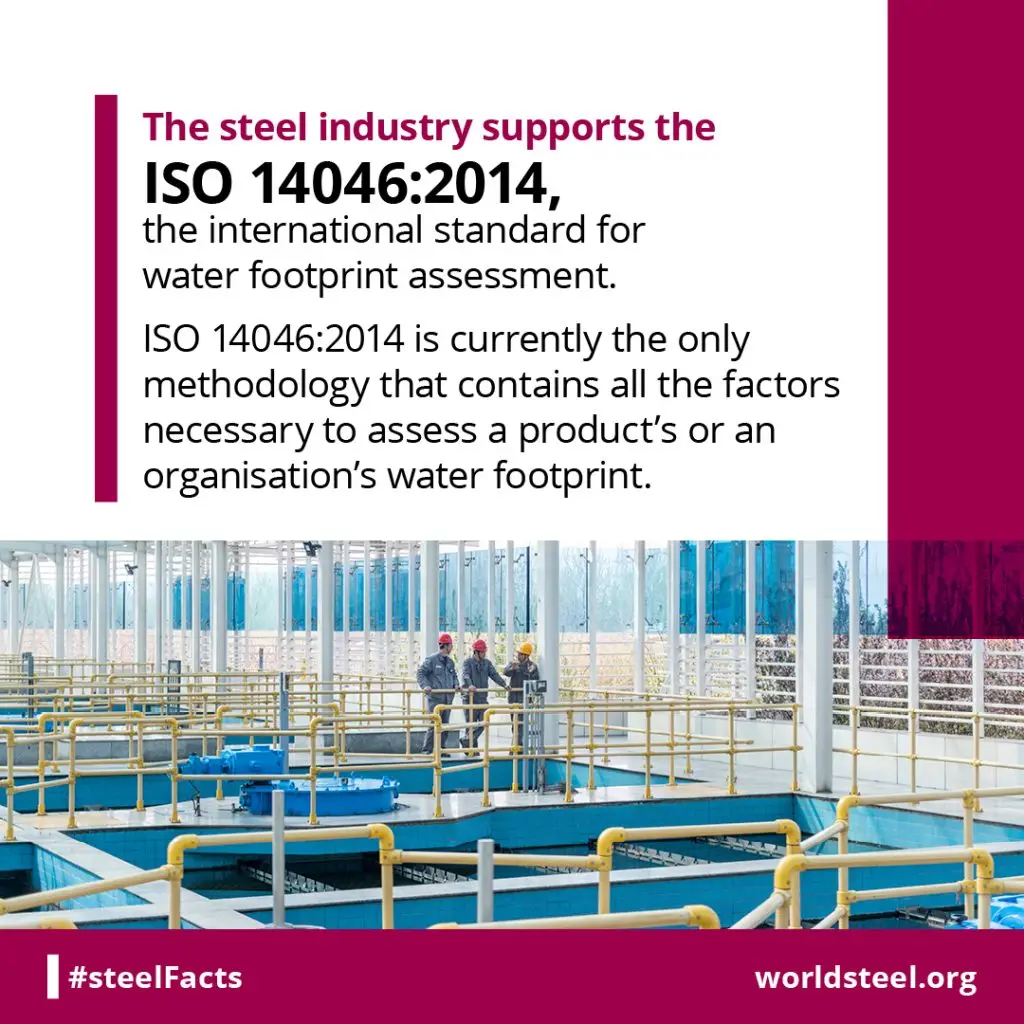
The steel industry supports ISO 14046:2014, the international standard for water footprint assessment. ISO 14046:2014 is currently the only methodology that contains all the factors necessary to assess a product’s or an organisation’s water footprint…
下载
复制该事实的链接
下载
复制该事实的链接
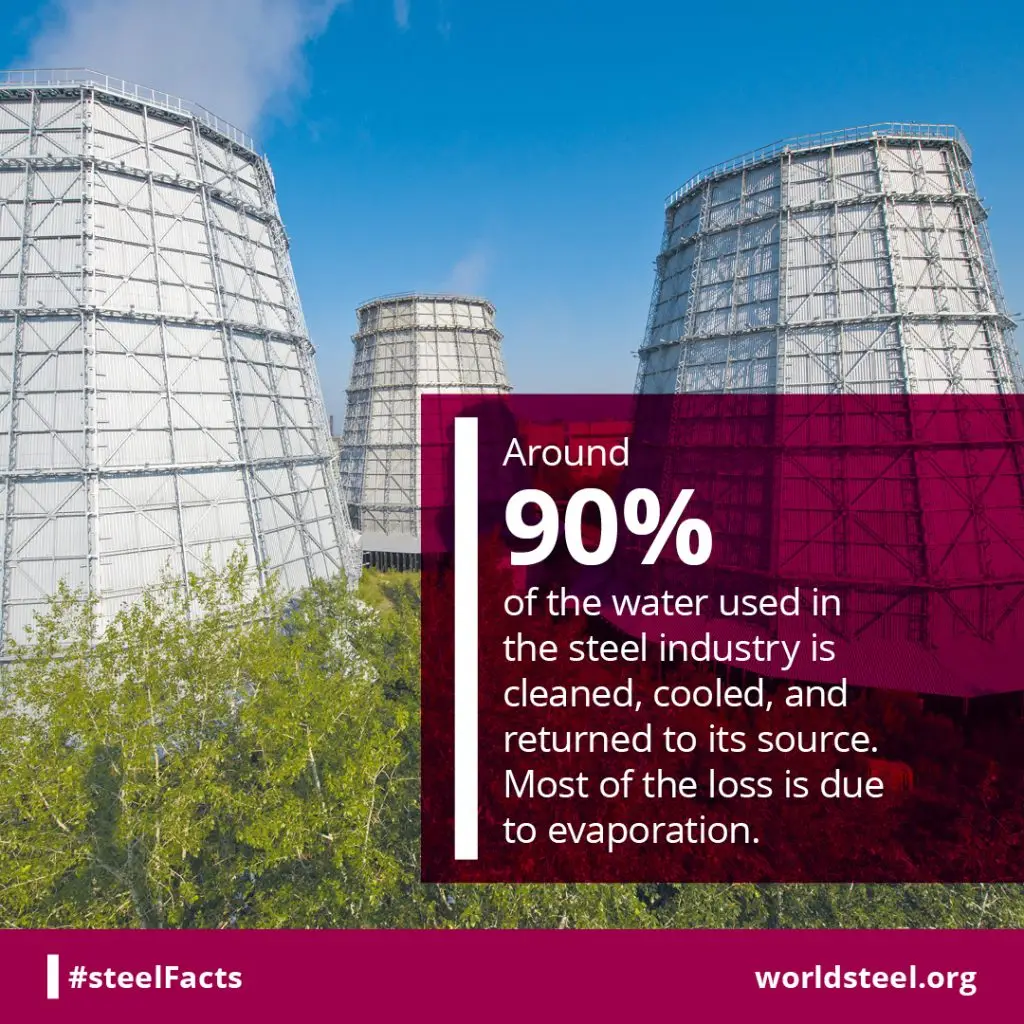
Around 90% of the water used in the steel industry is cleaned, cooled, and returned to its source. Most of the loss is due to evaporation.
下载
复制该事实的链接
Water from the steel industry that returns to rivers and other sources is often cleaner than when it was extracted.
下载
复制该事实的链接
Sea water is used almost exclusively in cooling operations, and losses during these processes may account for less than 1% of the total due to evaporation.
下载
复制该事实的链接
下载
复制该事实的链接
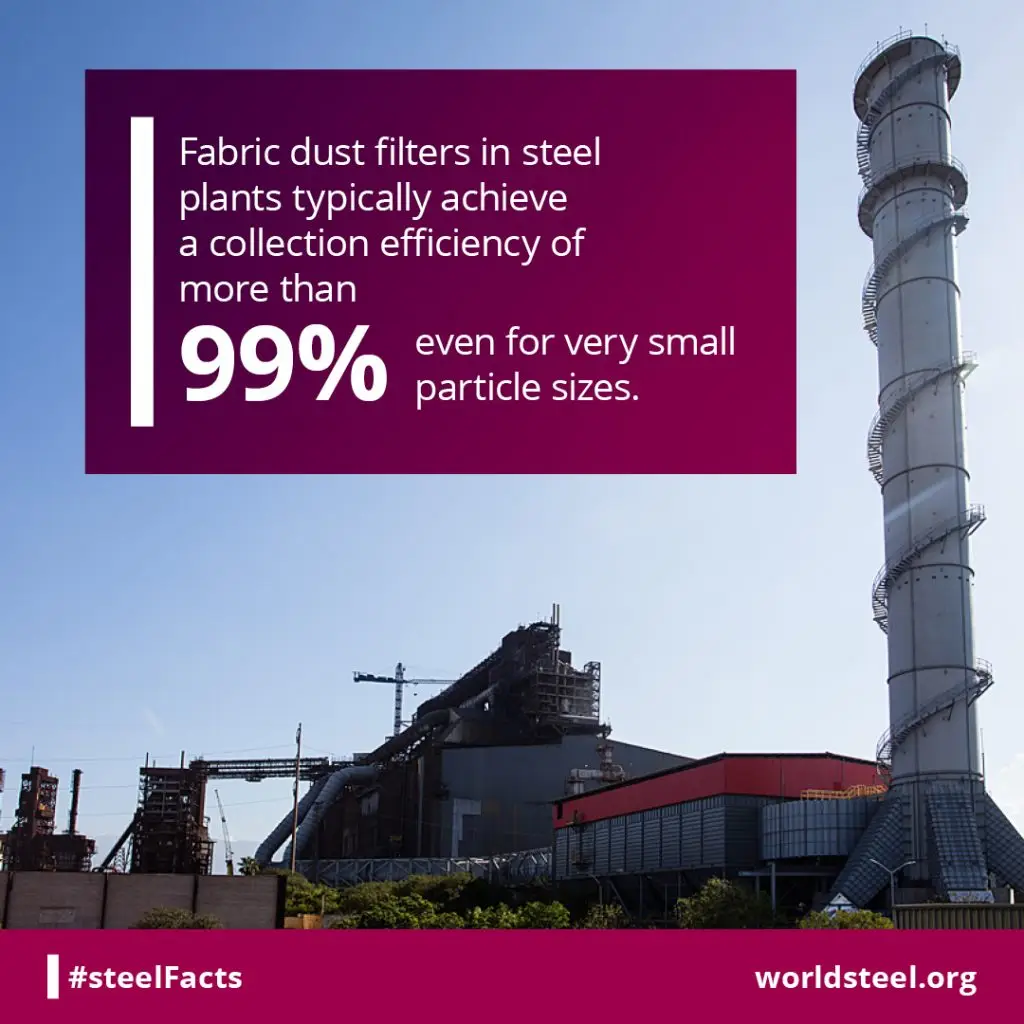
Fabric dust filters in steel plants typically achieve a collection efficiency of more than 99%, even for very small particle sizes.
下载
复制该事实的链接
The industry uses advanced technologies to control emissions of SOx, NOx, dust, and heavy metals, meeting increasingly stringent regulatory requirements.
下载
复制该事实的链接
worldsteel’s eco-profiles aim to transparently communicate life-cycle-related environmental indicators globally.
下载
复制该事实的链接
Steel supports a circular economy because it is durable, reusable, remanufacturable, and recyclable.
下载
复制该事实的链接
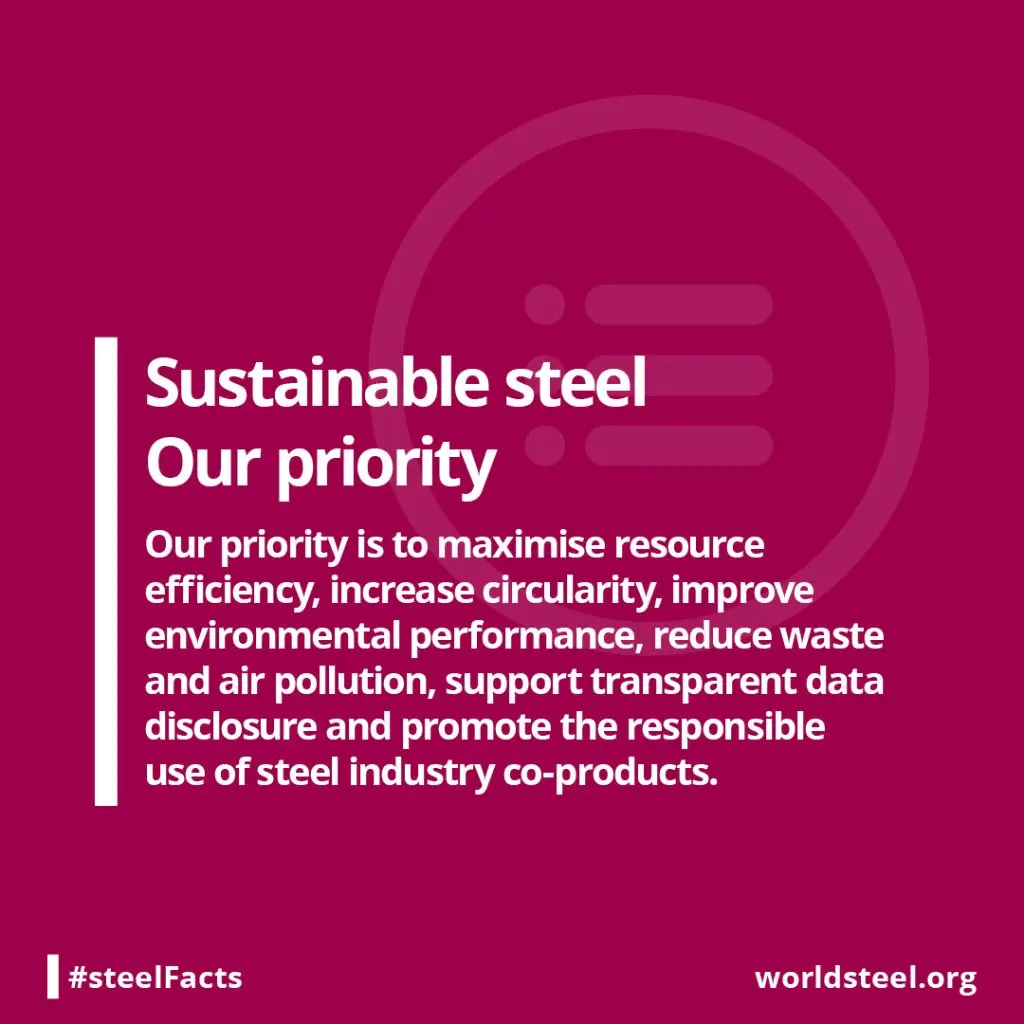
Our priority is to maximise resource efficiency, increase circularity, improve environmental performance, reduce waste and air pollution, support transparent data disclosure, and promote the responsible use of steel industry co-products.