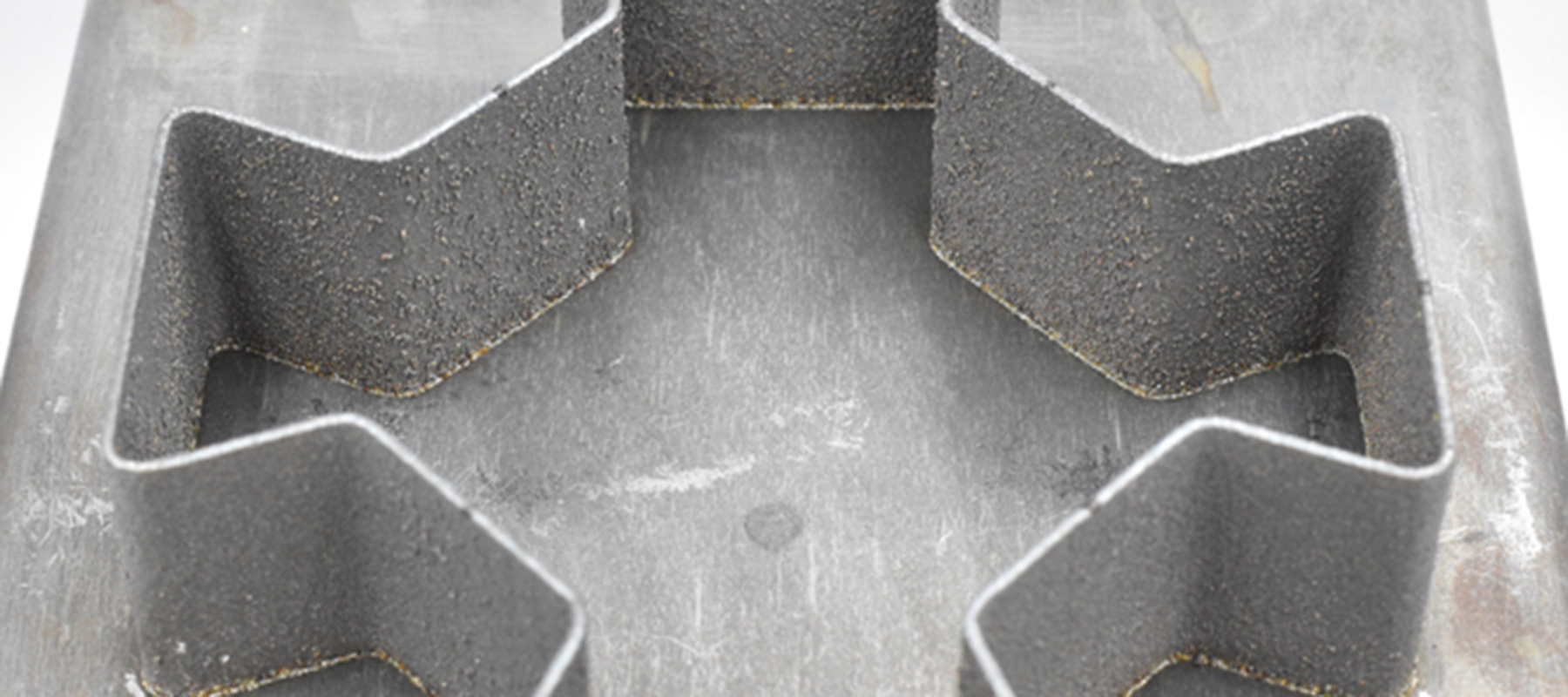

Researchers at the University of Aberdeen in Scotland are creating 3D-printed, reusable steel connectors that will make buildings easier to reuse, adapt and recycle, reducing demolition.
Modular construction is increasing worldwide, spurred by the demand for quick-to-erect and sustainable buildings. The market is forecast to grow from $100.77 billion in 2026 to $175.64 billion by 2034,, dominated by Asia Pacific making up 45.40% of the current market.
Consequently, this has pushed up demand for construction parts that make modular buildings faster to assemble and, when they reach the end of their useful life, easy to take apart.
To meet this need, a team of researchers at the University of Aberdeen in Scotland, in collaboration with Politecnico di Milano in Italy, have looked at how 3D-steel printing technology can be applied at scale to enable the construction industry to build more efficiently, reduce waste and develop a more sustainable, circular future. The team is bringing together expertise in structural and architectural engineering, advanced manufacturing and cold-formed steel systems.
The concept originated in 2023 and was developed through the work of the University of Aberdeen’s PhD student Ehsan Bakhshivand. It was funded by the School of Engineering in collaboration with Professor Ornella Iuorio, with additional support from Professor Barbara Previtali and her team at Politecnico di Milano. The initial prototypes and 3D steel printing were carried out at AS_Lab and AddMe Lab in Politecnico di Milano.
Dr Alireza Bagheri, a Senior Lecturer in Engineering at the University of Aberdeen, said: “The aim of our research is to build homes and structures in a smarter, more sustainable way. The 3D-printed steel connectors we have developed enable buildings to be assembled, adapted and reused with ease, overcoming the limitations of traditional mechanical connections and showing that low-waste, circular construction is achievable with today’s technology. This research provides a practical alternative.
“By designing connectors that allow lightweight steel buildings to be quickly assembled and fully disassembled without damaging components, the work supports faster, more efficient construction, reduces material waste, increases adaptability and building lifespan and lowers overall environmental impact.”

Reusable steel connectors, developed by the University of Aberdeen, could transform the construction industry worldwide
University of Aberdeen
Steel was the go-to material for the reusable connectors
Bagheri said that steel was the natural choice of material because the connectors are manufactured directly onto steel substrates. “Using the same material ensures metallurgical compatibility, structural continuity and efficient load transfer,” he explained.
“Steel provides the strength, stiffness and ductility required for compact, fully demountable connections. At the same time, metal additive manufacturing offers unprecedented geometric freedom, automation potential and the ability to tailor load transfer, stiffness and even failure modes. Crucially, steel’s inherent reusability makes it ideal for fast assembly and repeated disassembly, supporting a genuinely circular construction model.”
The researchers say the project offers a scalable route towards a future in which buildings are treated as long-term resources rather than disposable products. Bagheri added, “This approach is entirely new. No existing construction system currently combines metal 3D-printed connectors with cold-formed lightweight steel to enable rapid, automated assembly and complete disassembly for reuse.
“A major technical innovation has been developing a method to print directly onto very thin steel substrates, typically 1-3 mm thick, which significantly reduces distortion or residual stress. This breakthrough has been central to making the technology structurally feasible and suitable for real-world construction.”
Steel is positioning itself to have a major role in modular steel construction. Read on here to see how modular steel construction cuts congestion and pollution.
世界钢铁协会或任何签约代表世界钢铁协会写作的第三方,对本网站上发布的内容不承担任何责任,这些写作内容严格基于公司提供的信息。本网站中包含的信息并不代表世界钢铁协会或世界钢铁协会签约的任何第三方表示认可或同意,它仅反映了提供信息的公司的观点。世界钢铁协会不对因访问或使用本网站上发布的内容而造成的任何损害或损失承担责任。